


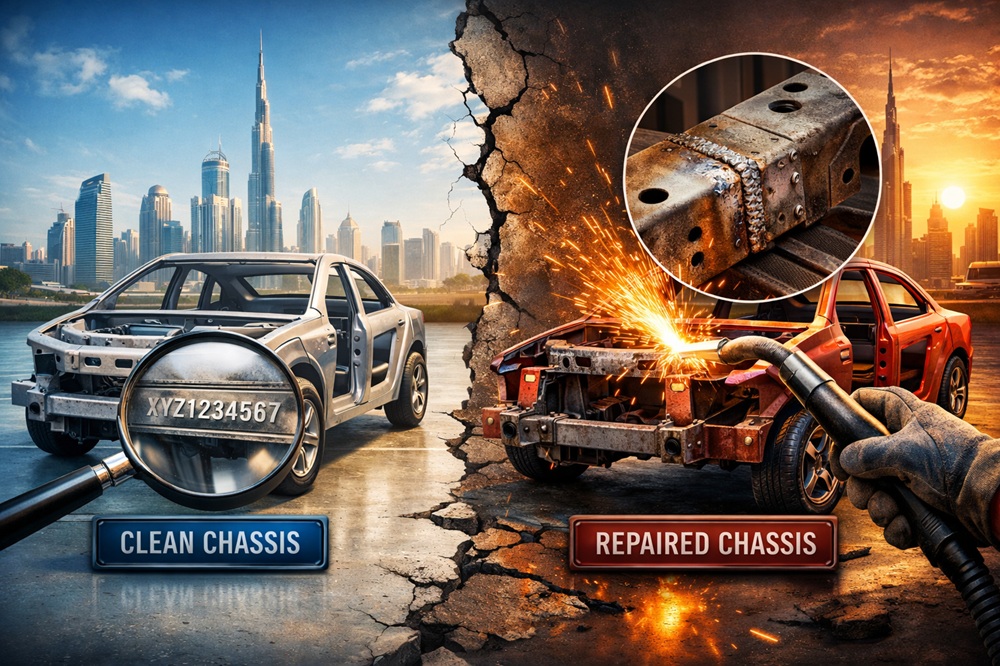
When buying or importing a vehicle in Dubai, one of the most important technical details that inspectors evaluate is the condition and integrity of the chassis. The chassis is the structural foundation of the vehicle, and its condition determines whether a car can pass inspection, be registered, and operate safely on the road.
During vehicle testing in Dubai, inspectors carefully check the chassis number, its original condition, and whether the structure has been modified or repaired. This process becomes especially important for vehicles imported from Japan, where cars often undergo detailed documentation and inspection before export.
Two terms frequently appear during these checks: clean chassis history and repaired chassis. While both vehicles may look similar externally, the difference between them can significantly affect registration approval, long-term reliability, and ownership experience in the UAE.
Understanding these distinctions helps buyers make informed decisions and avoid complications during vehicle testing and registration.
Quick Summary: Clean Chassis vs Repaired Chassis
A clean chassis history means the vehicle’s structural frame has remained original, without structural damage or major repairs affecting its integrity.
A repaired chassis means the structural frame has previously been damaged and later repaired through welding, replacement sections, or structural corrections.
Both vehicles may be operational, but their inspection outcomes, documentation checks, and long-term implications can differ.
Why Chassis Condition Matters in Dubai
Dubai’s road system is designed for high-speed travel and long-distance driving. Because of this, authorities place strong emphasis on vehicle safety and structural integrity during inspection procedures.
When vehicles arrive in the UAE or change ownership, they typically undergo technical testing at authorized vehicle testing centers. During this process, inspectors evaluate:
-
Vehicle structure and frame alignment
-
Chassis number authenticity
-
Signs of welding or modification
-
Structural damage repairs
-
Frame distortion or bending
If inspectors identify serious structural changes, the vehicle may face additional inspection steps or documentation checks.
This is why understanding the difference between a clean chassis and a repaired chassis is essential before purchasing an imported vehicle.
What Is a Clean Chassis History?
A vehicle with a clean chassis history means its original structural frame has not undergone structural damage or major repair.
The chassis number stamped on the frame remains in its original factory location and condition. There are no signs of welding, reconstruction, or frame distortion affecting the vehicle’s structural integrity.
Typical Characteristics of a Clean Chassis
Vehicles with clean chassis history generally show:
-
Original factory chassis stamping
-
No structural welding or frame replacement
-
No signs of frame distortion or bending
-
Straight alignment in inspection measurements
-
Factory structural integrity maintained
For imported Japanese vehicles, this condition is often supported by inspection documentation and auction grading records before export.
Clean chassis vehicles typically pass inspection procedures more smoothly because the structural foundation remains unchanged.
What Is a Repaired Chassis?
A repaired chassis refers to a vehicle whose structural frame has been damaged and later repaired. This repair may occur after an accident or structural impact.
The repair process may involve:
-
Welding structural sections
-
Replacing damaged frame segments
-
Correcting frame alignment
-
Reinforcing structural areas
Some repairs restore the vehicle to acceptable structural condition, while others may leave visible signs of modification.
During inspection in Dubai, technicians check these areas carefully to ensure the repair does not compromise safety.
Common Signs of a Repaired Chassis
Vehicle inspectors and experienced buyers often look for specific indicators that suggest a chassis has been repaired.
These signs may include:
Welding Marks on Structural Areas
Welding around frame rails or suspension mounting points may indicate structural repairs.
Frame Reinforcement Plates
Metal plates added to reinforce certain areas may signal previous structural damage.
Uneven Structural Surfaces
Sections of the frame may show grinding marks, repainting, or uneven metal surfaces.
Misaligned Structural Components
Minor differences in alignment between the front and rear frame sections may reveal previous correction work.
Altered Chassis Number Area
In rare cases, repairs may affect the area around the stamped chassis number, which inspectors check carefully for authenticity.
These signs do not automatically mean a vehicle cannot pass inspection, but they often lead to deeper evaluation.
How Vehicle Testing Centers Check Chassis Condition
During vehicle testing in Dubai, the chassis inspection process typically includes several steps.
Visual Structural Inspection
Inspectors examine the underside of the vehicle to identify structural changes, welding marks, or deformation.
Chassis Number Verification
The chassis number is checked against registration documents and import records.
Frame Alignment Assessment
Technicians evaluate whether the vehicle frame maintains proper alignment.
Structural Damage Assessment
If repairs are visible, inspectors determine whether the repairs meet safety standards.
These steps help ensure vehicles entering the road network meet safety requirements.
Clean Chassis vs Repaired Chassis: Key Differences
While both types of vehicles may function properly, there are important differences in inspection evaluation and ownership considerations.
Structural Integrity
Clean chassis vehicles retain the original factory frame design.
Repaired chassis vehicles have undergone structural corrections.
Inspection Simplicity
Vehicles with clean chassis history typically move through inspection procedures more easily.
Repaired chassis vehicles may require closer inspection.
Documentation Verification
Clean chassis vehicles usually have straightforward verification of chassis authenticity.
Repaired chassis vehicles may require additional review if repairs affect the stamped area.
Long-Term Structural Stability
Original frames maintain factory-designed structural integrity.
Repaired frames depend on the quality of the repair work performed.
Understanding these differences helps buyers assess the long-term reliability of the vehicle.
Why Many Imported Vehicles Show Repaired Chassis
Japanese vehicles are frequently exported after minor or moderate accidents that have already been repaired before shipment.
These repairs may occur because:
-
Vehicles are restored before export
-
Structural corrections are performed after accidents
-
Frame alignment is adjusted after impact damage
In many cases, the repairs are properly documented and professionally completed. However, buyers should still understand what type of repair occurred.
Ownership Considerations for Repaired Chassis Vehicles
Buying a vehicle with a repaired chassis does not automatically mean it will perform poorly. Many repaired vehicles operate reliably when repairs are properly executed.
However, buyers should consider several factors.
Structural Safety
The repair must maintain proper structural integrity.
Inspection Transparency
Documentation should clearly explain the repair history.
Professional Repair Quality
Repairs done using proper structural equipment generally maintain better long-term reliability.
Future Inspections
Vehicles may undergo repeated structural checks during ownership transfers.
For these reasons, thorough inspection is important before purchase.
Why Buyers Should Verify Chassis History
Understanding chassis condition protects buyers from unexpected issues during registration and ownership.
Verification helps confirm:
-
Structural authenticity
-
Absence of unauthorized modifications
-
Compliance with inspection requirements
-
Vehicle safety for long-term use
This process is especially important for imported vehicles where buyers rely on documentation and inspections rather than previous ownership records within the UAE.
The Role of Inspection Specialists
Professional vehicle inspection specialists often review imported cars before they enter the registration process.
Their evaluation typically includes:
-
Structural condition analysis
-
Chassis number verification
-
Frame alignment checks
-
Documentation review
-
Safety assessment
These inspections help buyers identify potential concerns before moving forward with vehicle registration.
Frequently Asked Questions
1. What does clean chassis history mean?
A clean chassis history means the vehicle’s structural frame has not been damaged or structurally repaired and remains in its original factory condition.
2. Can a repaired chassis vehicle pass inspection in Dubai?
Yes. If the repair maintains structural safety and does not affect chassis authenticity, the vehicle may pass inspection.
3. How do inspectors detect chassis repairs?
Inspectors look for welding marks, structural modifications, frame alignment changes, and alterations around the chassis number area.
4. Does a repaired chassis affect vehicle safety?
Safety depends on the quality of the repair. Professionally repaired frames can maintain structural stability, while poorly executed repairs may cause issues.
5. Where is the chassis number usually located?
The chassis number is typically stamped on the vehicle frame or engine bay area and must match registration documents.
6. Why is chassis verification important during import?
It confirms that the vehicle identity matches documentation and ensures the structure has not been altered in a way that compromises safety.
7. Do Japanese imported cars always have clean chassis history?
No. Some imported vehicles may have undergone repairs before export, which is why inspection and documentation review are important.
8. Should buyers inspect the chassis before purchasing an imported vehicle?
Yes. A thorough inspection helps confirm structural condition and prevents complications during vehicle testing and registration.
The Role of UKA Japan Motors
When dealing with imported vehicles, verifying structural condition is an important step in ensuring safe ownership and smooth registration.
UKA Japan Motors focuses on inspection guidance and documentation review for Japanese imported vehicles. This includes evaluating structural condition, verifying chassis authenticity, and helping buyers understand inspection outcomes before proceeding with registration.
By prioritizing transparency and compliance with UAE inspection requirements, buyers can make more informed decisions about the vehicles they choose.
Conclusion
The difference between a clean chassis history and a repaired chassis lies in the structural condition of the vehicle frame. Clean chassis vehicles maintain their original structural integrity, while repaired chassis vehicles have undergone structural corrections after damage.
Both types may be roadworthy, but inspection processes in Dubai carefully evaluate the chassis to ensure safety and authenticity. Understanding these differences helps buyers avoid unexpected issues during vehicle testing and ensures greater confidence in long-term ownership.
Careful inspection, proper documentation, and structural verification remain essential steps when purchasing or importing a vehicle in the UAE.
Contact UKA Japan Motors for availability and inspection guidance. 🚗