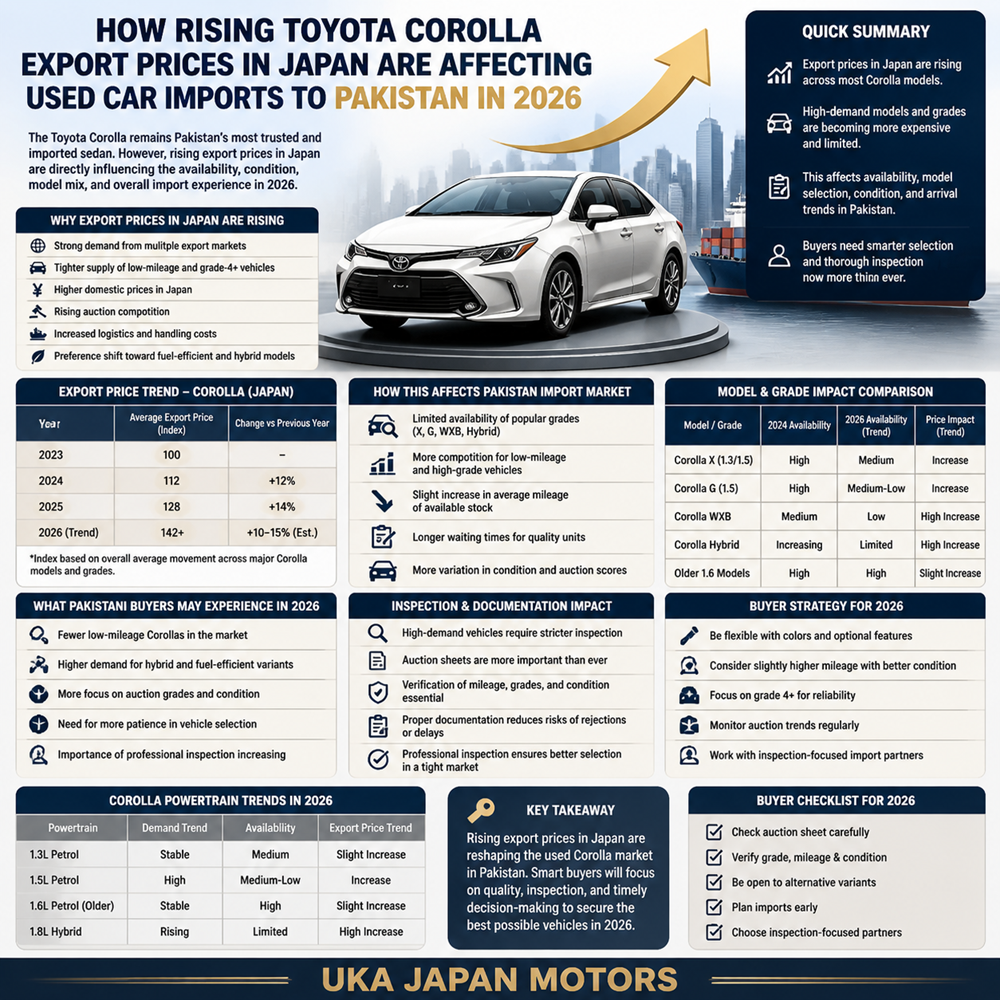
Importing a Japanese used car into Kampala in 2026 requires more than choosing a familiar model, checking mileage, and arranging shipment. Uganda’s vehicle import rules now play a major role in deciding whether a car is suitable before it ever reaches the registration stage. For buyers in Kampala, the age of the vehicle, inspection status, roadworthiness documents, and compliance record are just as important as engine size, ground clearance, fuel type, or interior condition. Uganda currently applies an age restriction...
Read More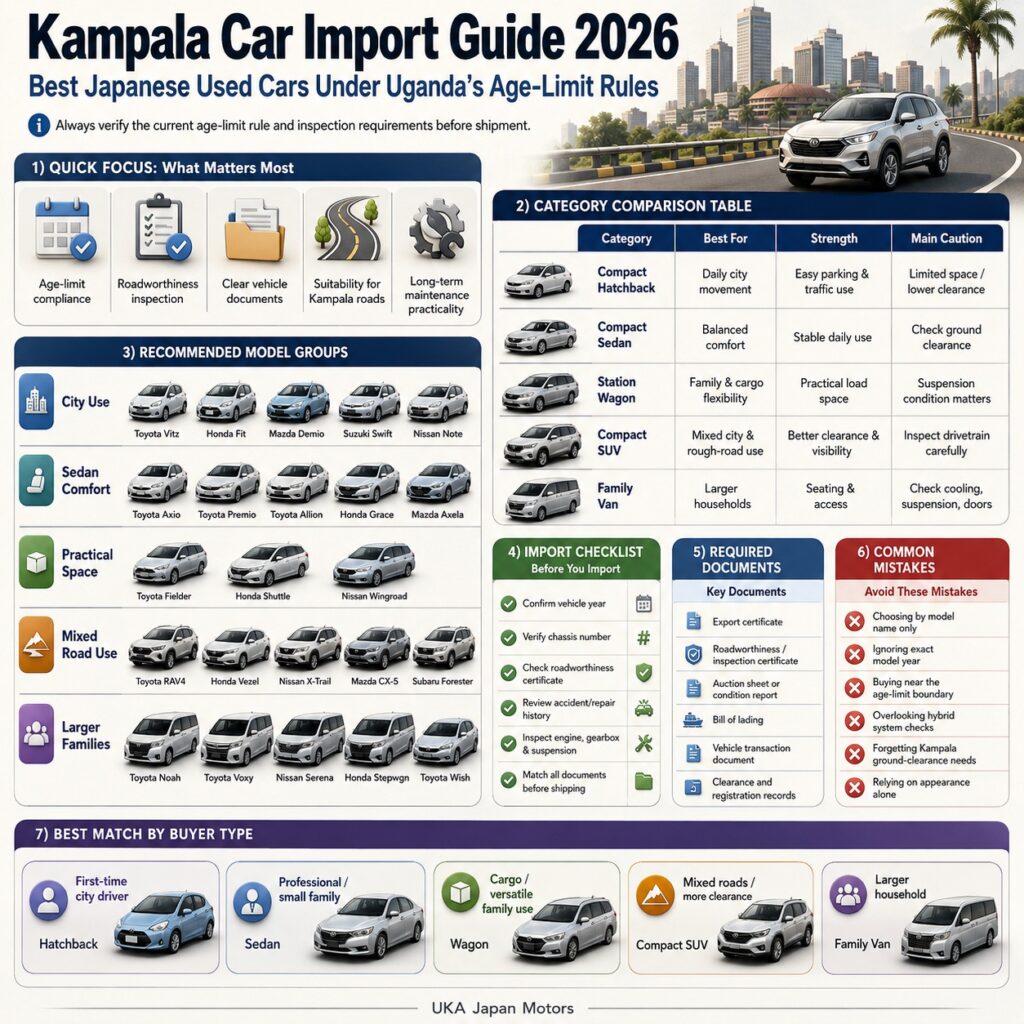
Dubai used car buyers in 2026 are looking at vehicles more carefully than before. The decision is no longer only about choosing a brand, body style, or model year. Buyers are now thinking about shipping pressure, import timing, documentation, inspection quality, long-term reliability, parts availability, fuel behaviour, road comfort, air-conditioning performance, and how well a vehicle can handle daily driving across Dubai and the wider UAE. This is where Japanese imports continue to attract serious attention. For many buyers in...
Read More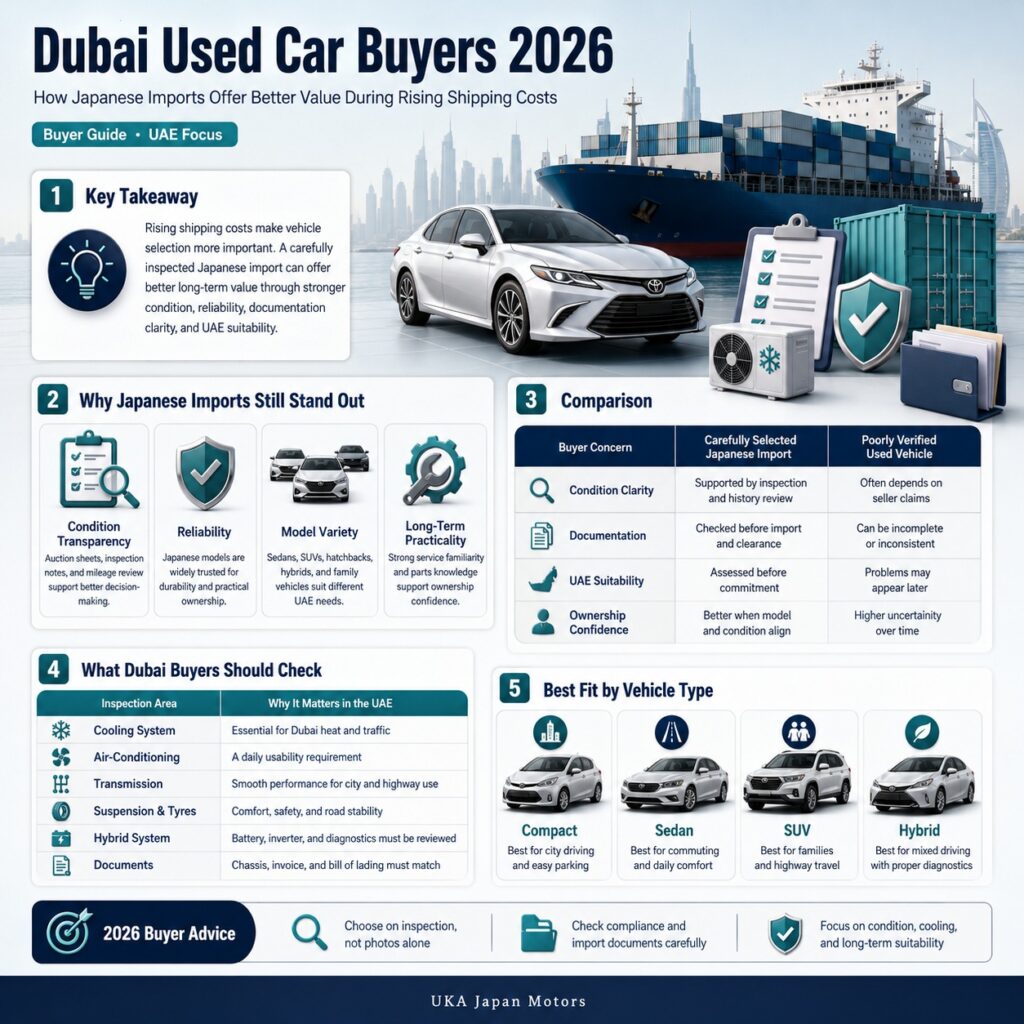
Japanese hybrid kei cars are becoming a serious consideration for many buyers in Lahore and Karachi because they match the way people actually drive in these cities. Daily routes are often slow, crowded, stop-and-go, and unpredictable. A car may spend more time crawling through traffic than moving at open-road speeds. In this environment, a compact hybrid vehicle can feel more practical than a larger car that is difficult to park, heavier to move through congestion, and less suited to narrow...
Read More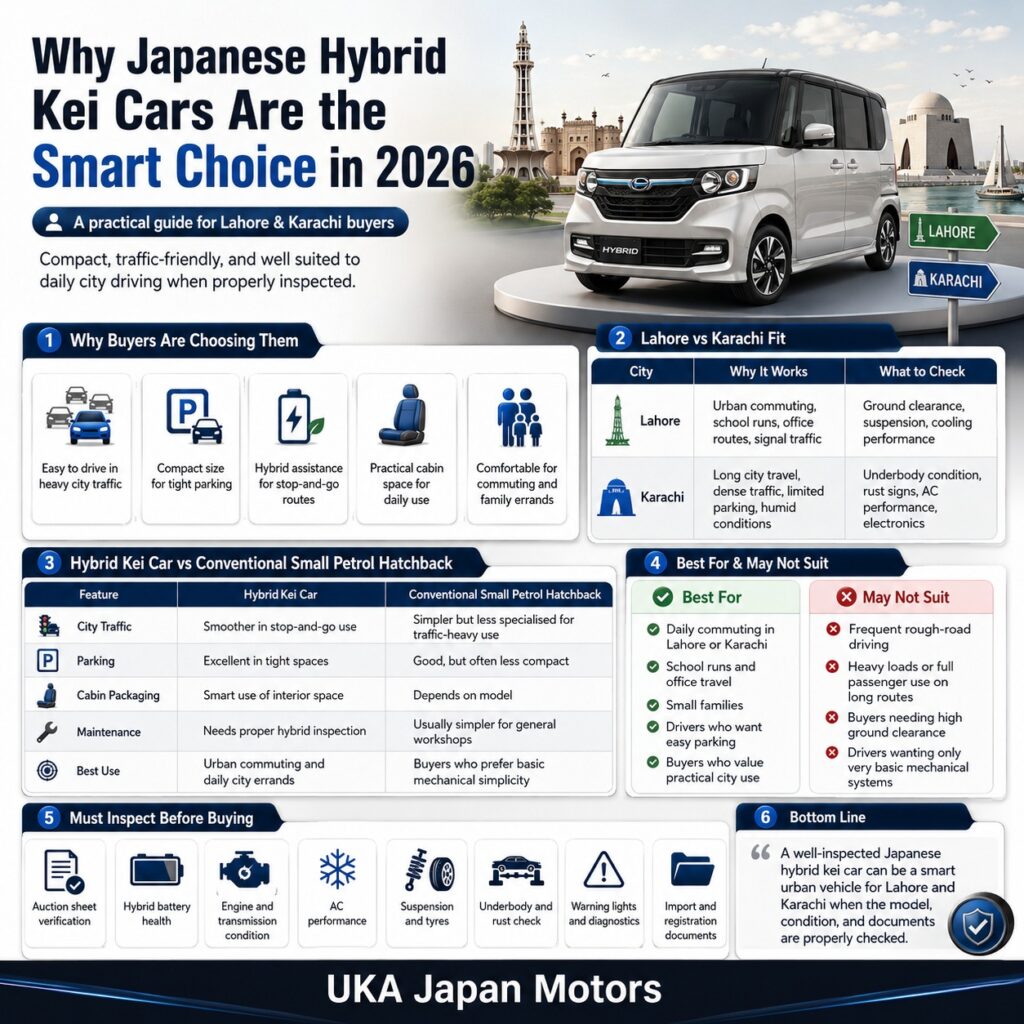
Dar es Salaam’s used car market in 2026 is shaped by practical decisions rather than impulse buying. For many first-time buyers, the main question is not simply which car looks modern or has attractive features. The real concern is whether the vehicle can handle daily traffic, changing road conditions, humid coastal weather, inspection requirements, and long-term ownership without becoming difficult to manage. This is why Japanese fuel-efficient cars continue to stand out among first-time buyers in Dar es Salaam. They...
Read More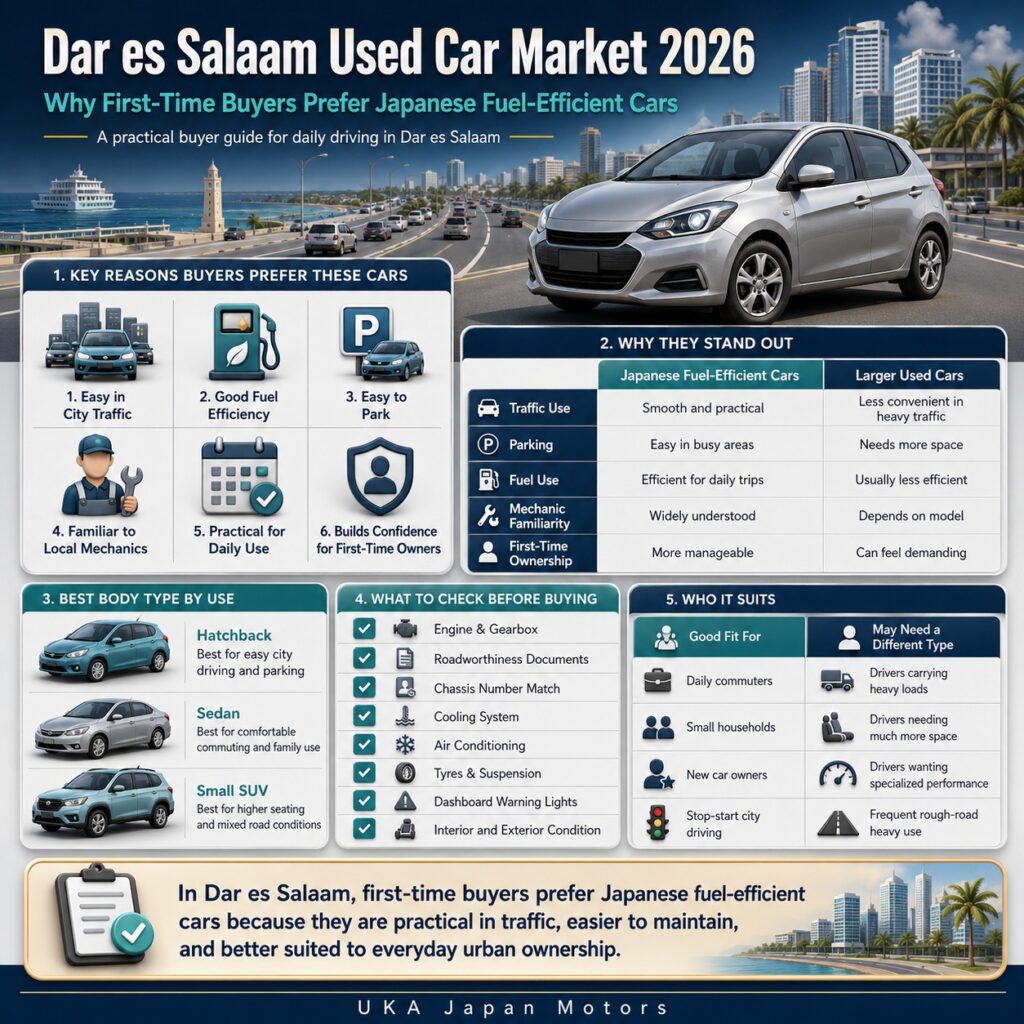
Family car buying in Birmingham is changing. In 2026, many households are no longer looking only for a vehicle that meets an emissions rule or avoids a city-centre charge. They are looking for something more complete: a dependable daily car that can handle school runs, supermarket trips, weekend motorway journeys, wet winter commutes, and the practical demands of family life without becoming complicated to own. This is where reliable Japanese hybrids have become especially relevant. They are often discussed only...
Read More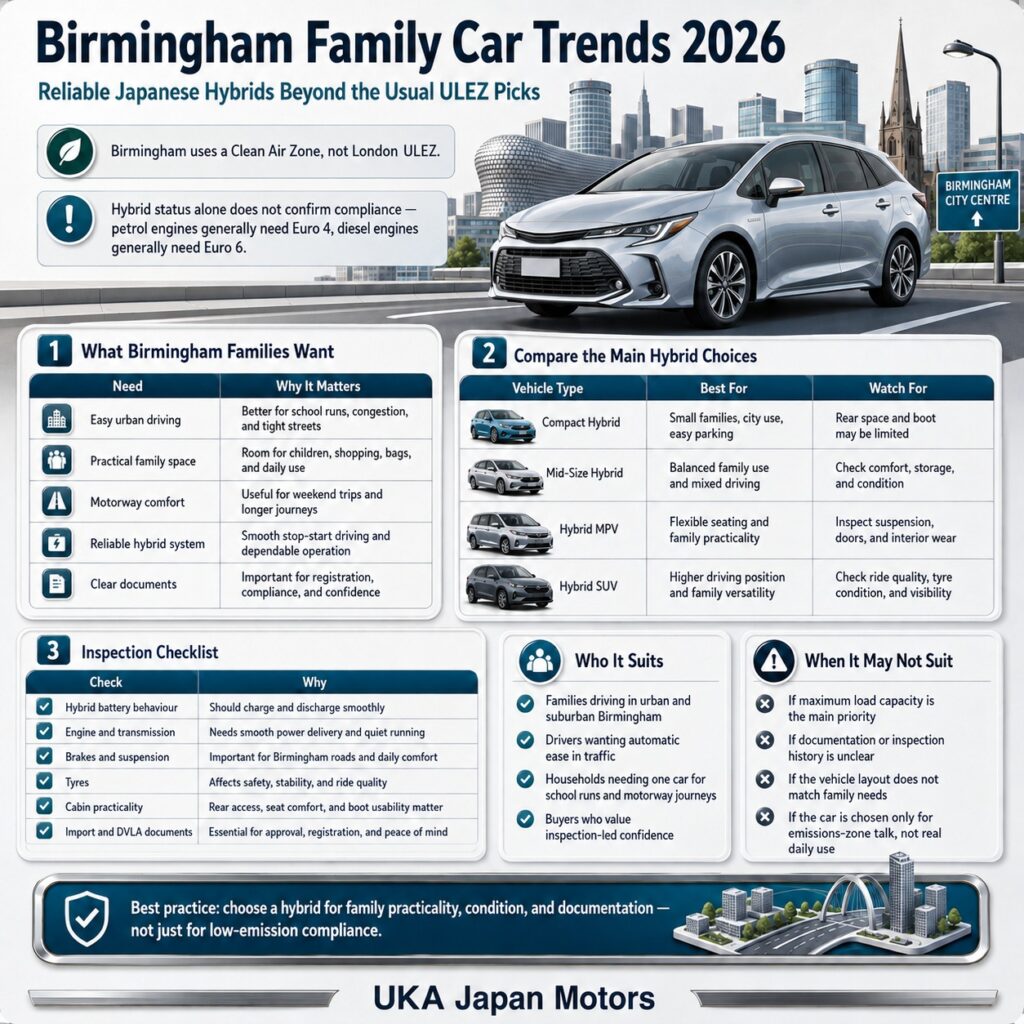
Over the past few years, the used car market in Jamaica has witnessed significant shifts, with small Japanese hatchbacks and compact cars emerging as the next big trend. In a country where road conditions vary from coastal highways to steep hill drives, and where fuel efficiency is crucial for daily commuting, these vehicles are becoming the go-to choice for many Jamaican drivers. But what makes these small, fuel-efficient vehicles so appealing to local drivers? In this article, we’ll explore the...
Read More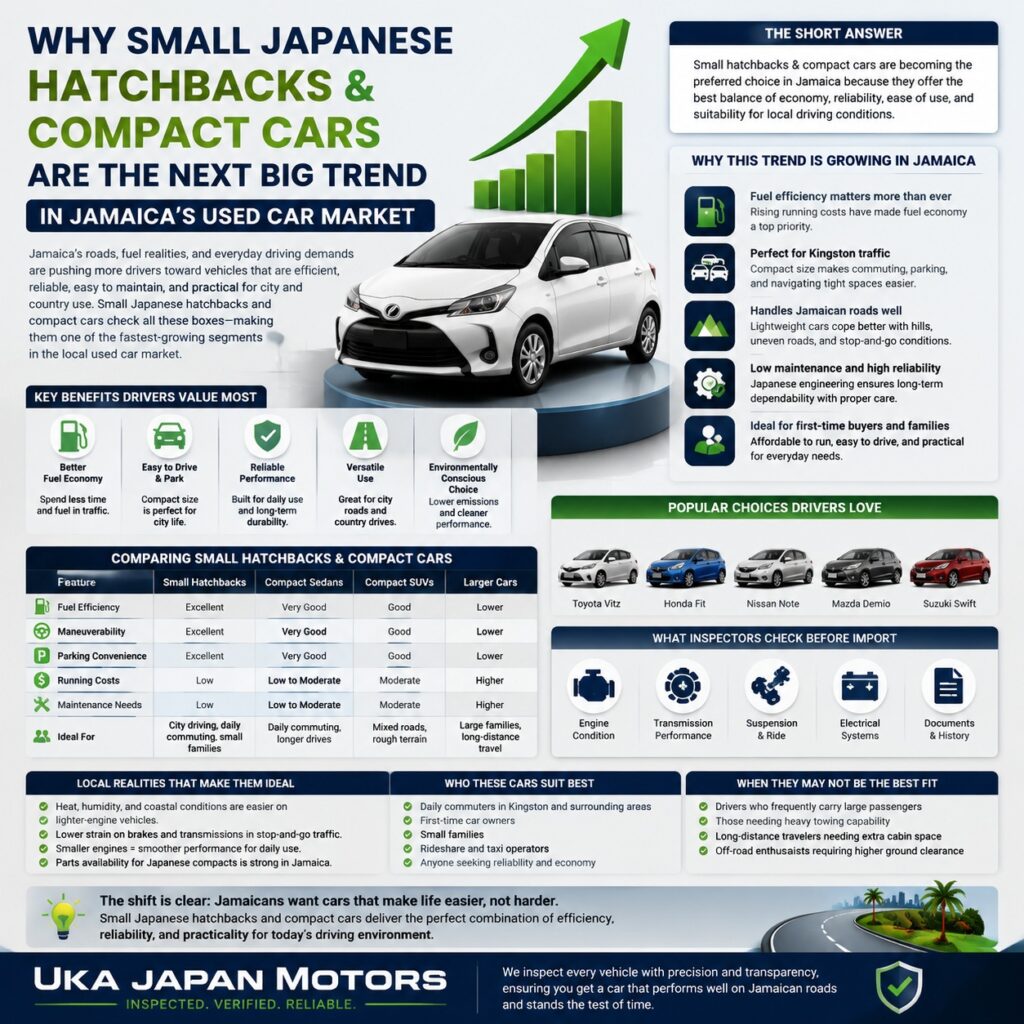
Introduction As Kenya continues to focus on environmental sustainability and the economic benefits of hybrid vehicles, the demand for hybrid Japanese cars has surged. Japanese car manufacturers are well-known for their innovation, reliability, and fuel efficiency, which makes their hybrid models highly suitable for Kenya’s driving conditions. In this article, we will explore the best hybrid Japanese cars to import to Kenya in 2026, considering factors like fuel economy, reliability, and performance. Why It Matters for Kenyan Drivers Hybrid vehicles...
Read More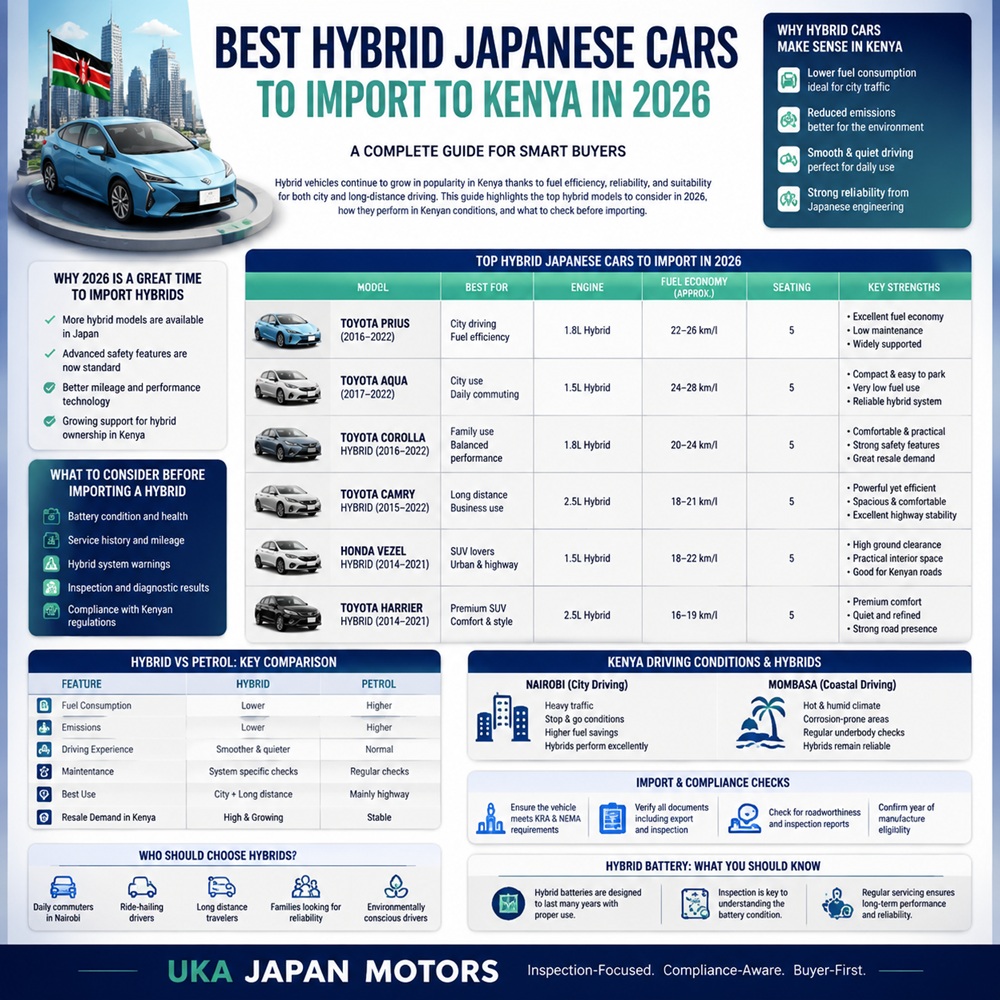
Top 5 Japanese Car Importers in Uganda Japan has been a significant exporter of vehicles worldwide, including to Uganda. The country is known for its reliability, fuel efficiency, and advanced automotive technology. In Uganda, there is a growing demand for Japanese vehicles, and several importers have emerged as key players in the market. Below, we will review the top 5 Japanese car importers in Uganda, highlighting their roles and services. 1. Be Forward Uganda Be Forward Uganda is part of...
Read More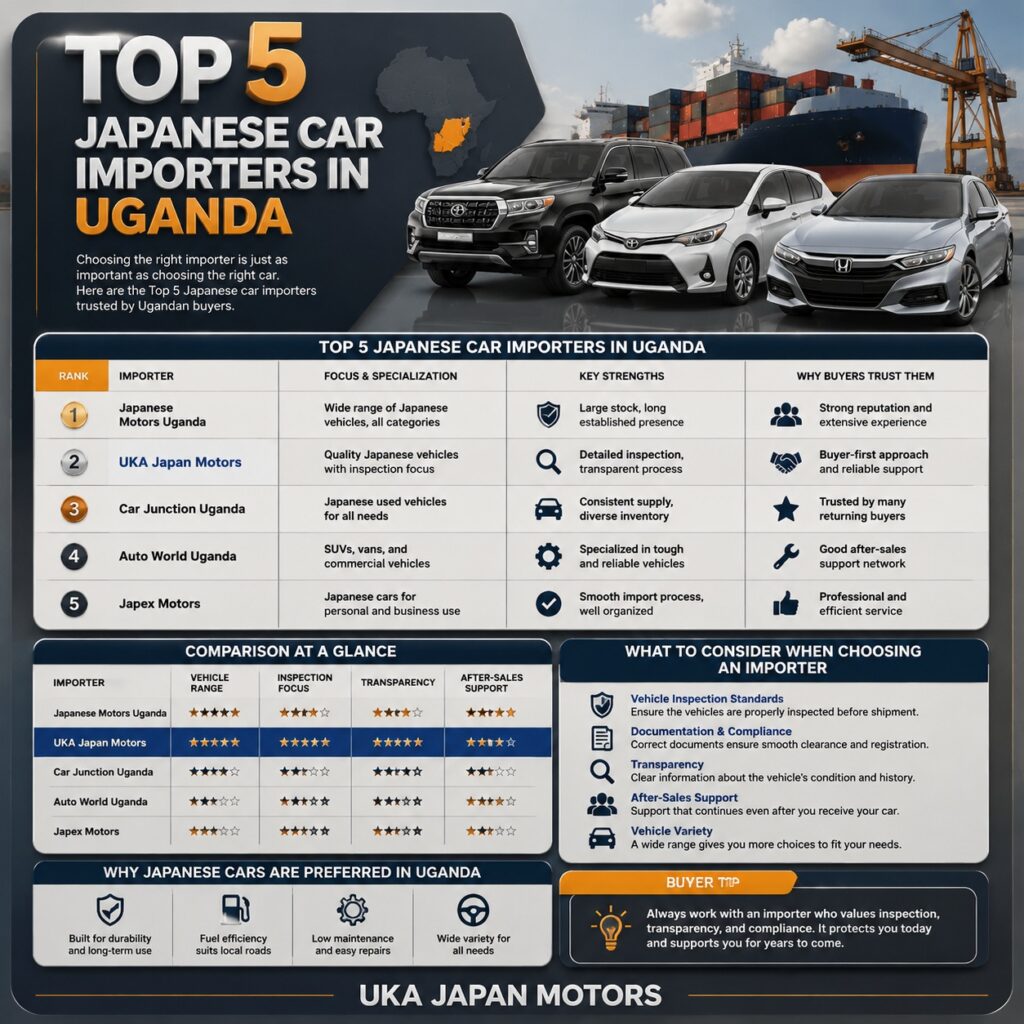
When it comes to purchasing a used car in the UAE, budget-conscious buyers are increasingly turning to Japanese models due to their reliability, fuel efficiency, and longevity. For importers in Dubai and across the UAE, Japanese vehicles priced under $10,000 represent a significant market segment. This article explores the top Japanese used cars under $10,000 that UAE importers are seeking this month, offering insights into why these models are so popular, how to navigate local regulations, and the key considerations...
Read More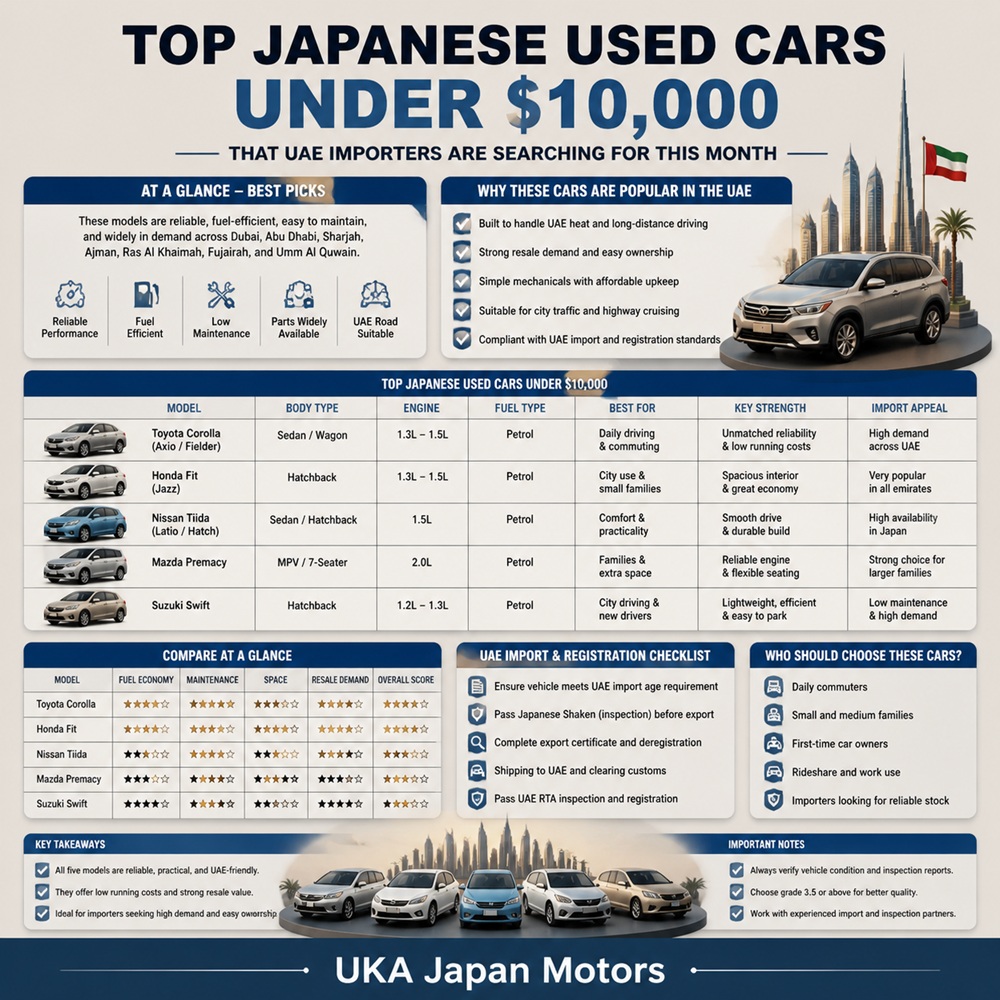
The rising prices of Toyota Corolla exports from Japan have significant implications for used car imports to Pakistan in 2026. As one of the most popular cars in the country, any fluctuation in the price of the Toyota Corolla affects a large segment of the Pakistani automotive market. This article will explore how the increasing export prices of the Toyota Corolla from Japan are shaping the used car import landscape in Pakistan, impacting buyers, importers, and industry players alike. Why...
Read More