


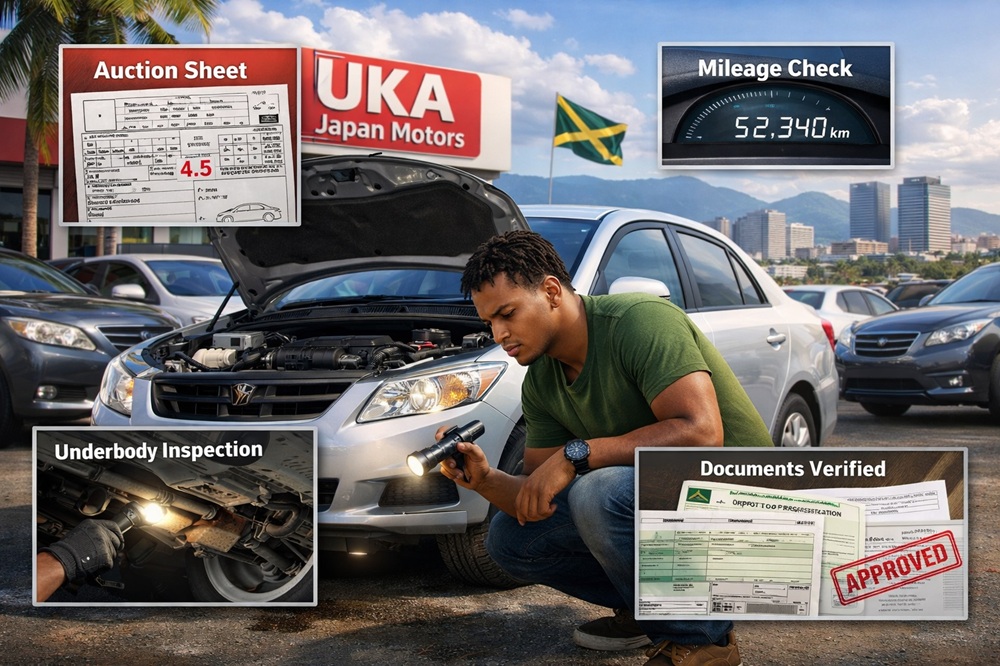
Buying your first vehicle is a major step. In Jamaica, vehicle ownership carries responsibilities that go beyond simply choosing a car that looks good. Road conditions, climate, import regulations, inspection standards, and long-term maintenance realities all influence whether your first vehicle becomes a dependable asset—or a costly mistake.
For drivers in Kingston and surrounding communities, traffic congestion, hillside roads, coastal air exposure, and heat all affect vehicle performance and durability. This guide explains exactly what first-time buyers should evaluate before purchasing, helping you make a confident, informed decision.
Direct Answer: What Should a First-Time Buyer Check Before Buying?
Before purchasing your first vehicle in Jamaica, you should:
- Verify complete documentation and import records.
- Inspect structural integrity, especially underbody condition.
- Confirm mileage authenticity and auction grading (if imported).
- Check cooling system health for hot climate driving.
- Evaluate suspension and braking systems for local road conditions.
- Understand insurance and registration requirements.
- Consider long-term maintenance accessibility.
- Assess whether the vehicle suits your daily driving pattern.
Each of these points directly impacts ownership stability.
Why Buying a Car in Jamaica Requires Special Attention
Vehicle ownership here differs from simply buying a car elsewhere. Jamaica’s environment introduces unique variables:
- Heat and humidity strain cooling systems and electronics.
- Coastal air accelerates rust development.
- Steep terrain in areas like St. Andrew demands reliable braking systems.
- Heavy urban traffic increases transmission wear.
- Import rules require strict compliance documentation.
A first-time buyer who ignores these realities may face avoidable mechanical and legal complications.
Step 1: Documentation – The Foundation of a Safe Purchase
Documentation should always be verified before mechanical inspection.
Essential Documents to Confirm:
- Import entry documentation
- Registration certificate
- Fitness certificate
- Proof of customs clearance
- Previous ownership history
- Auction sheet (for imported Japanese vehicles)
If the vehicle was imported, ensure the chassis number matches all paperwork exactly. Small discrepancies can create registration issues later.
Why This Matters
Inconsistent or incomplete documentation can:
- Delay transfer of ownership
- Prevent renewal of registration
- Complicate insurance processing
- Raise compliance concerns during inspections
First-time buyers often focus on the car itself and overlook paperwork. In reality, documentation errors create more long-term problems than minor mechanical issues.
Step 2: Underbody and Structural Inspection
In Jamaica’s coastal climate, corrosion is a serious concern.
What to Check:
- Rust on chassis rails
- Signs of welding repairs
- Underbody seal condition
- Suspension mounting points
- Brake line integrity
Vehicles exposed to salty air near coastal areas may develop rust faster. Even cars driven primarily in Kingston’s urban zones can show corrosion if not properly protected.
Why Underbody Inspection Is Critical
Rust weakens structural components. Cosmetic surface rust is manageable. Structural corrosion is not.
A professional inspection should confirm:
- No structural compromise
- No accident frame damage
- No hidden repairs
Step 3: Mileage Verification and Auction History
Most used vehicles imported into Jamaica originate from Japanese auctions. These auctions assign grading based on condition.
What First-Time Buyers Should Look For:
- Original auction sheet
- Verified mileage records
- Consistent service history
- No odometer tampering indicators
Mileage fraud can occur if vehicles change hands multiple times. Reliable verification protects long-term reliability expectations.
Step 4: Cooling System Health in Jamaica’s Climate
Heat management is essential in this environment.
Inspect:
- Radiator condition
- Coolant reservoir
- Thermostat functionality
- Air conditioning performance
- Cooling fan operation
Daily traffic congestion in Kingston places additional strain on engines and transmissions. Overheating issues often surface during prolonged stop-and-go driving.
Comparison: Small Engine vs Larger Engine in Heat
Smaller engines can be efficient but may work harder in heavy traffic and on inclines. Larger engines may handle strain better but require proper cooling maintenance.
The key factor is not engine size alone—it is cooling system health and maintenance history.
Step 5: Suspension and Braking System Assessment
Hilly terrain and uneven surfaces demand reliable braking and suspension.
Check:
- Brake pad wear
- Rotor condition
- Shock absorber performance
- Steering responsiveness
- Wheel alignment
A first vehicle should feel stable and predictable, especially when descending steep roads.
Step 6: Transmission Condition
Urban driving increases transmission wear.
Inspect:
- Smooth gear transitions
- No delayed engagement
- No vibration during acceleration
- Clean transmission fluid
Automatic and CVT transmissions are common in imported vehicles. CVT systems require consistent fluid maintenance.
Step 7: Electrical System and Humidity Effects
Humidity can affect:
- Battery terminals
- Wiring harnesses
- Sensors
- Control modules
Electrical faults may not appear immediately but can surface months after purchase if corrosion exists.
First-time buyers should ensure:
- No warning lights on dashboard
- No irregular power window behavior
- Stable infotainment system function
Step 8: Fitness and Registration Requirements
All vehicles must meet roadworthiness standards.
You should confirm:
- Current fitness certificate
- Insurance compliance
- Registration validity
- Correct engine and chassis numbers recorded
Fitness inspections evaluate brakes, lights, tires, emissions, and overall road safety.
Step 9: Matching the Vehicle to Your Lifestyle
A first car should match daily use.
Consider:
- Daily commute distance
- Passenger needs
- Parking availability
- Fuel type preference
- Maintenance accessibility
Comparison: Sedan vs Hatchback for First-Time Owners
Sedans often provide better highway stability and trunk space. Hatchbacks offer easier maneuverability and parking convenience in busy Kingston areas.
The right choice depends on usage pattern—not popularity.
Step 10: Long-Term Maintenance Planning
Ownership begins after purchase.
Before buying, ask:
- Are parts readily available locally?
- Are qualified technicians familiar with this model?
- Does the vehicle have common known mechanical issues?
- Is servicing history documented?
Reliable long-term ownership requires predictable maintenance.
Common Mistakes First-Time Buyers Make
- Choosing appearance over condition.
- Ignoring underbody inspection.
- Skipping professional mechanical checks.
- Overlooking documentation accuracy.
- Failing to test cooling performance.
- Buying without understanding registration requirements.
- Not budgeting for maintenance.
- Rushing the decision due to pressure.
Avoiding these mistakes significantly reduces ownership risk.
Inspection Reality in Jamaica
Imported vehicles often arrive in good condition, but transit, storage, and environmental exposure can alter condition.
A proper inspection includes:
- Chassis verification
- Frame alignment review
- Brake and suspension testing
- Cooling system pressure testing
- Diagnostic scanning
Professional evaluation is strongly recommended for first-time buyers unfamiliar with mechanical indicators.
Ownership Mindset: Think Beyond the First Month
A first car should provide:
- Reliable daily transport
- Predictable maintenance intervals
- Structural integrity
- Legal compliance clarity
If the vehicle meets these standards, ownership becomes stable rather than stressful.
Frequently Asked Questions (FAQ)
1. Is it better to import directly or buy locally?
Both options require documentation verification. Buying locally allows immediate inspection. Importing requires trusted inspection review before shipment.
2. How important is an auction sheet?
Very important. It verifies mileage, grading, and prior condition before export.
3. Should I prioritize low mileage?
Mileage matters, but condition and maintenance history matter more.
4. How can I tell if a vehicle was in an accident?
Check for uneven panel gaps, inconsistent paint texture, and underbody welding marks. Professional inspection confirms structural integrity.
5. What transmission type is best for Kingston traffic?
Automatic and CVT systems are common. Smooth shifting and service history are more important than type alone.
6. How often should I service my first vehicle?
Follow manufacturer guidelines and adjust for local driving conditions. Stop-and-go traffic may require more frequent servicing.
7. Does coastal air really affect vehicles?
Yes. Salt exposure accelerates corrosion, especially underneath the vehicle.
8. What documents must match exactly?
Engine number, chassis number, registration details, and import records must align perfectly.
9. Is air conditioning performance important during inspection?
Yes. Jamaica’s climate places heavy demand on AC systems.
10. Should I always get a professional inspection?
For first-time buyers, professional inspection significantly reduces risk.
How UKA Japan Motors Supports First-Time Buyers
UKA Japan Motors operates with inspection transparency as a priority. For first-time buyers, professional guidance can clarify:
- Auction sheet interpretation
- Documentation verification
- Chassis inspection review
- Cooling and underbody condition evaluation
- Compliance alignment before registration
The goal is informed decision-making, not impulse purchasing.
Professional inspection ensures that the vehicle’s condition aligns with expectations and Jamaican road realities.
Conclusion
Buying your first vehicle in Jamaica requires more than selecting a popular model. It requires understanding documentation, inspection standards, environmental factors, and long-term ownership responsibilities.
When you focus on structural integrity, cooling performance, transmission health, and compliance accuracy, you protect yourself from avoidable stress.
A well-inspected vehicle becomes a dependable tool for daily life. A poorly evaluated one becomes a recurring problem.
Take time. Verify documentation. Inspect thoroughly. Match the vehicle to your real lifestyle needs.
Contact UKA Japan Motors for availability and inspection guidance.