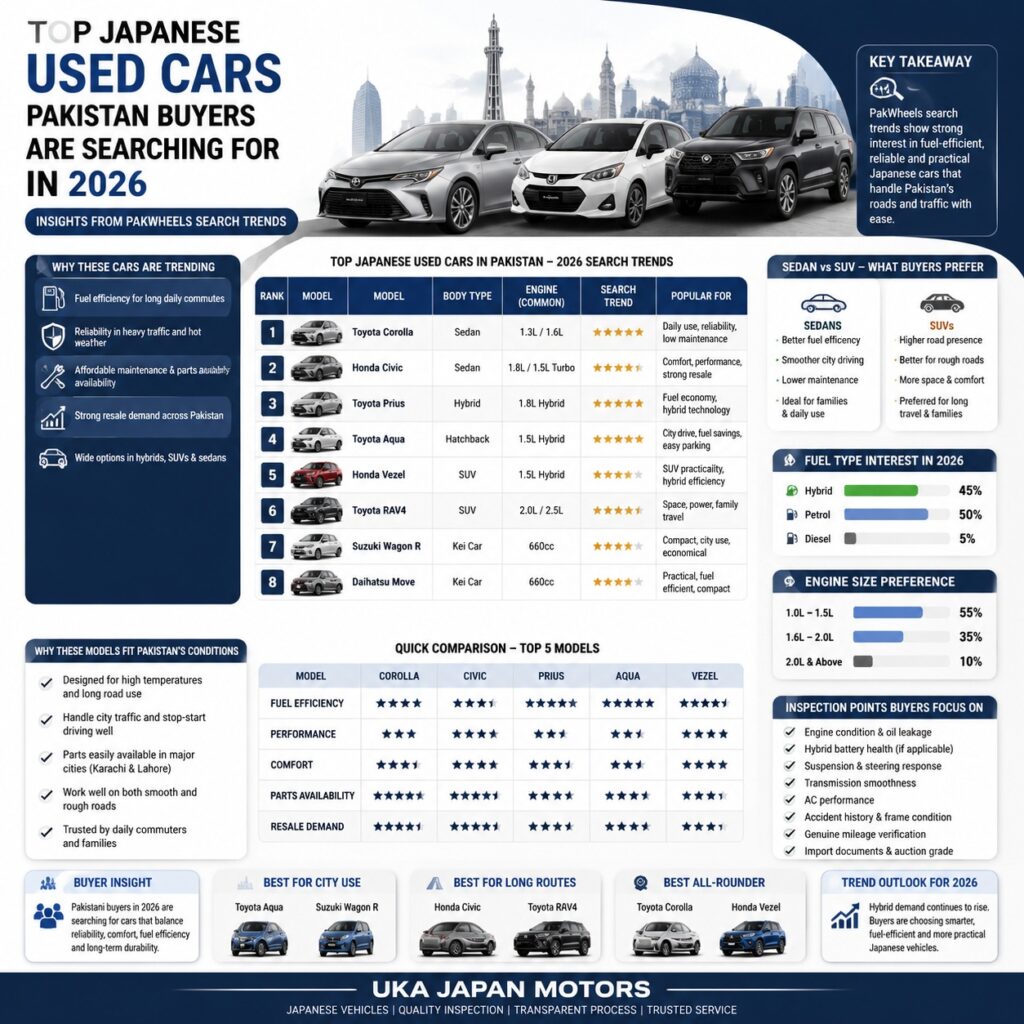
Fuel efficiency has become a much more important part of everyday vehicle ownership in Pakistan during 2026. Petroleum rates have changed repeatedly, and official fuel-price publications during September alone show multiple revisions. For drivers in Lahore and Karachi, this volatility matters because urban driving often combines long commuting distances with congestion, idling, air-conditioning use and repeated acceleration and braking. The result is that choosing a fuel-efficient car is no longer simply about finding the vehicle with the highest advertised kilometre-per-litre...
Read More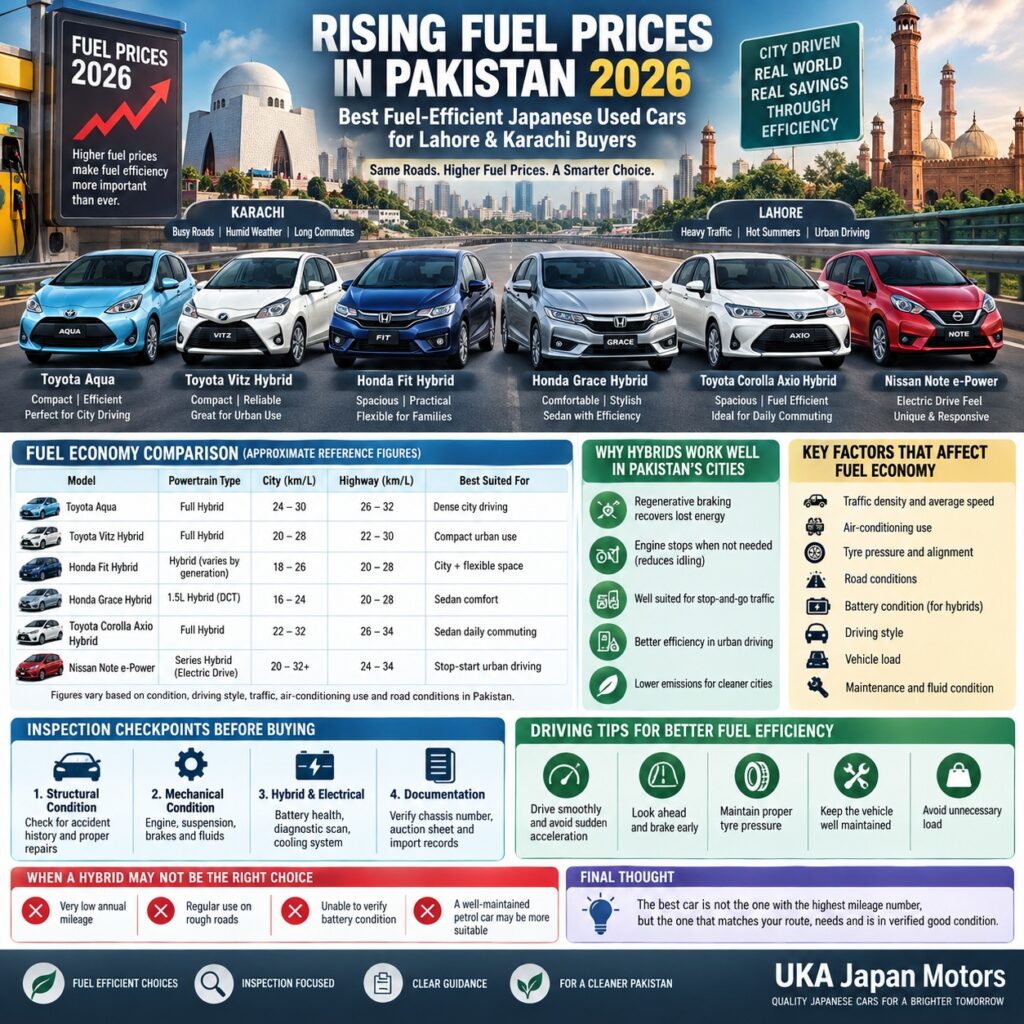
Japanese hybrid cars with engines up to 1800cc occupy an important position in Pakistan’s imported-vehicle market. Their appeal is not based on one factor alone. They combine relatively compact petrol engines with electric assistance, suit the stop-and-go traffic common in Karachi and Lahore, and are available in several body styles ranging from compact hatchbacks to family sedans and crossovers. There is also an important import-policy factor: Pakistan’s Federal Board of Revenue states that a 50% exemption from duty and taxes...
Read More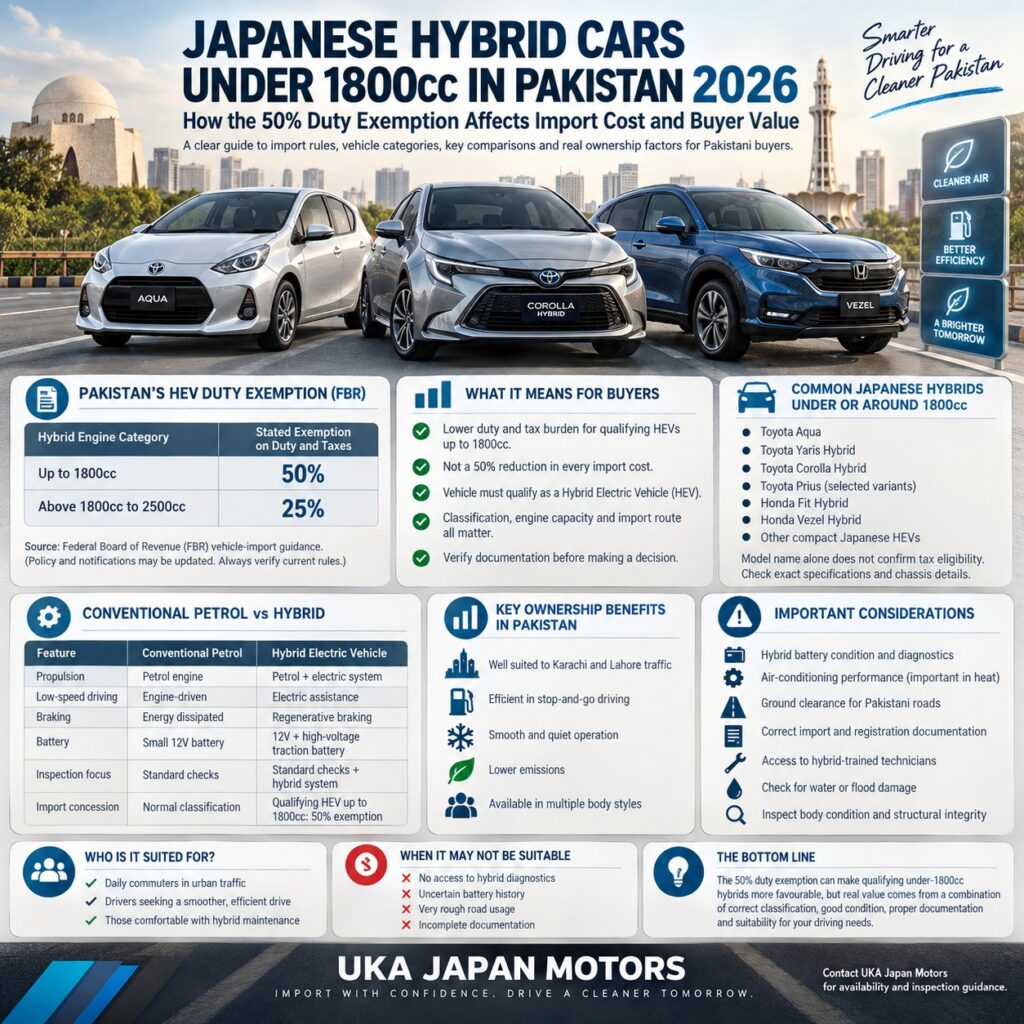
Pakistan’s commercial used-vehicle import framework entered an important new phase after 30 June 2026. For buyers looking at Japanese used cars for everyday driving in Karachi or Lahore, the change is easy to misunderstand. Much of the discussion has focused on whether the five-year age restriction has ended. That is important, but vehicle age is only one part of the new framework. The larger change is that commercial importation is becoming increasingly compliance-based. A vehicle has to be considered not...
Read More
Pakistan’s rules for importing used vehicles changed significantly when commercial importation was formally opened under the Import Policy Order framework. For buyers of Japanese used cars in Karachi and Lahore, however, the most important change is not simply that another import route exists. It is the way vehicle eligibility is moving away from being determined mainly by age and toward a system in which condition, safety compliance, environmental requirements, documentation and inspection can carry much greater importance. That distinction matters....
Read More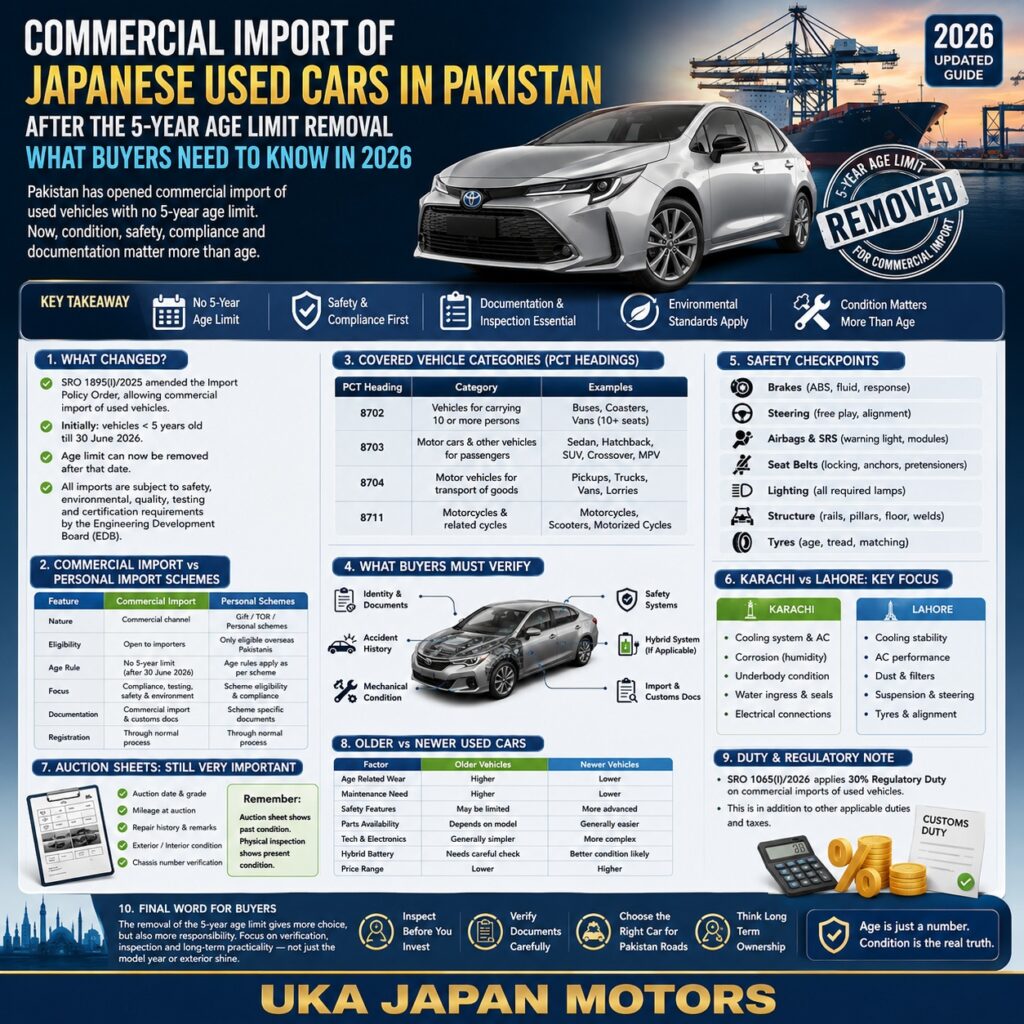
Pakistan’s roadworthiness requirements for imported used vehicles changed significantly in 2026. Japanese used cars intended for registration and daily use in Lahore or Karachi now face greater scrutiny before shipment, particularly in relation to accident history, mileage authenticity, emissions, engine condition, airbags, glass, exterior damage and general road safety. The most important clarification is that an ATJ roadworthiness inspection is not normally carried out after the car reaches Lahore or Karachi. It is a pre-shipment inspection performed before the vehicle...
Read More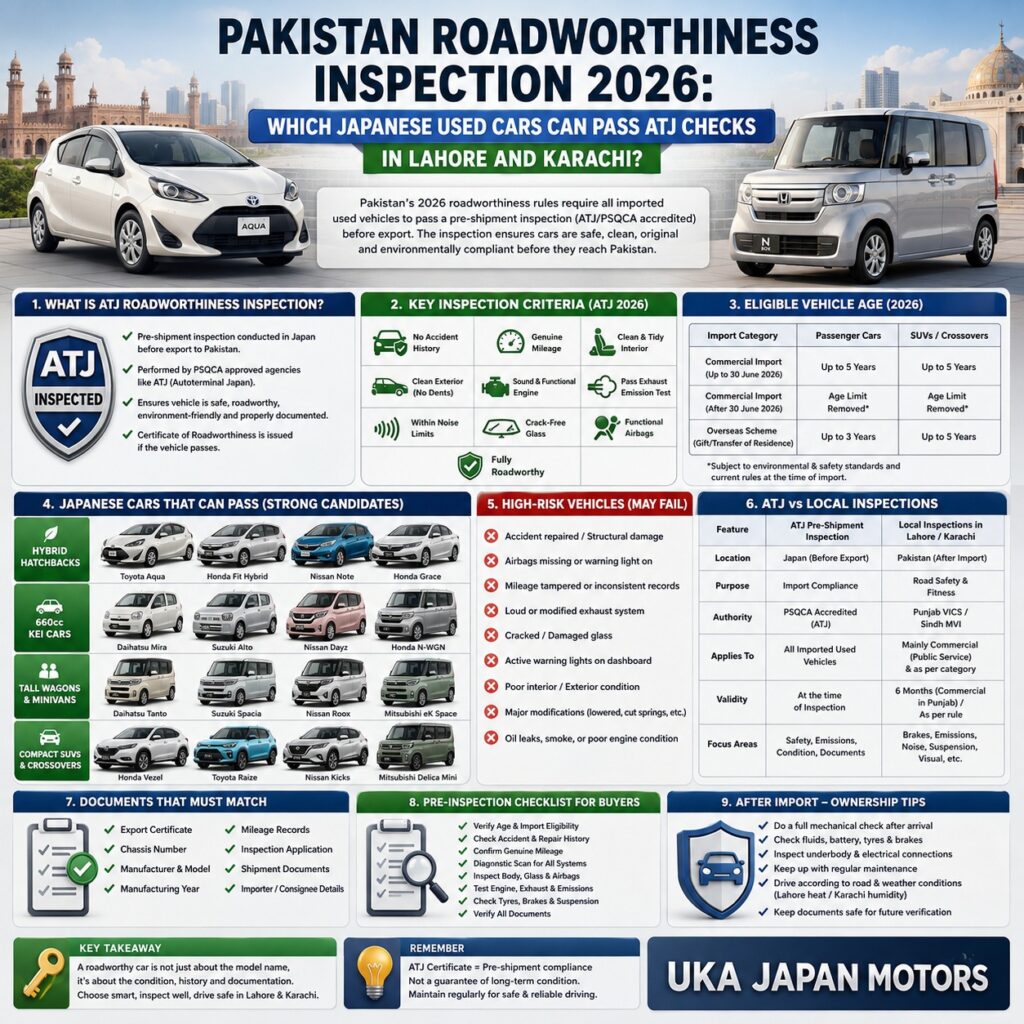
Pakistan’s Finance Act 2026 has created considerable discussion among buyers, importers and owners of Japanese used vehicles. Much of that discussion centres on one question: will the new import-duty structure lead to lower prices in Karachi and Lahore? The question is reasonable, but the answer requires more than comparing one duty percentage with another. The Finance Act 2026 established the wider federal fiscal framework, while the most relevant vehicle-import changes were implemented through Federal Board of Revenue notifications issued on...
Read More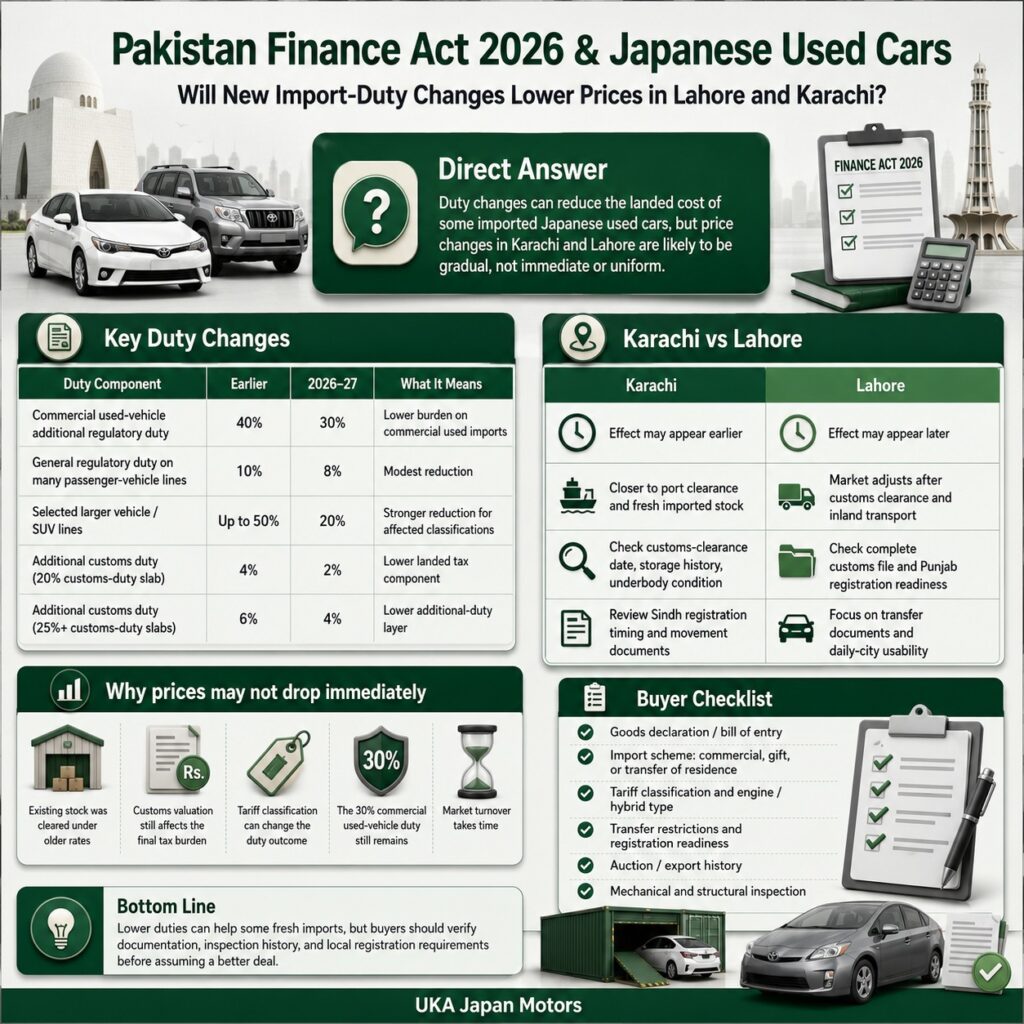
Japanese imported cars remain a major part of Pakistan’s urban vehicle landscape, especially in Karachi and Lahore. Over the last three years, reported and estimated figures suggest that Pakistan imported approximately 150,000 to 180,000 Japanese cars. The yearly movement is commonly described around these ranges: about 65,000 units in 2023, an estimated 50,000 to 60,000 units in 2024, and roughly 45,300 to 59,400 units in 2025. These figures are important, but they should be understood carefully. Publicly available reporting does...
Read More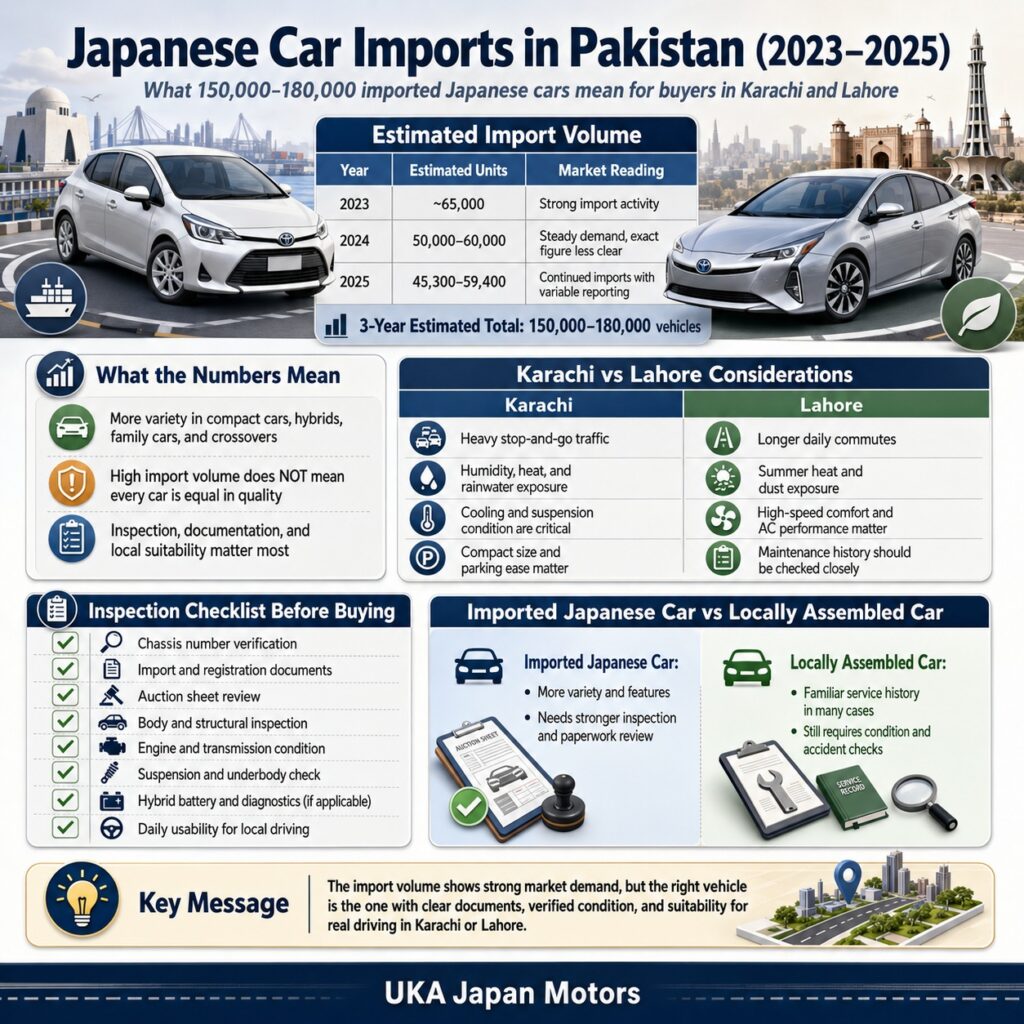
Japanese 660cc cars have become a familiar part of daily driving in Lahore and Karachi. Their small size, easy parking manners, light steering, compact cabins, automatic transmissions, and city-friendly driving behavior make them attractive for people who spend most of their time in traffic rather than on open roads. Models such as small hatchbacks, tall wagons, and compact family runabouts are commonly considered by office commuters, students, small households, and drivers who want a manageable vehicle for congested urban routes....
Read More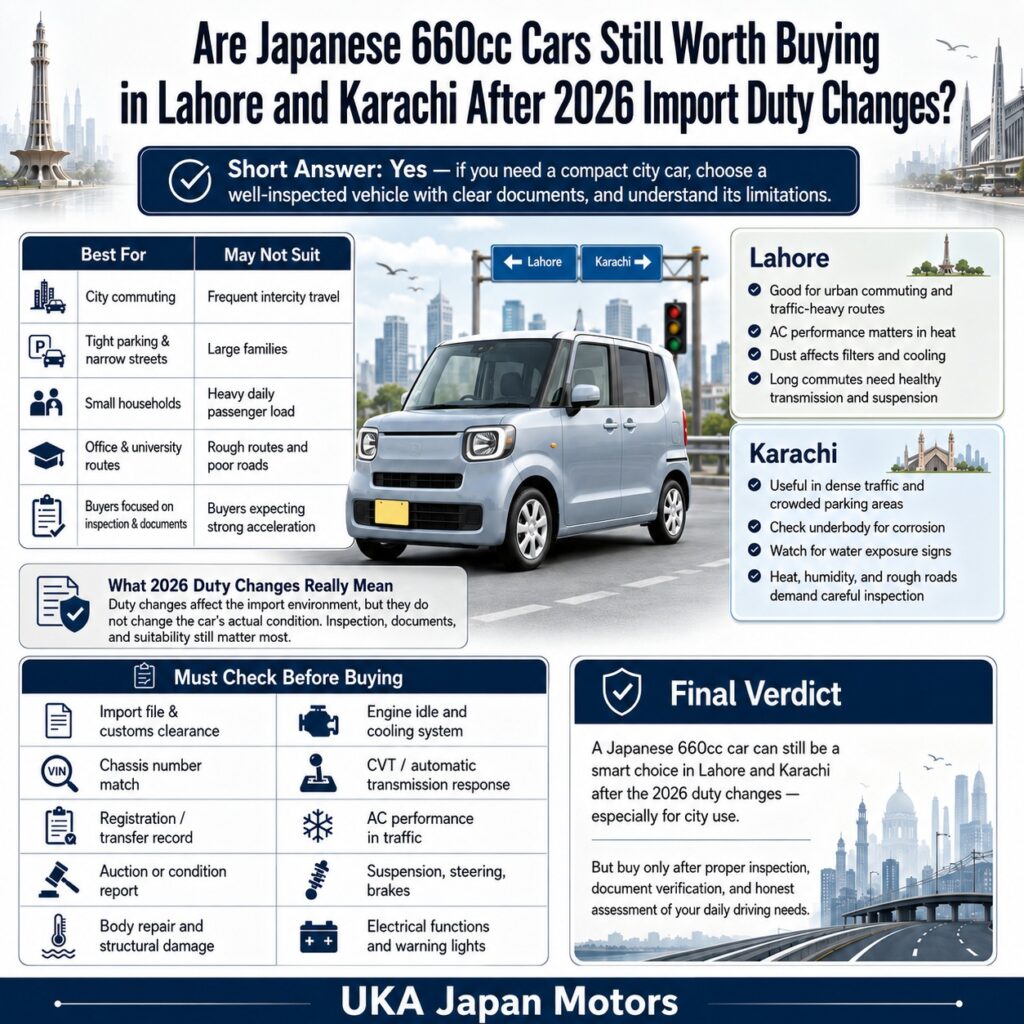
Choosing between the Nissan Note e-Power and Toyota Aqua is not simply a matter of choosing one Japanese hybrid hatchback over another. For buyers in Lahore and Karachi, the decision depends on how the car will behave in heavy traffic, how confidently it can handle long urban commutes, how its hybrid system responds to heat and stop-start driving, how easily it can be inspected before purchase, and how clearly its import and registration documents can be verified. Both cars attract...
Read More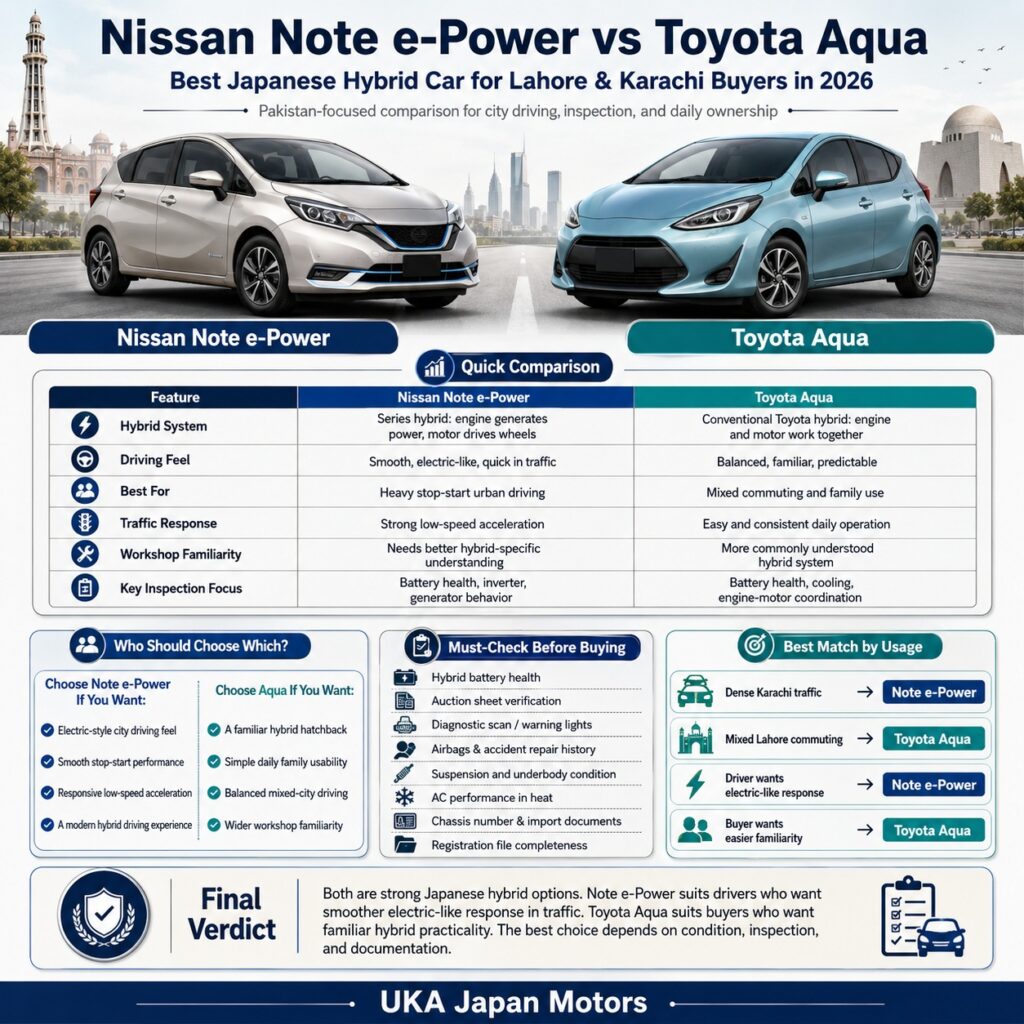
The Pakistani automotive market continues to show a strong preference for Japanese vehicles, particularly in the used car segment. Driven by reliability, fuel efficiency, and a robust aftermarket ecosystem, these cars dominate searches on platforms like PakWheels, reflecting real ownership priorities in Karachi and Lahore. This article delves into the most sought-after Japanese used cars in 2026, examining why buyers favor these models, the local conditions that influence their choices, and practical considerations for inspection and ownership. Direct Answer: Most...
Read More