Importing a used Japanese vehicle into Uganda involves more than selecting a vehicle, arranging shipment and completing registration. Before an imported vehicle can move through the customs process, Uganda Revenue Authority (URA) must establish the customs value that applies to it. This is an important distinction for buyers in Kampala because the customs value should not automatically be understood as whatever figure appears on a seller's invoice. URA's published guidance specifically explains that used motor vehicles are handled through a...
Read More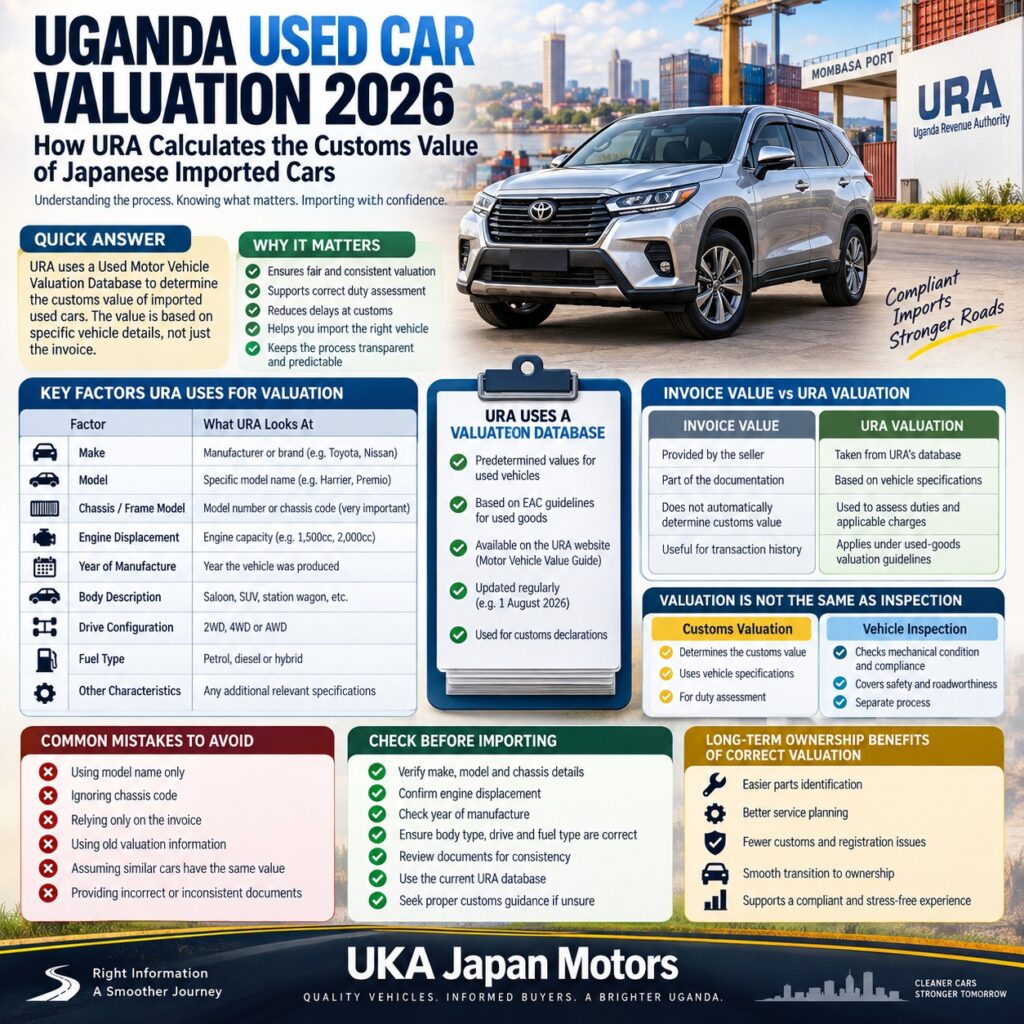
Uganda took an important step toward regulating vehicle fuel efficiency in 2026 through the Energy Efficiency and Conservation Act, 2026. For Kampala motorists considering Japanese used vehicles, the change is significant because Uganda now has a legal framework specifically addressing vehicle fuel economy, emissions information, efficiency standards and fuel-economy labelling. There is, however, an important distinction between the new legal framework and the rules that a buyer must satisfy immediately when importing a vehicle. As of 14 September 2026, the...
Read More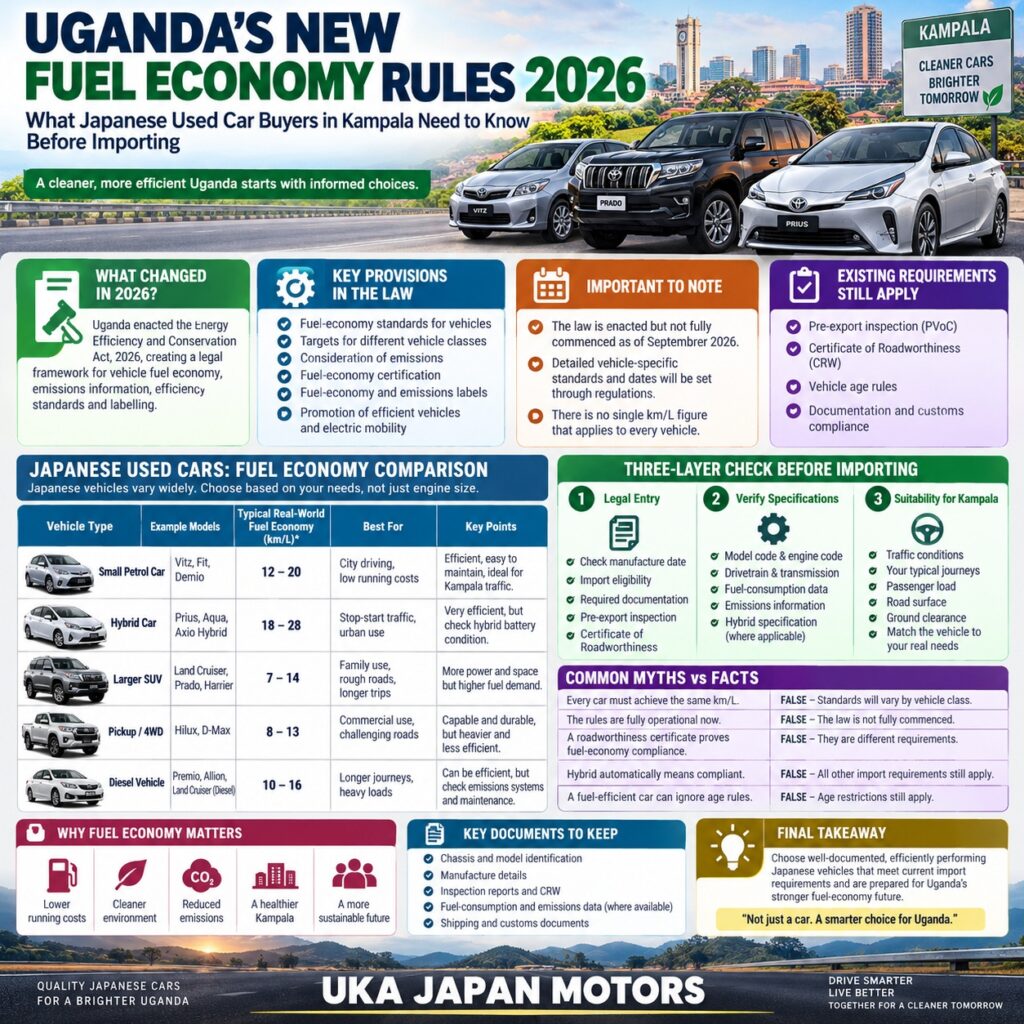
For Kampala buyers considering a Japanese used vehicle in 2026, the year of manufacture is more than a basic specification on the vehicle record. It can determine whether a passenger vehicle falls outside or inside Uganda's 50% environmental levy category. Current guidance published by the Uganda Revenue Authority (URA) shows a clear distinction for passenger and saloon vehicles: vehicles below nine years are shown without an environmental levy, while vehicles in the 9–15-year bracket attract a 50% environmental levy. Vehicles...
Read More
For Kampala buyers considering a used vehicle from Japan, the model, mileage and mechanical condition are only part of the decision. The vehicle must also fall within Uganda’s import rules at the time it is brought into the country. That makes the proposed reduction of Uganda’s maximum imported-vehicle age from 15 years to 13 years particularly important. Government measures discussed for the 2026/27 financial year have included reducing the allowable age of imported used vehicles from 15 years to 13...
Read More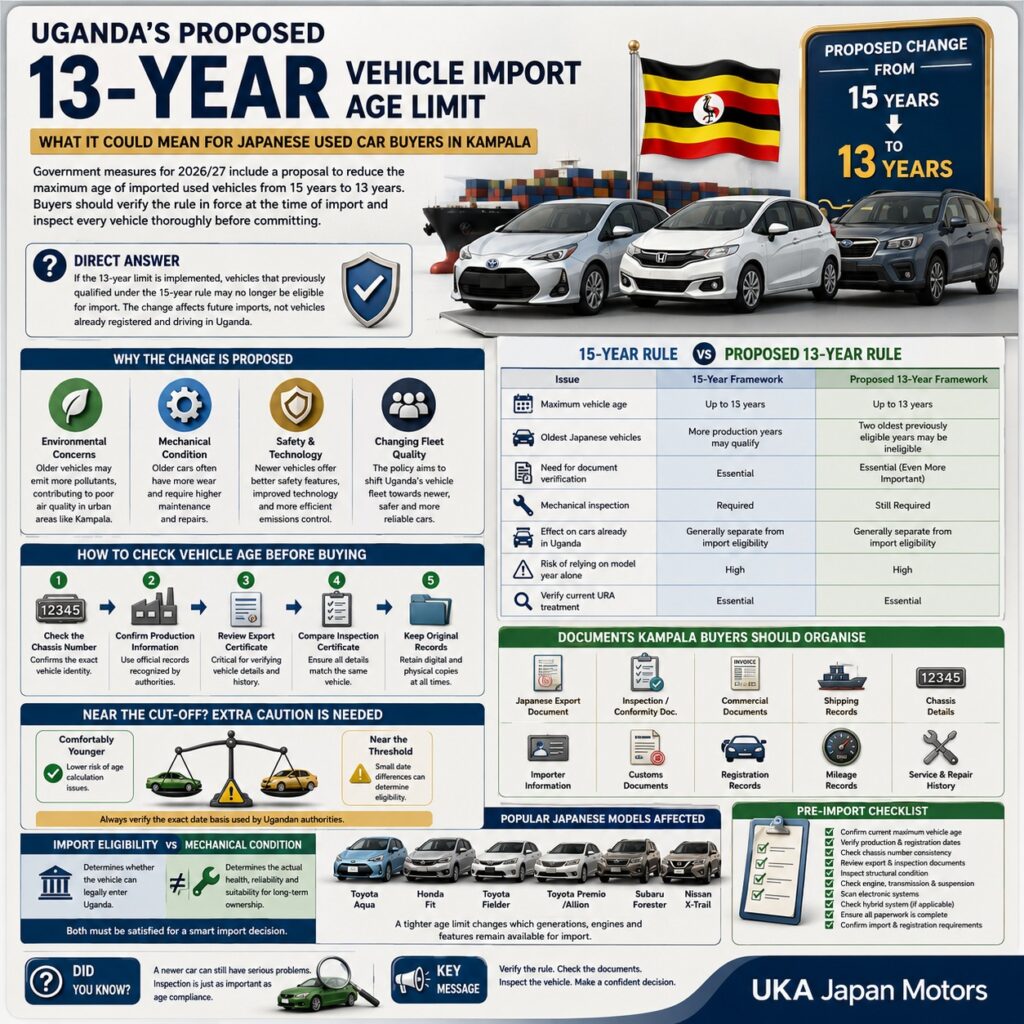
A used Japanese hybrid can suit Kampala driving remarkably well, particularly where daily journeys involve repeated stopping, slow-moving traffic and frequent changes between acceleration and braking. However, the condition of the high-voltage battery must be assessed carefully before the vehicle is shipped. The hybrid battery is not the same as the small 12-volt battery used to operate the vehicle’s computers, locks, lights and control systems. It is a larger high-voltage energy-storage unit that works with the petrol engine, electric motor,...
Read More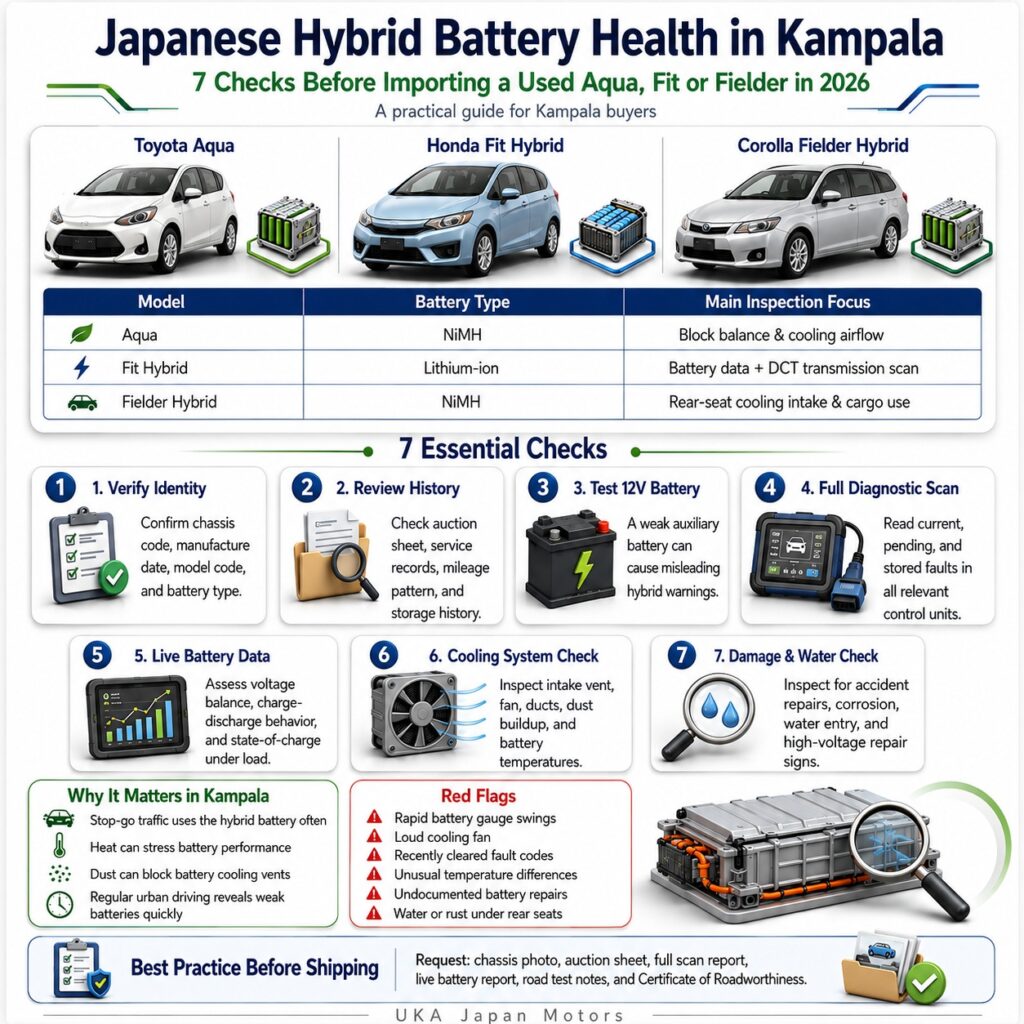
Importing a Japanese used vehicle into Uganda involves more than identifying a suitable model and placing a bid. Before committing to a vehicle, a Kampala buyer must understand how the Uganda Revenue Authority may classify it, determine its customs value and apply the relevant taxes and statutory charges. The URA Motor Vehicle Import Tax Calculator is designed to support this process. It allows an importer to enter important vehicle details—including vehicle type, customs value, engine capacity, seating capacity, gross weight,...
Read More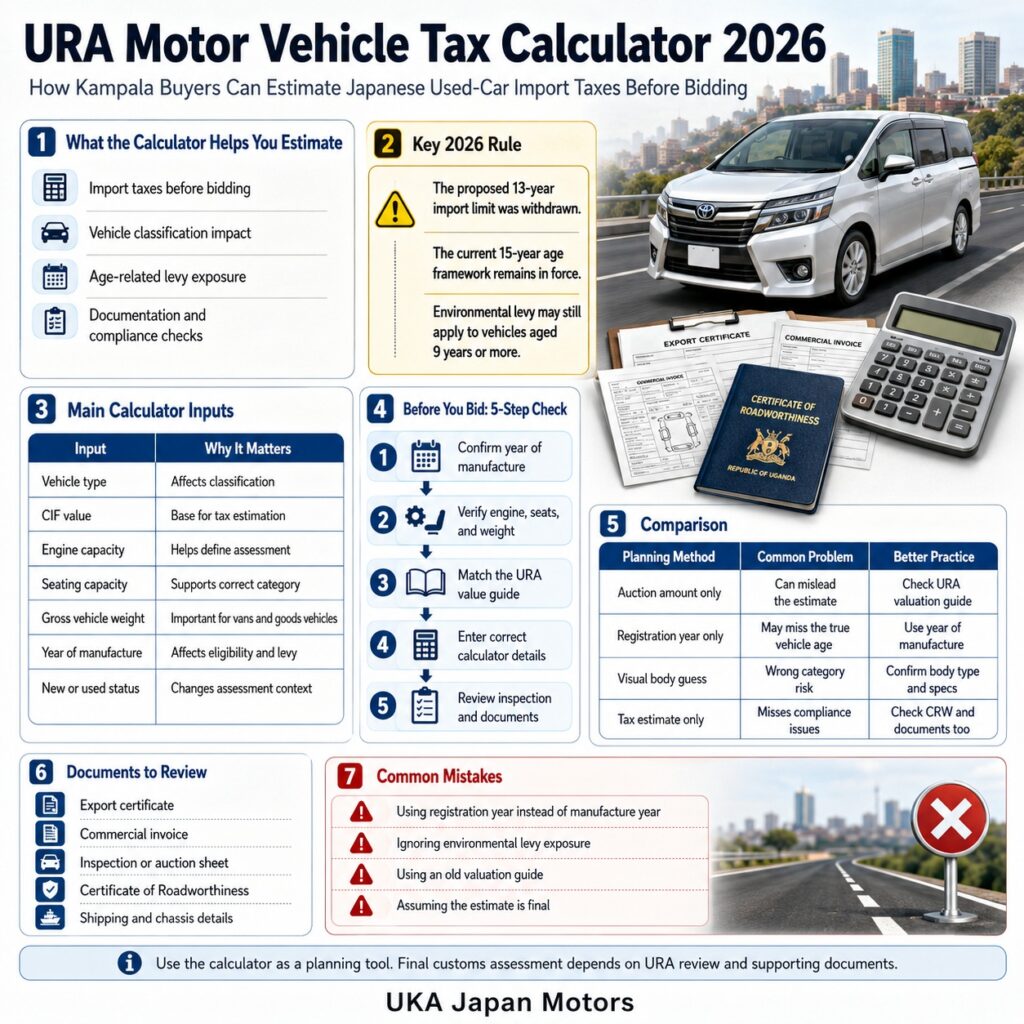
Japanese used vehicles have long been central to private transport in Uganda, but the pattern visible in 2026 is more than a continuation of familiar demand. Kampala buyers are becoming more selective about vehicle age, engine size, ground clearance, fuel consumption, passenger capacity, inspection history and long-term serviceability. Available export information indicates that Uganda received 2,723 Japanese used vehicles in January 2026, compared with 1,933 in January 2025, representing a reported year-on-year rise of about 40.8 percent. Earlier data also...
Read More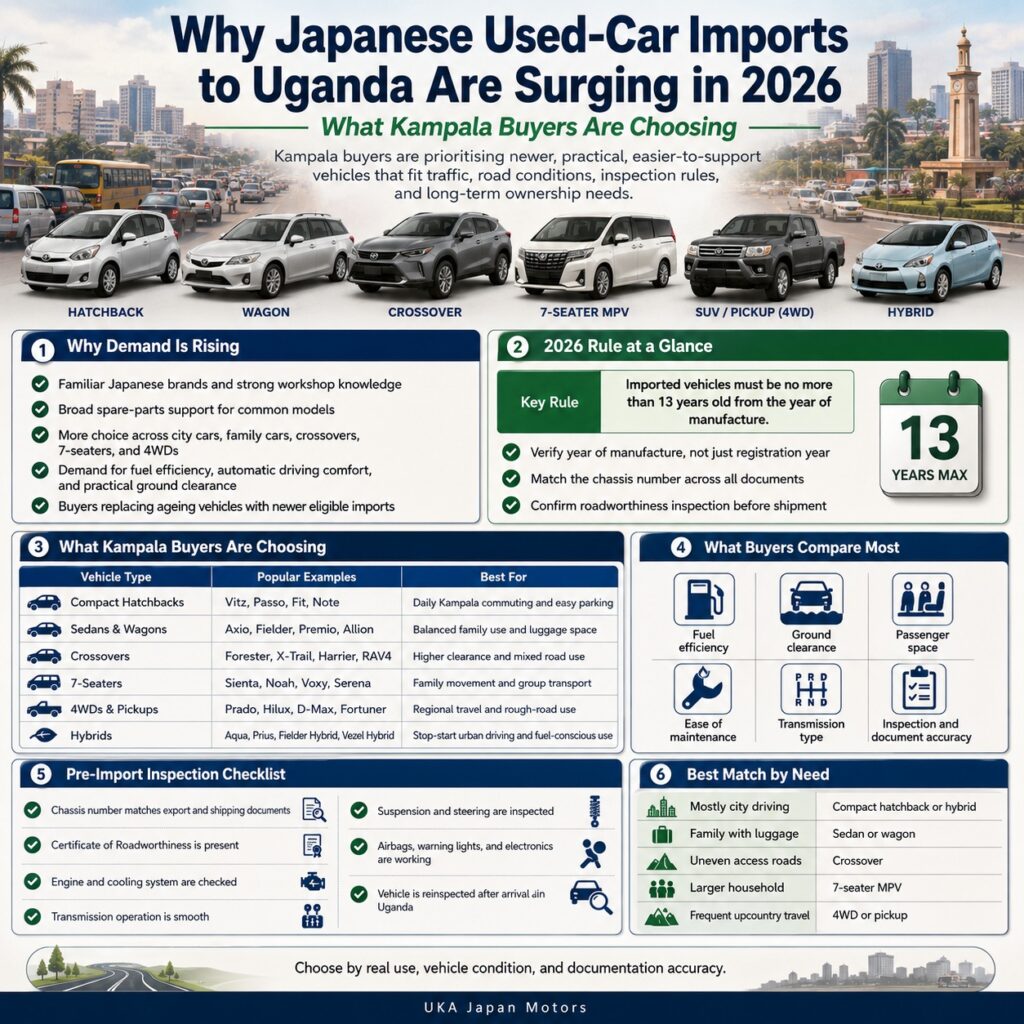
Buying a Japanese used car for Kampala in 2026 requires more than choosing a familiar badge or a good-looking body shape. The right vehicle must fit Uganda’s current age position, pass the required inspection process, make sense under URA assessment inputs, and remain practical for Kampala’s traffic, road surfaces, drainage conditions, heat, dust, and everyday ownership patterns. For many Kampala buyers, the best Japanese used car is not always the largest, newest-looking, or most powerful option. It is usually the...
Read More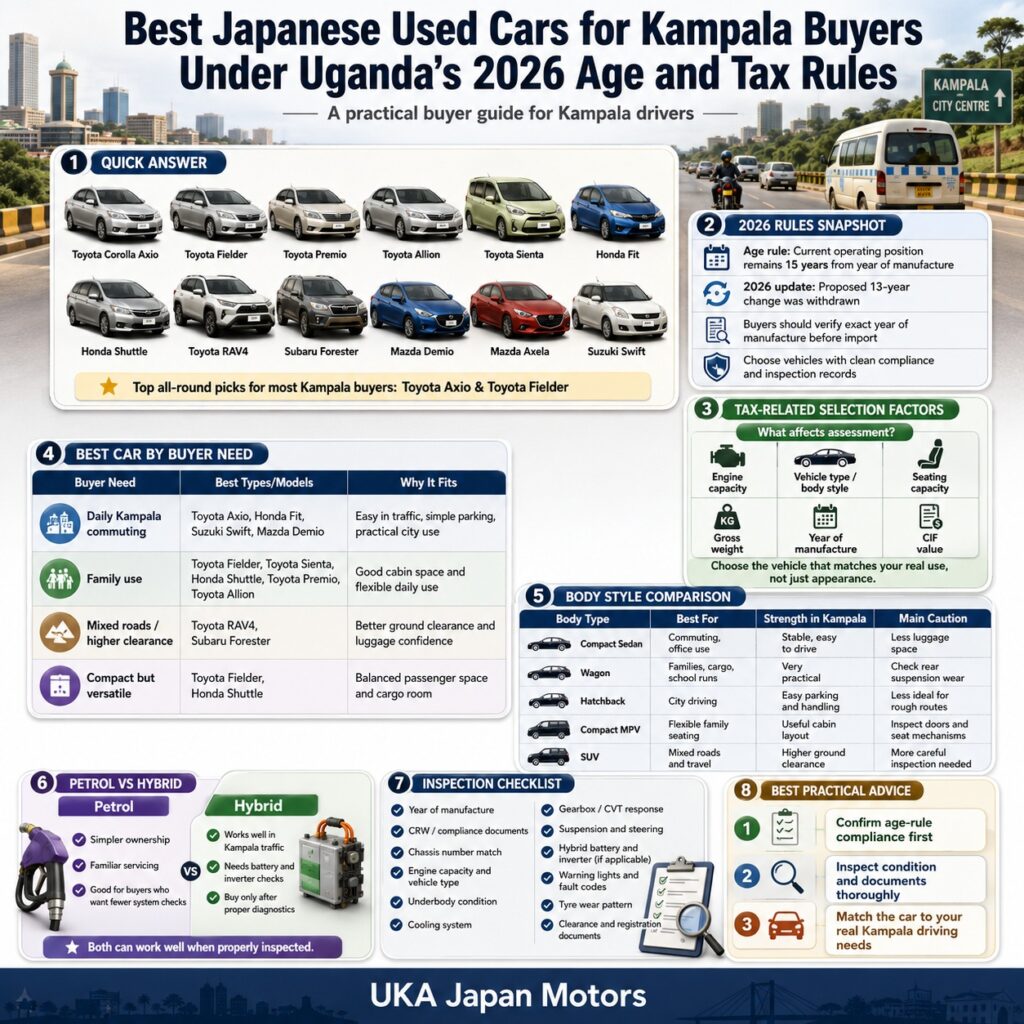
Fuel-saving Japanese cars are vehicles designed to use fuel carefully without making daily driving difficult. For Kampala buyers in 2026, this does not simply mean choosing the smallest engine available. A car must be able to move confidently through slow traffic, handle uneven roads, climb hilly sections, tolerate heat, and remain practical for normal family, work, and personal use. In Kampala, fuel use is shaped by real driving conditions. A vehicle may look efficient on paper but behave differently in...
Read More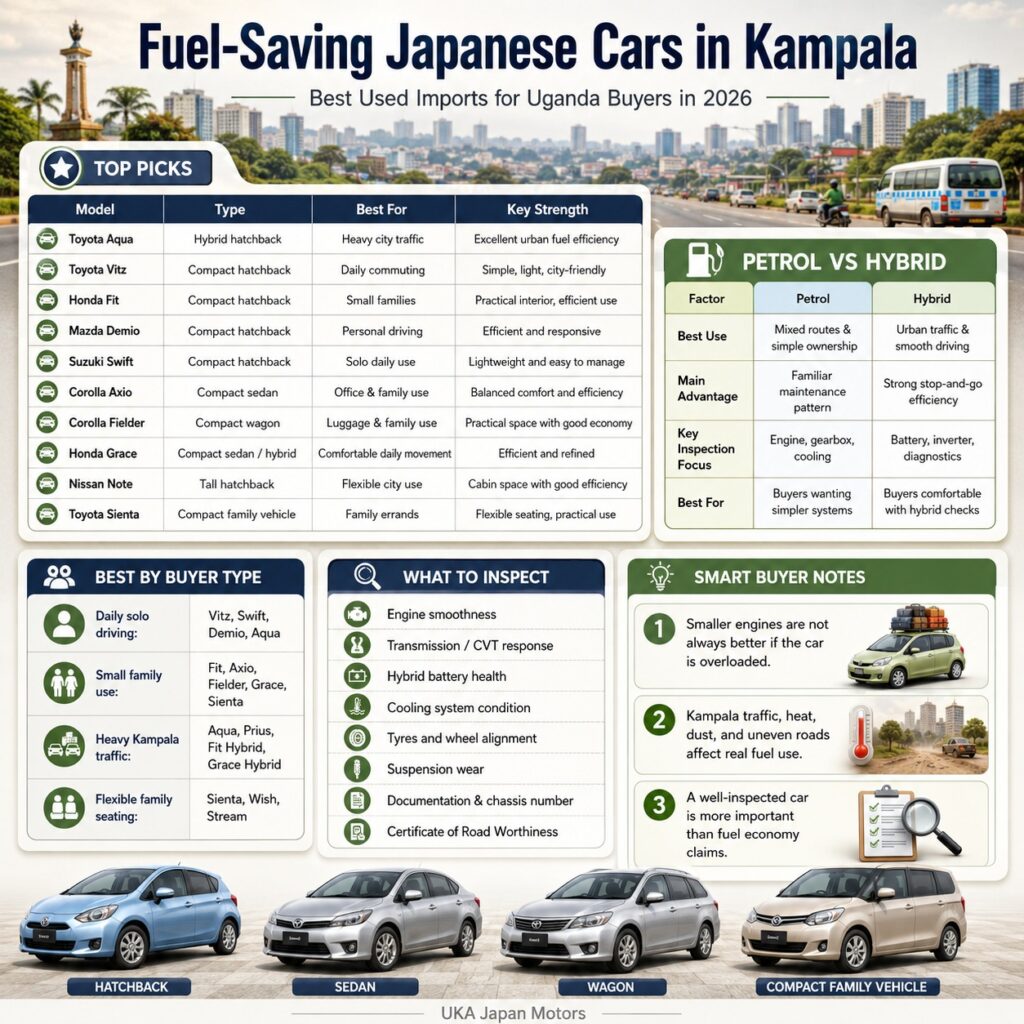
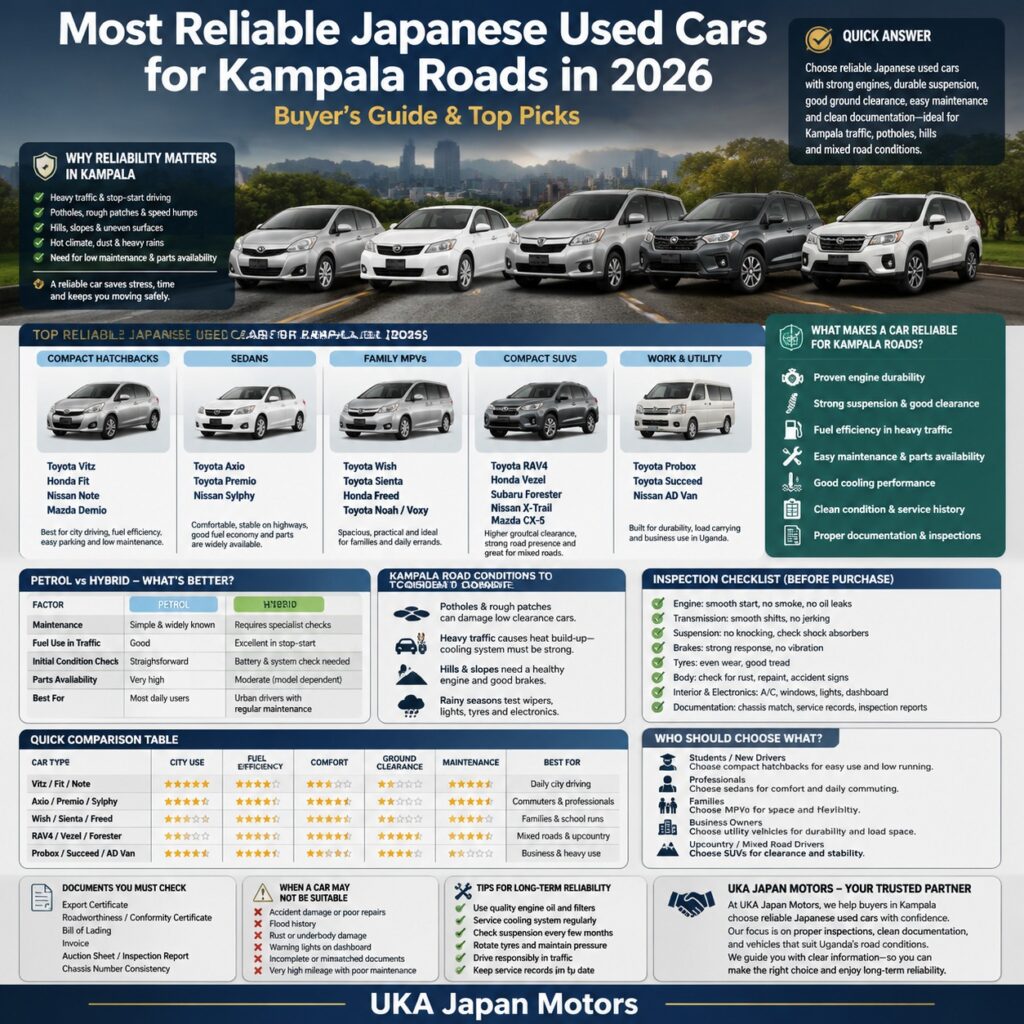
For Kampala drivers, choosing a reliable Japanese used car in 2026 is about more than the model year or brand reputation. Uganda’s road network, traffic congestion, climate, and import regulations demand vehicles that combine durable engineering, service accessibility, and proven performance in both city and mixed-road conditions. Reliability ensures minimal unexpected repairs, smoother daily commuting, and long-term ownership confidence. Japanese cars have earned a strong reputation among Ugandan buyers for engine longevity, robust transmissions, and widespread mechanical familiarity. However, reliability...
Read More