Buying a Japanese used car in Mae Sot requires more than checking how the engine sounds or whether the body looks clean. Vehicle condition matters, but legal identity, ownership records, registration details and transfer readiness are equally important. This is particularly relevant in Mae Sot because the town is both an everyday driving environment and an important border-area transport centre. Vehicles may be used for commuting within town, family travel, business operations, provincial-road journeys or regular movement around commercial and...
Read More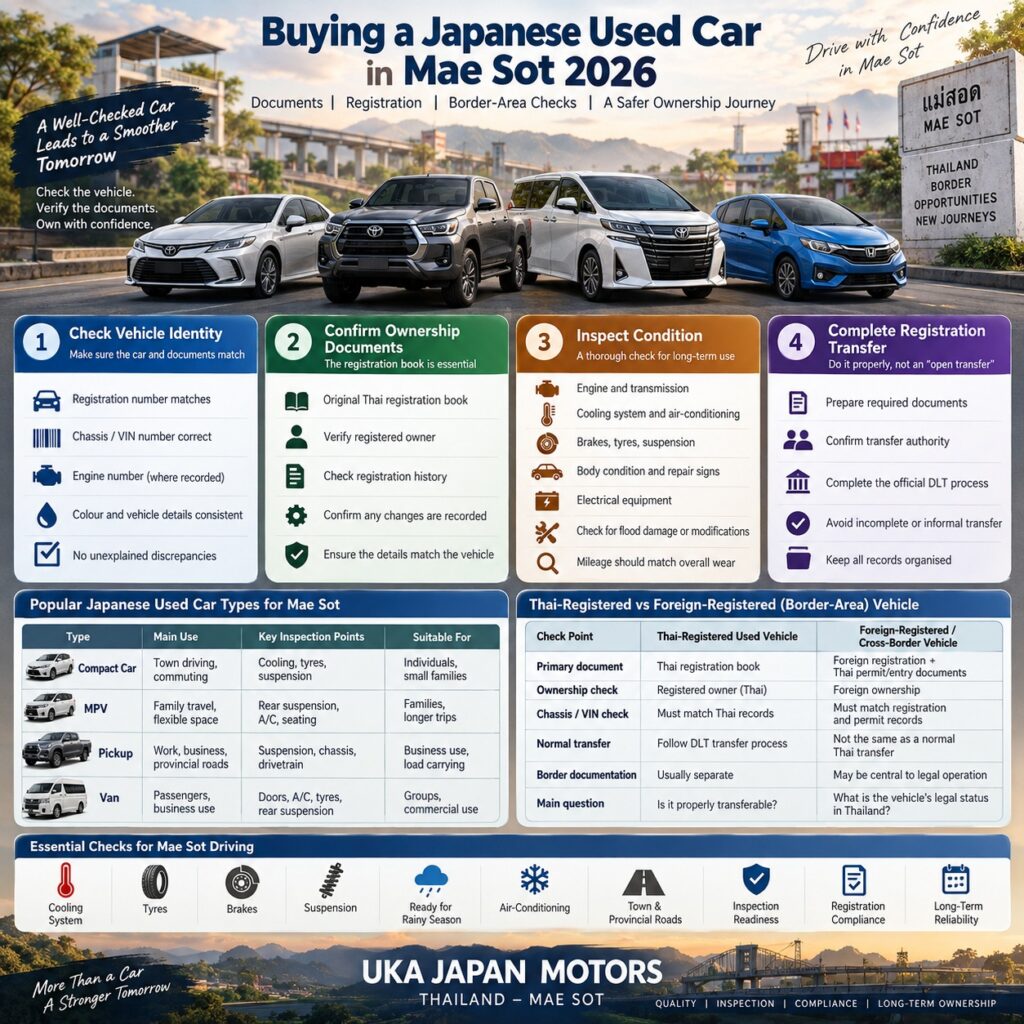
A four-wheel-drive pickup in Mae Sot is often more than a vehicle for occasional off-road driving. For many owners, it is a daily working tool that may have to handle town traffic in the morning, carry equipment or goods later in the day, travel on provincial roads in Tak, and continue operating through heavy rainy-season conditions. That makes choosing a used 4x4 pickup different from simply comparing engine output or exterior styling. The Toyota Hilux, Isuzu D-Max, Mitsubishi Triton and...
Read More
Mae Sot’s automotive environment has always been shaped by more than ordinary town driving. As a major commercial centre in Tak Province and a gateway facing Myawaddy across the Moei River, the district combines daily commuting, family transport, provincial-road travel, goods movement, workshop activity and border-related business. That combination makes pickups and vans particularly relevant. A Japanese pickup can move tools, equipment or goods during the working day while remaining practical for ordinary road use. A van can support passenger...
Read More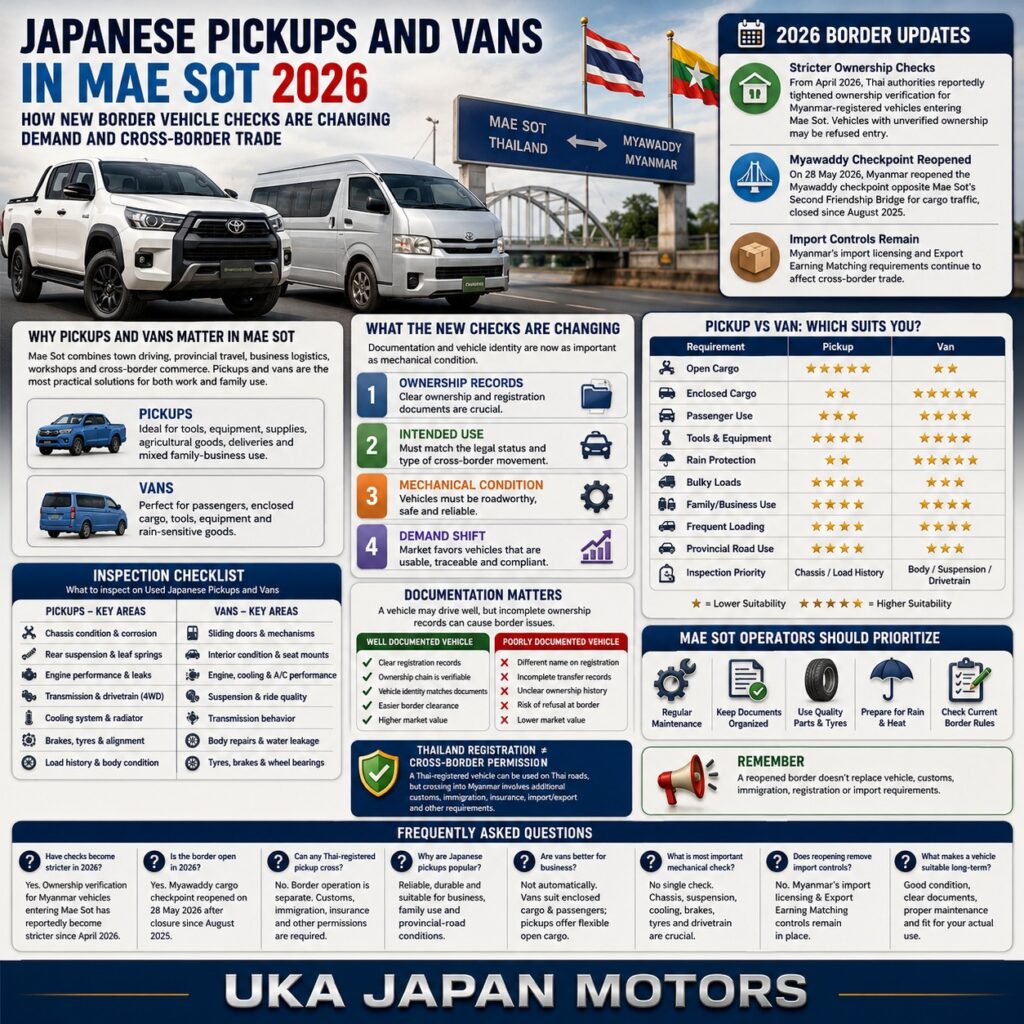
The Mae Sot–Myawaddy crossing is more than a geographic connection between Thailand and Myanmar. For Mae Sot, it forms part of a wider transport and commercial environment that influences logistics activity, vehicle use, workshops, parts demand, commercial transport and the way businesses think about road vehicles. When border movement changes, therefore, the automotive implications extend beyond the number of vehicles travelling toward the frontier. The 2026 reopening and normalization of activity around the Mae Sot–Myawaddy route brings renewed attention to...
Read More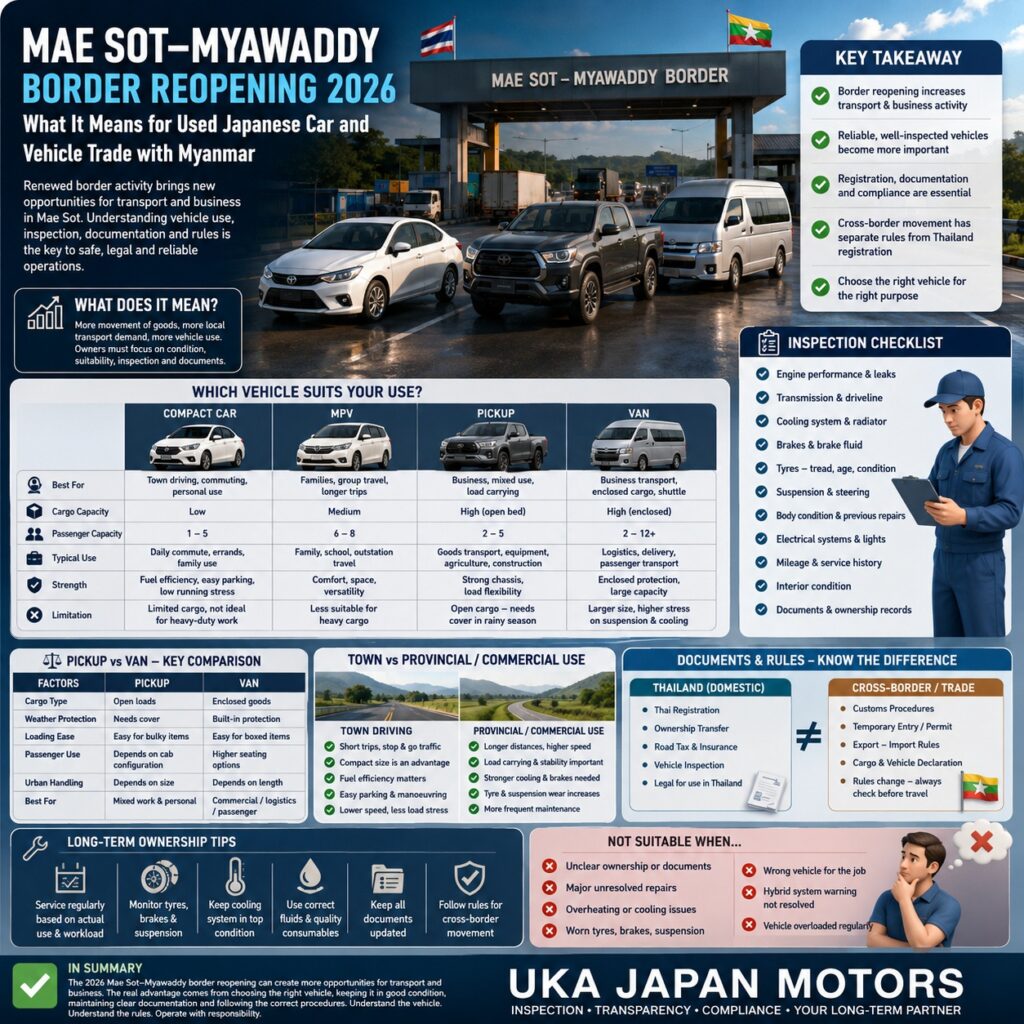
The reopening of the Mae Sot–Myawaddy cargo crossing in 2026 is an important development for businesses and vehicle-related operators in Mae Sot, Tak Province. However, its practical meaning is more specific than simply saying that the “border is open again.” Myanmar reopened the Myawaddy checkpoint opposite Thailand’s Second Thai–Myanmar Friendship Bridge in Mae Sot on 28 May 2026, after the Myanmar side had kept the cargo checkpoint closed since 18 August 2025. Thailand’s Department of International Trade Promotion subsequently confirmed...
Read More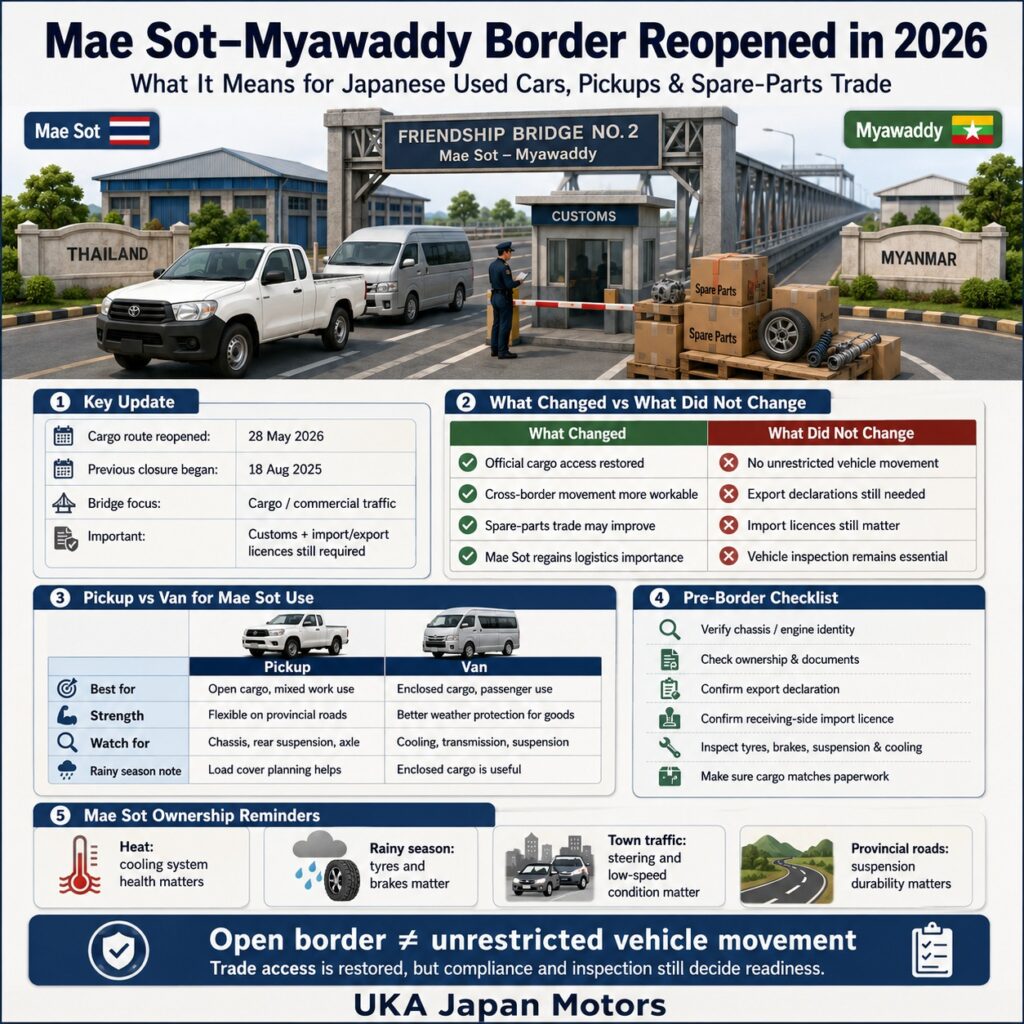
Thailand’s automotive transition entered a new stage in 2026 as the government began considering a large vehicle-replacement programme connected to electric mobility, road safety, industrial development, and reduced dependence on conventional fuels. For vehicle owners and buyers in Mae Sot, the announcement naturally raises questions. Will older diesel pickups be removed from the road? Will Japanese vans become harder to register? Could a used vehicle lose its practical usefulness? Will businesses be expected to replace working vehicles with electric models?...
Read More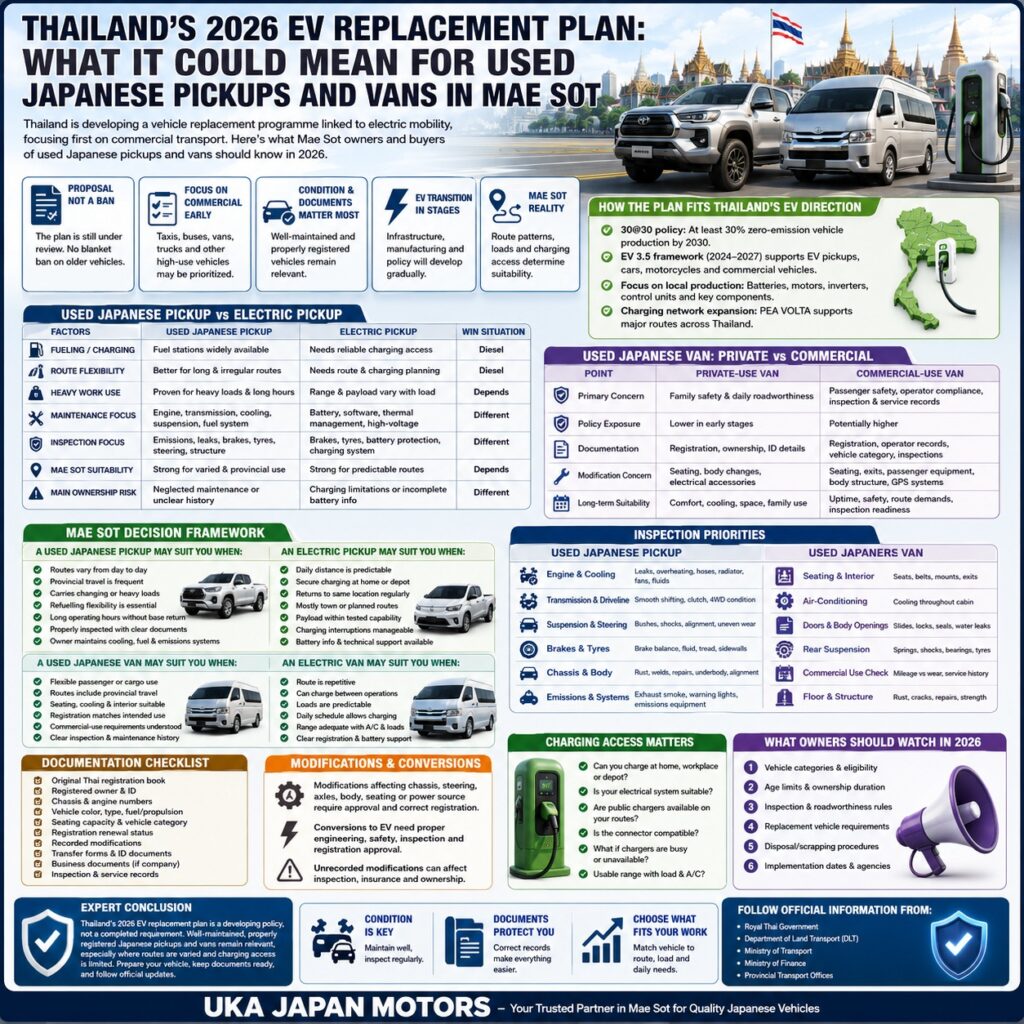
App-based passenger driving places different demands on a vehicle than ordinary private ownership. A car may be comfortable for occasional family use but become tiring, inefficient or maintenance-sensitive when driven through repeated short journeys, long periods of air-conditioning use and frequent passenger loading. For drivers based in Mae Sot, vehicle selection also involves an important local question: whether the intended app and vehicle category are actually active in the area. As of July 2026, Bolt’s official Thailand cities page lists...
Read More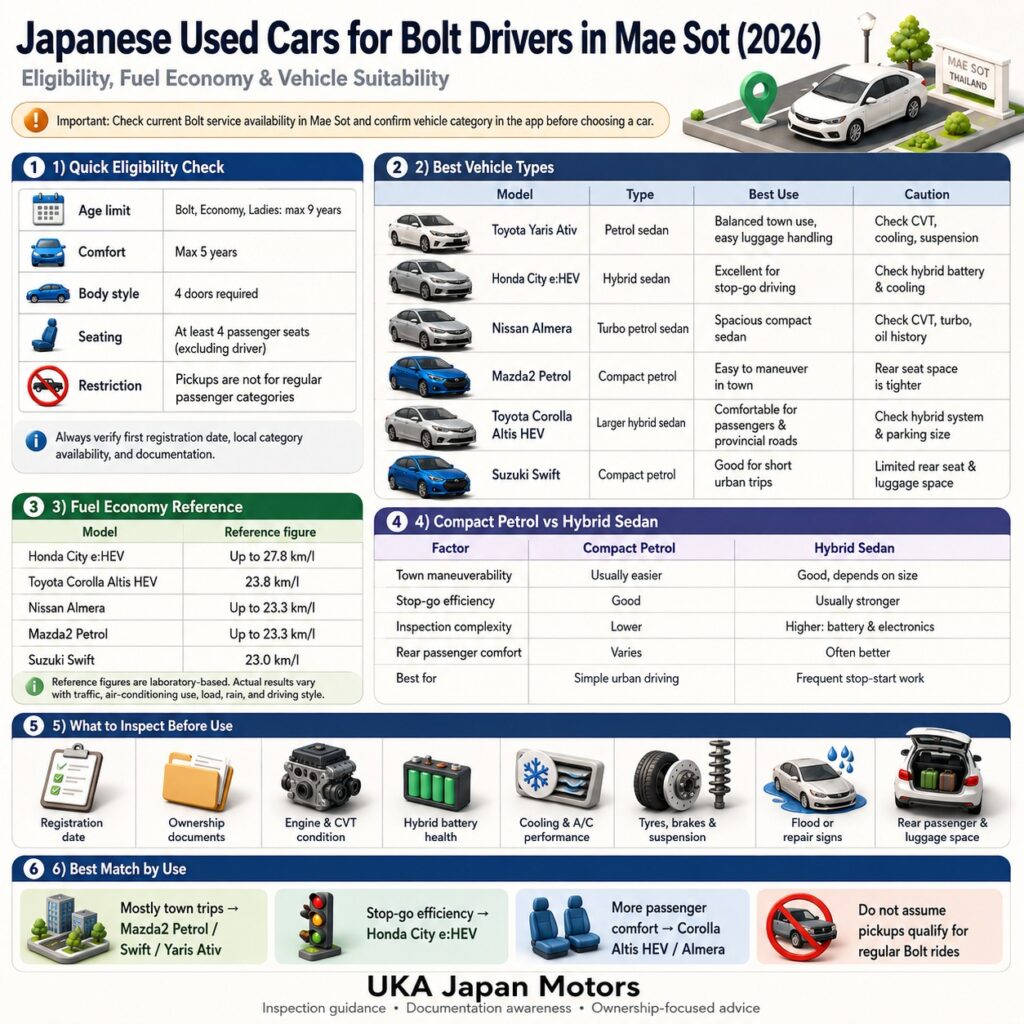
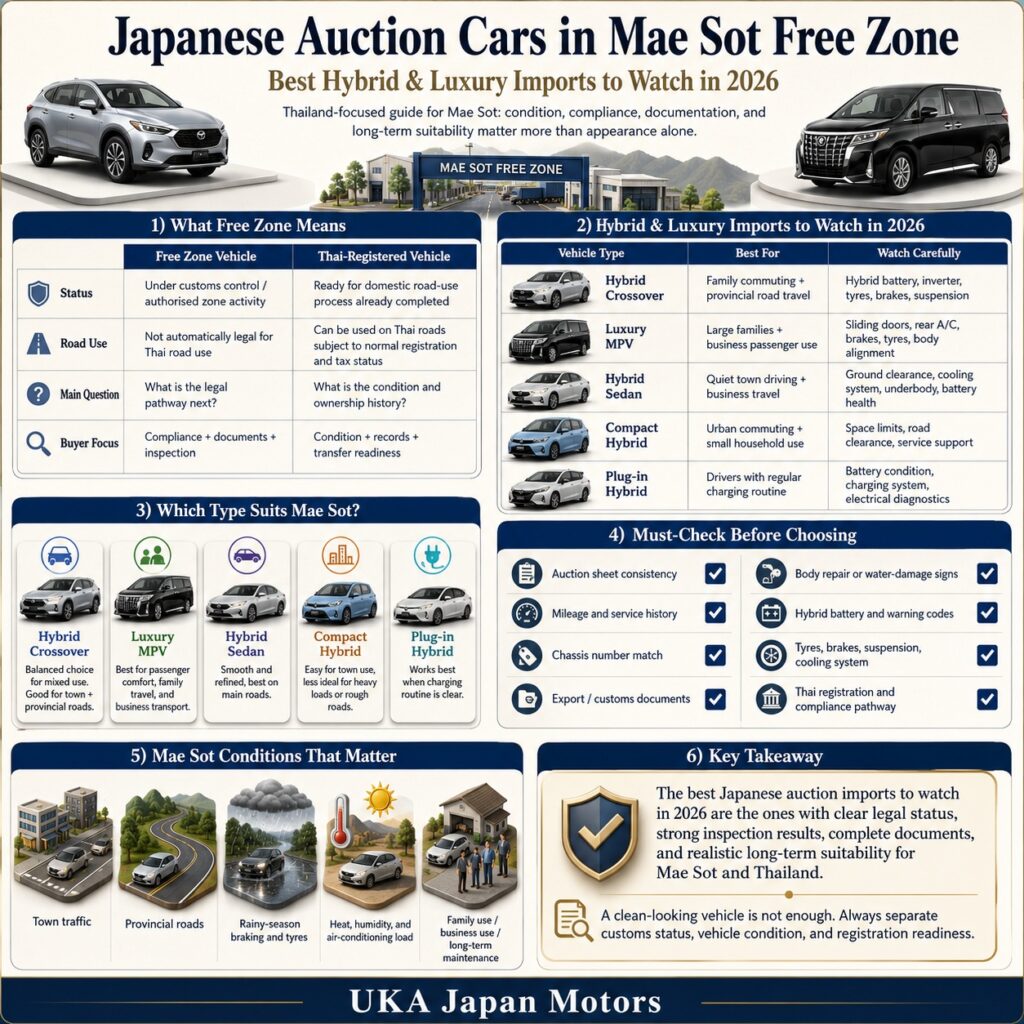
Japanese car auctions connected with Mae Sot Free Zone activity attract attention from buyers who are looking at trucks, vans, compact cars, MPVs, and hybrid vehicles for use in Thailand. For many buyers in Mae Sot, the appeal is practical rather than emotional. A vehicle may be intended for daily commuting, family transport, provincial road travel, small business movement, or mixed use between town roads and outer districts. But auction buying is different from viewing a fully registered vehicle already...
Read More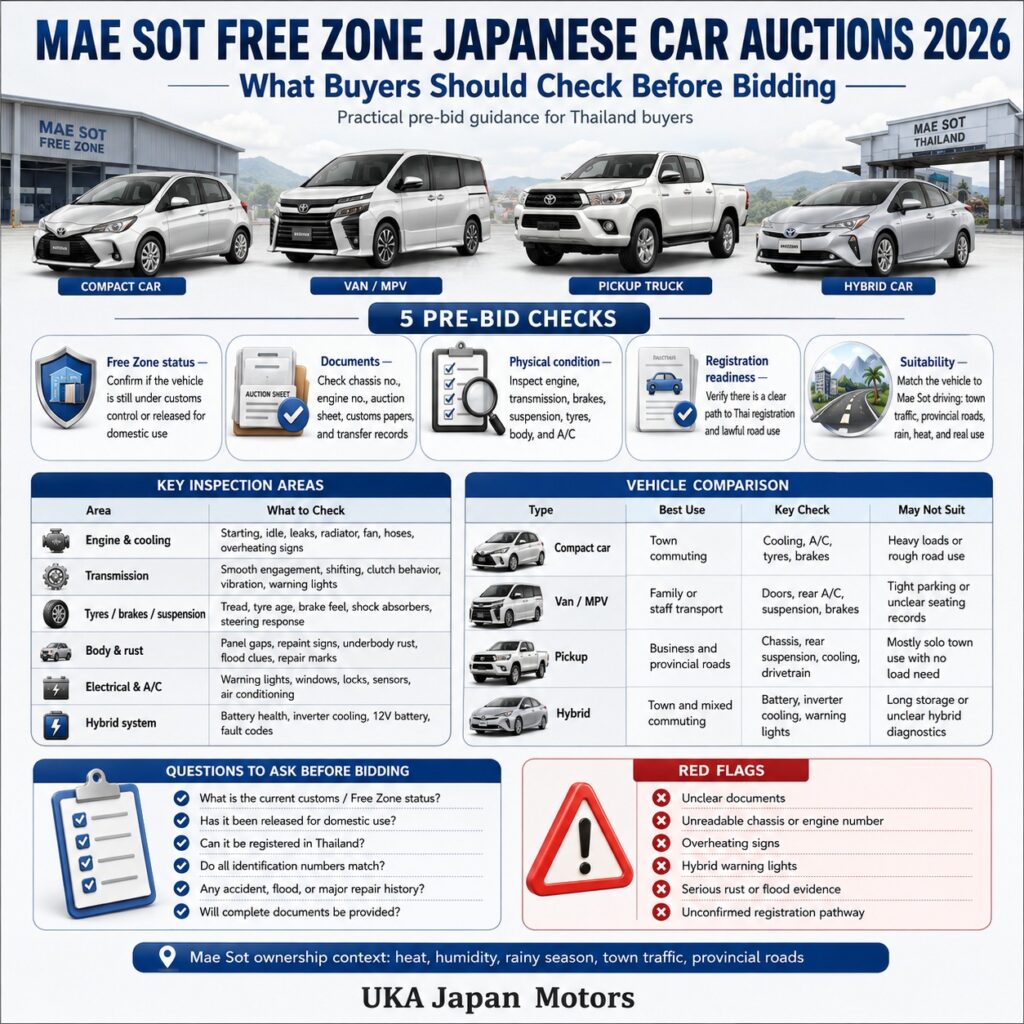
Mae Sot has a particular position in Thailand’s vehicle market conversation. It is not only a town where families, workers and business owners need reliable transport for daily life. It is also a border-linked commercial area where import, export, warehousing and vehicle movement are discussed more often than in many inland towns. In 2026, Mae Sot Free Zone car auctions continue to attract attention because they bring together several buyer interests at once: Japanese trucks for business use, vans for...
Read More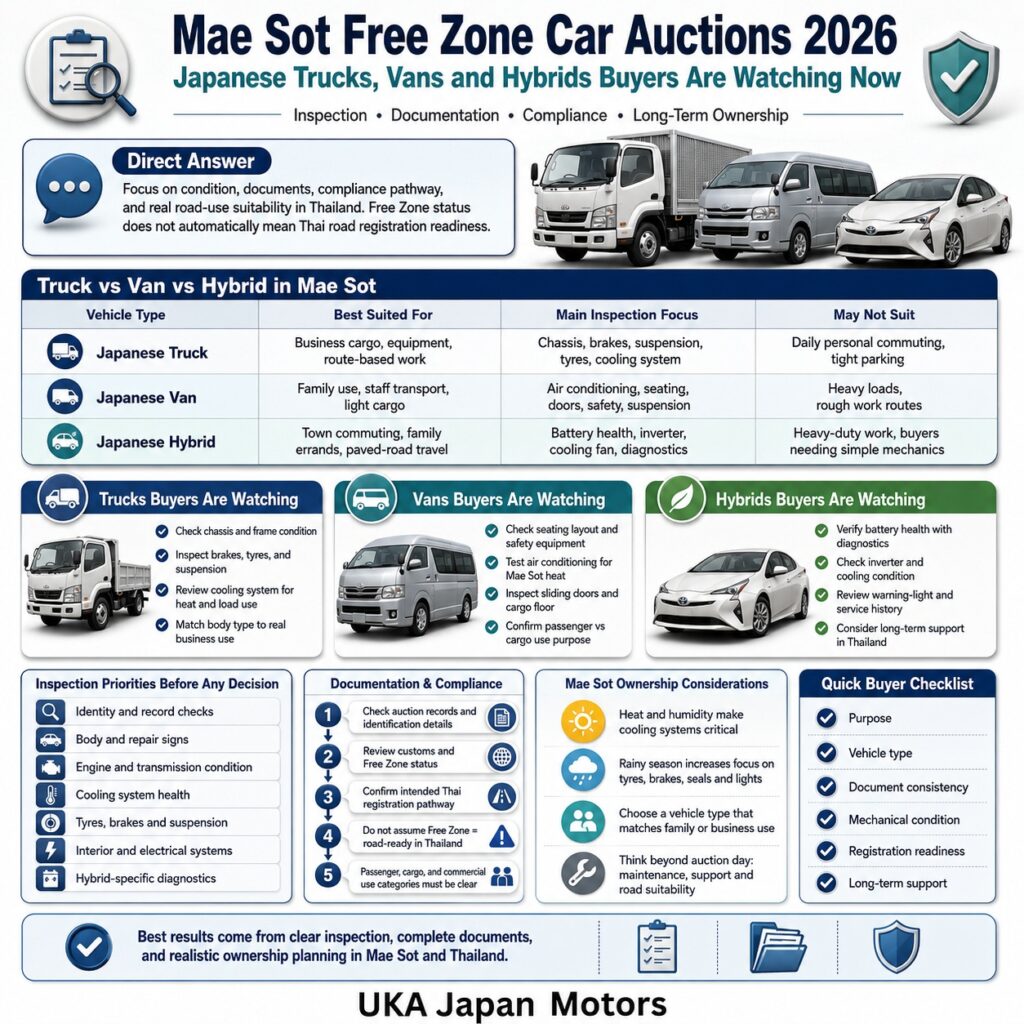
Japanese auction cars attract attention in Mae Sot because they often appear clean, well-documented, and technically interesting, especially in hybrid and luxury segments. For drivers, families, and business owners in Tak province, the idea of a Japanese auction vehicle can sound appealing: a hybrid MPV for family travel, a refined sedan for business use, a quiet crossover for daily commuting, or a luxury model with comfort features suited to long provincial journeys. However, Japanese auction cars in the Mae Sot...
Read More