For anyone importing a Japanese used car into Tanzania in 2026, vehicle age is no longer a specification that should be checked after choosing the model. It needs to be considered near the beginning of the import process. The reason is the revised age-based excise-duty structure introduced under Tanzania's Finance Act, 2026. The law came into operation on 1 July 2026 and established different excise-duty bands for imported vehicles according to age. Vehicles aged eight years but not more than...
Read More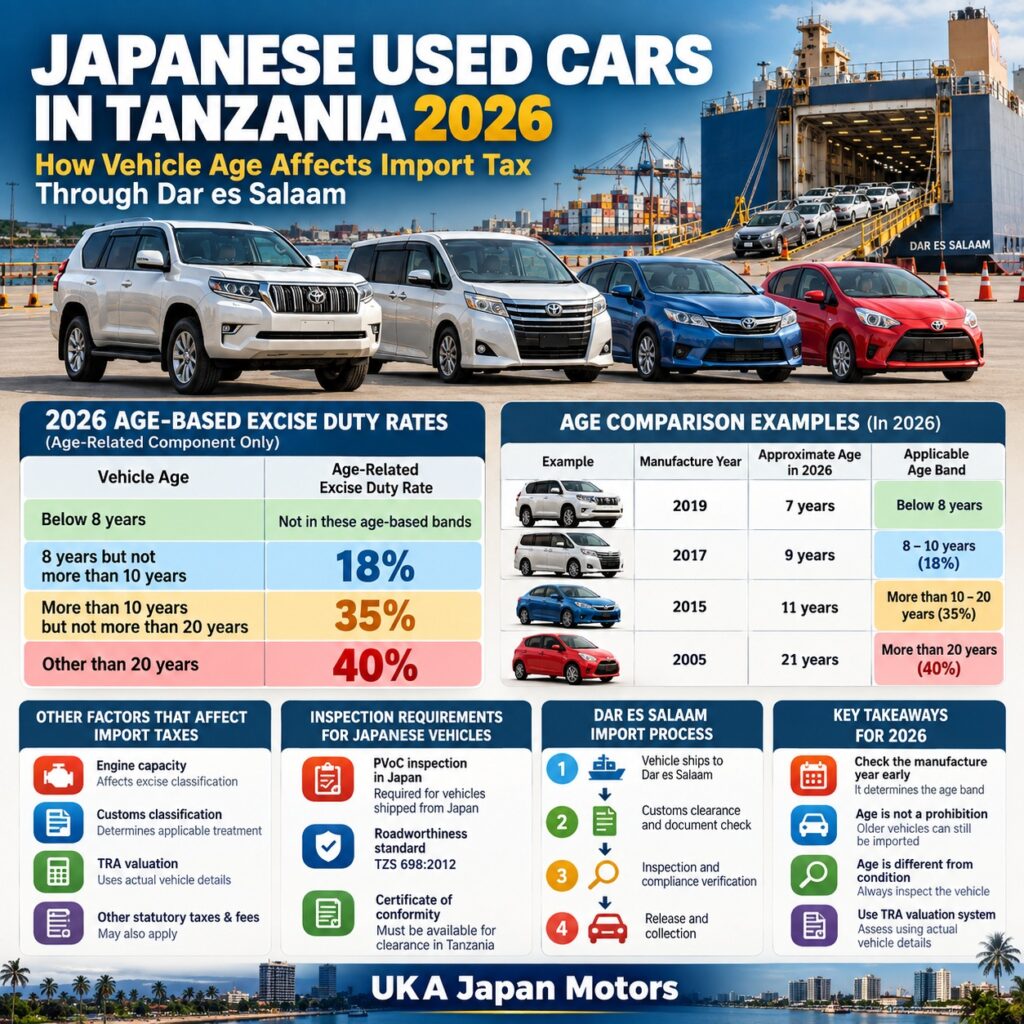
Japanese used cars have been familiar on Tanzanian roads for years, but in 2026 the relationship between the Japanese used-vehicle supply chain and Tanzania has become especially important. The reasons go beyond the popularity of a few Toyota models. Dar es Salaam buyers are increasingly making vehicle decisions around a combination of manufacture year, engine capacity, fuel consumption, ground clearance, mechanical simplicity, availability of familiar parts, inspection history and suitability for Tanzanian driving conditions. At the same time, Tanzania's 2026...
Read More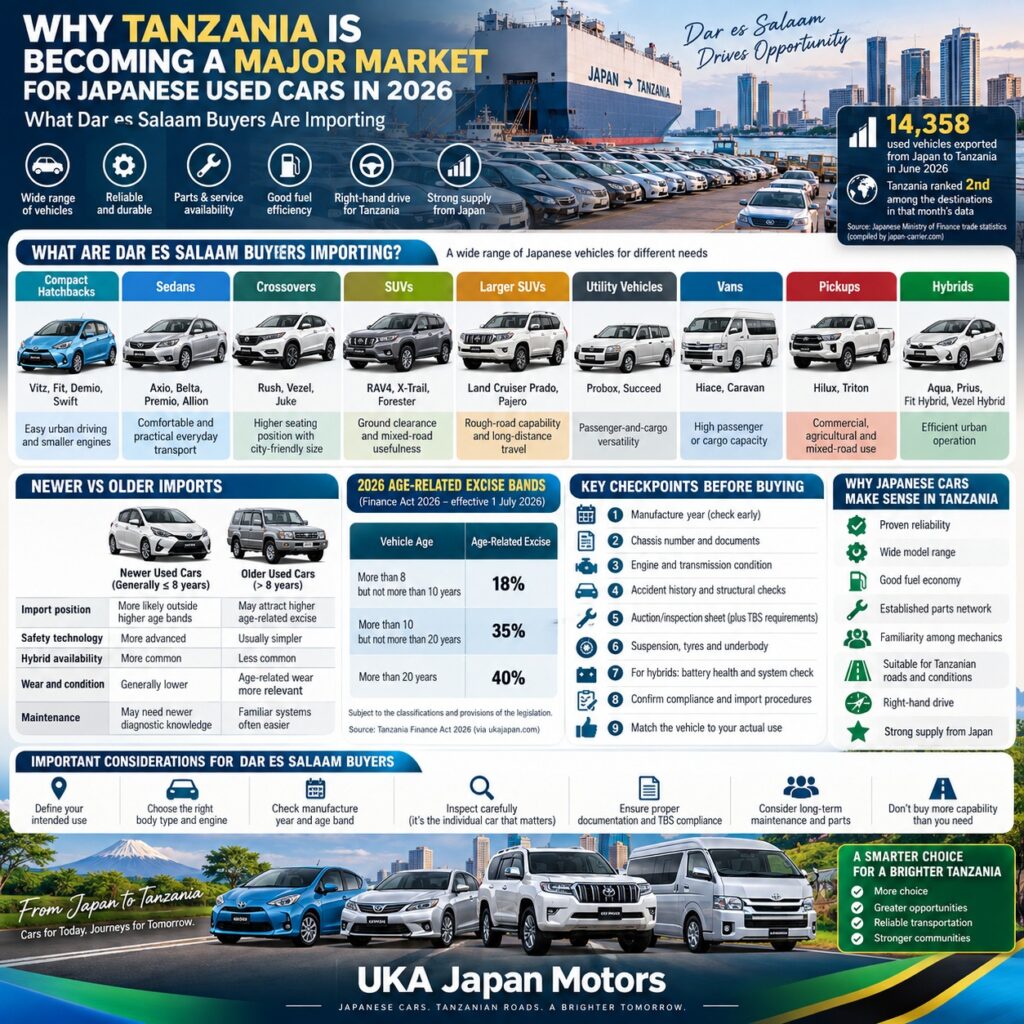
Vehicle age has become a more important consideration for Tanzanians choosing a Japanese used car in 2026. A buyer may traditionally have focused first on engine size, mileage, body condition, ground clearance, fuel consumption, spare-parts availability, and the reputation of a particular model. Those factors remain important. However, Tanzania's 2026 changes to the excise-duty treatment of imported older vehicles make the age of the vehicle an additional factor that should be checked before an import decision is made. The Finance...
Read More
Age has always mattered when choosing a Japanese used vehicle in Tanzania, but in 2026 it deserves considerably more attention. A buyer comparing two Toyota RAV4s, Nissan X-Trails, Toyota Harriers, Honda CR-Vs or similar Japanese vehicles may initially focus on mileage, engine size, equipment, exterior condition and service history. Yet if one vehicle is within the eight-to-ten-year age bracket and another has passed ten years, the difference goes beyond ordinary mechanical ageing. Tanzania's Finance Act, 2026 changed the age-related excise-duty...
Read More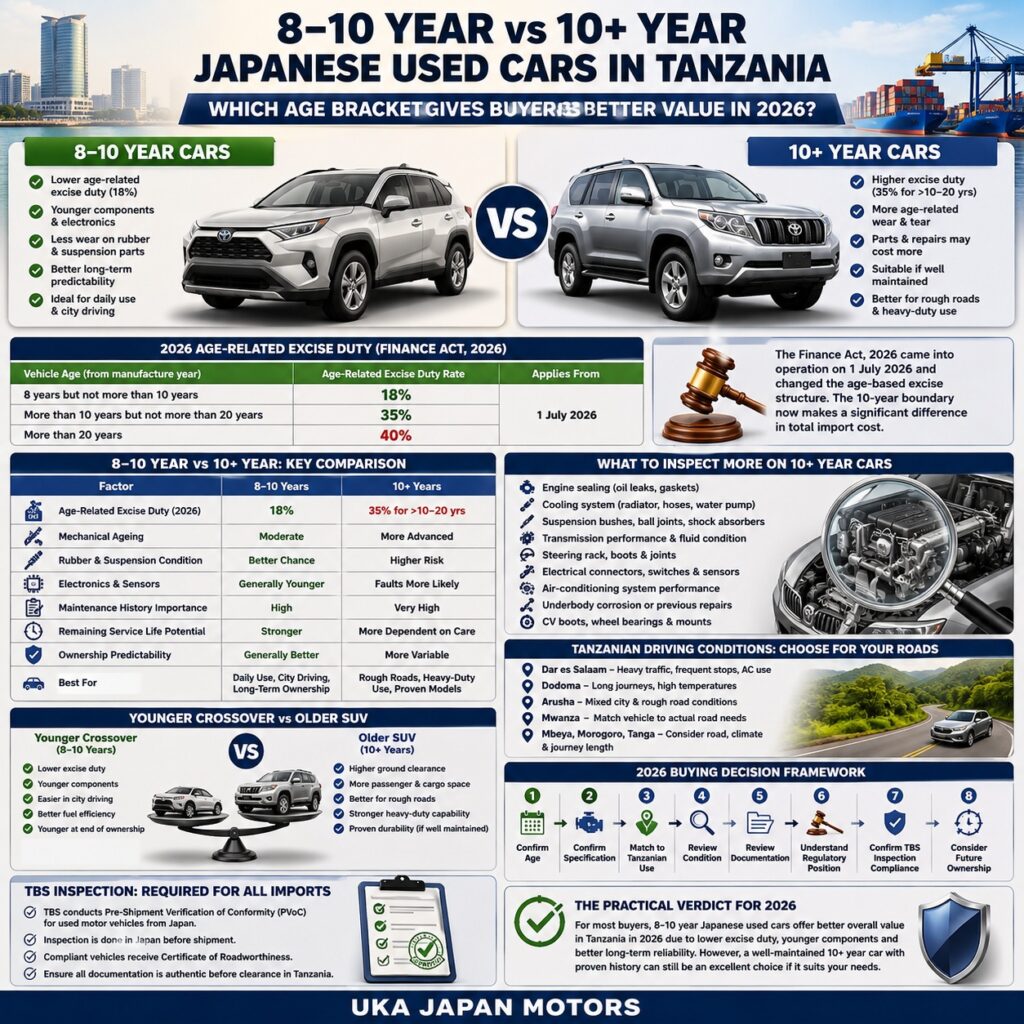
For a buyer importing a Japanese used vehicle into Dar es Salaam in 2026, the production year is no longer a detail to check near the end of the selection process. It should be one of the first specifications examined. Two vehicles can belong to the same model family, have similar equipment and appear equally suitable for daily driving, yet fall into very different import positions because they were manufactured a few years apart. Tanzania's 2026 tax framework makes this...
Read More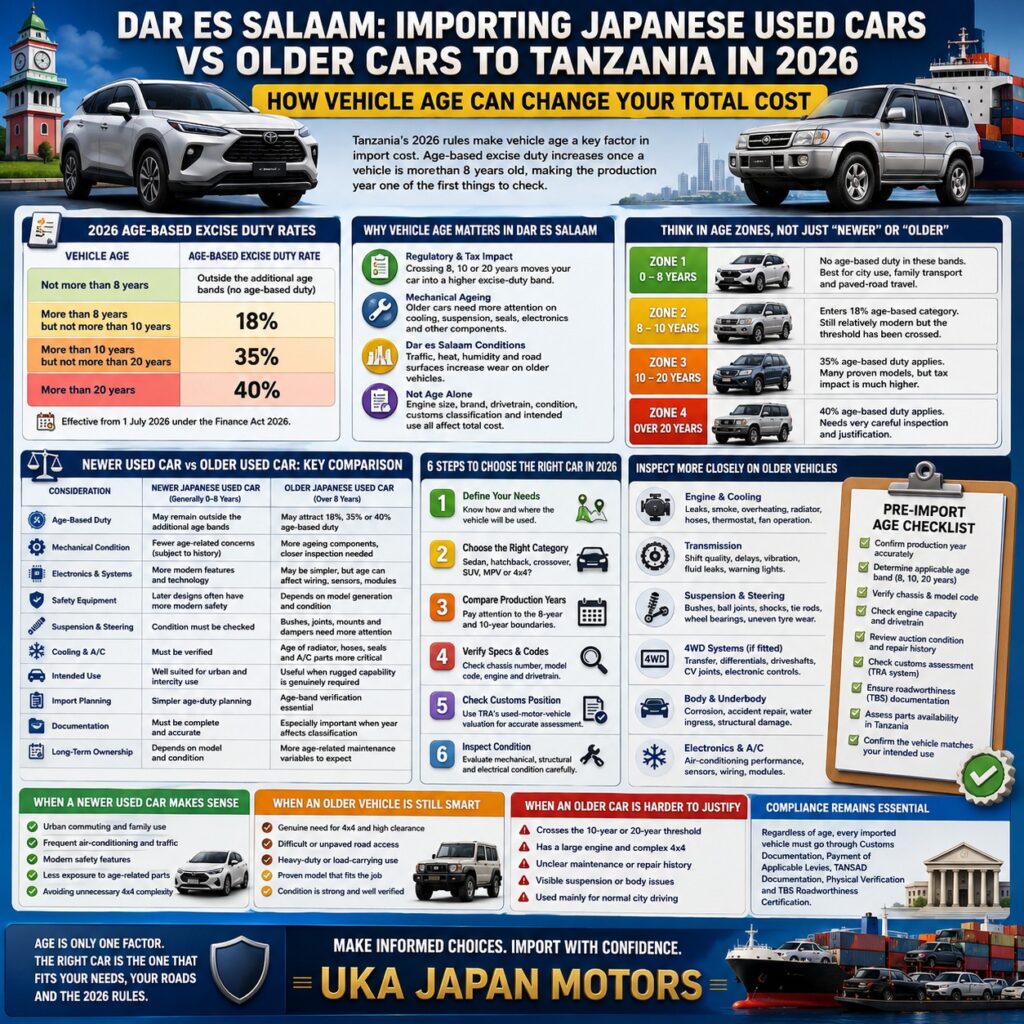
For buyers importing Japanese used vehicles into Dar es Salaam, the year of manufacture has become even more important under Tanzania’s Finance Act, 2026. The Finance Act, 2026—Act No. 2 of 2026—came into operation on 1 July 2026. Among its amendments to the Excise (Management and Tariff) Act is a revised age-based excise structure for imported used vehicles. Vehicles aged eight years but not more than ten years are now subject to an 18% age-related excise duty, vehicles aged more...
Read More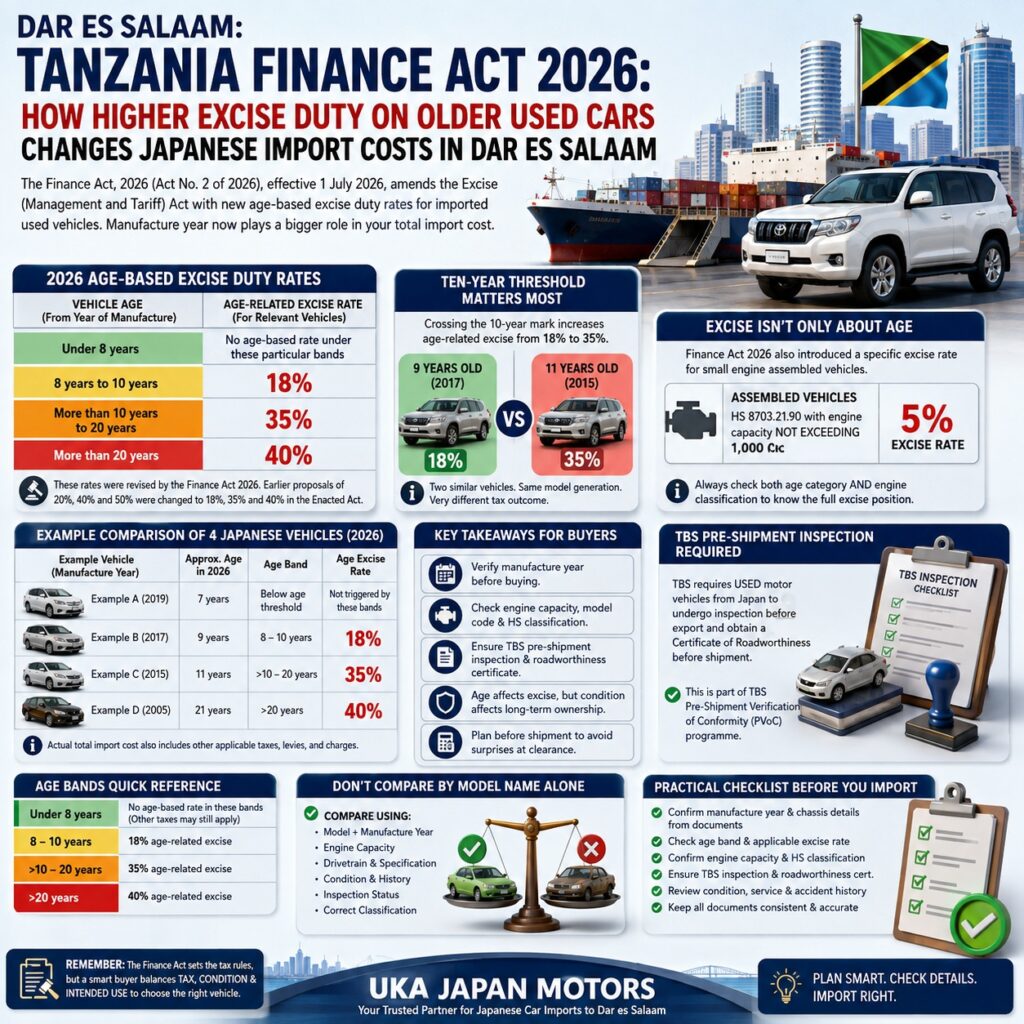
Engine size has always been an important consideration when importing a Japanese vehicle into Tanzania. In 2026, however, buyers must look beyond the familiar assumption that the smallest engine automatically receives the lightest overall clearance assessment. The Finance Act No. 2 of 2026 took effect on 1 July 2026. Among its vehicle-related changes, cars with engines not exceeding 1,000cc, which previously sat in a nil engine-capacity excise category, became subject to a 5% excise duty. The Act also revised the...
Read More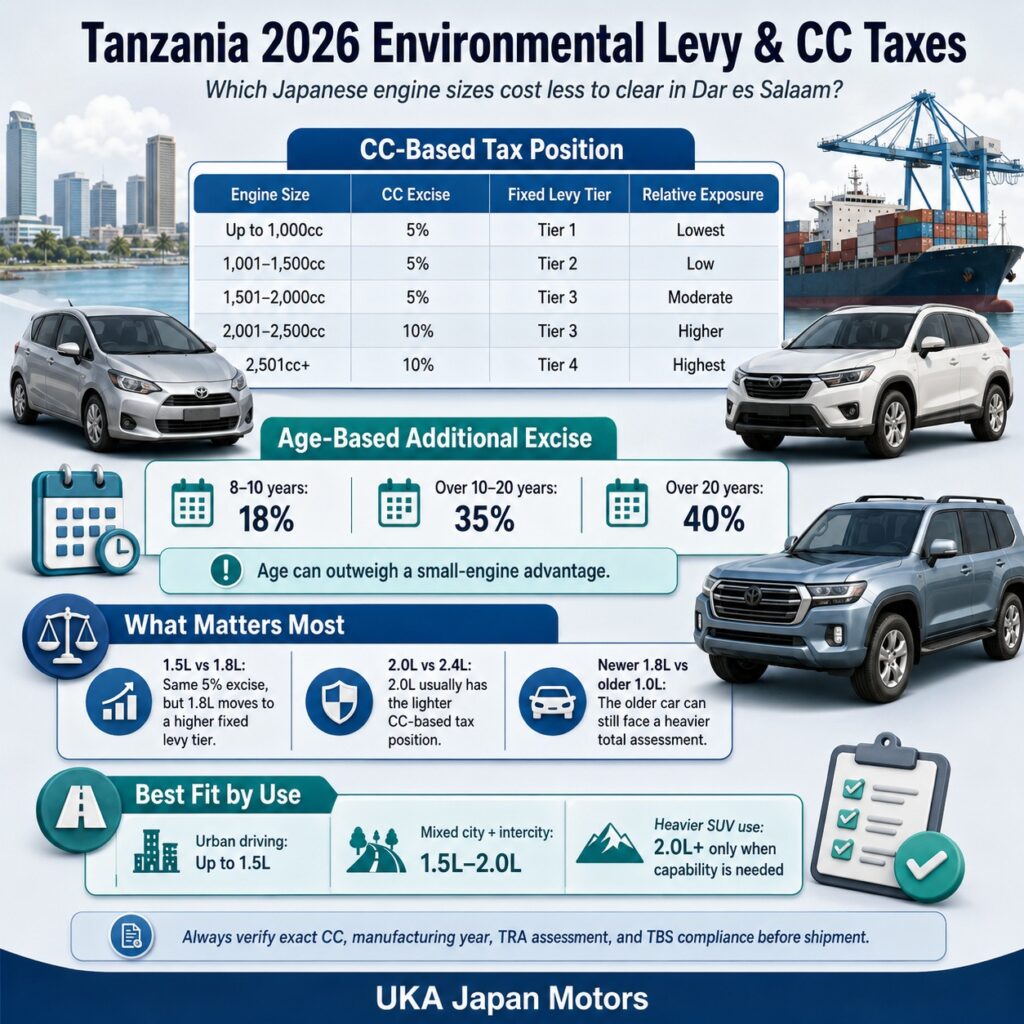
The year shown on a Japanese vehicle listing has become one of the most important details for anyone importing a used car into Tanzania. Previously, some buyers concentrated mainly on the vehicle model, engine size, physical condition and export documents. Under Tanzania’s 2026 tax framework, vehicle age now has an even stronger influence on the final customs assessment. This is particularly important when comparing a newer Japanese passenger car or crossover with an older sport utility vehicle. An older SUV...
Read More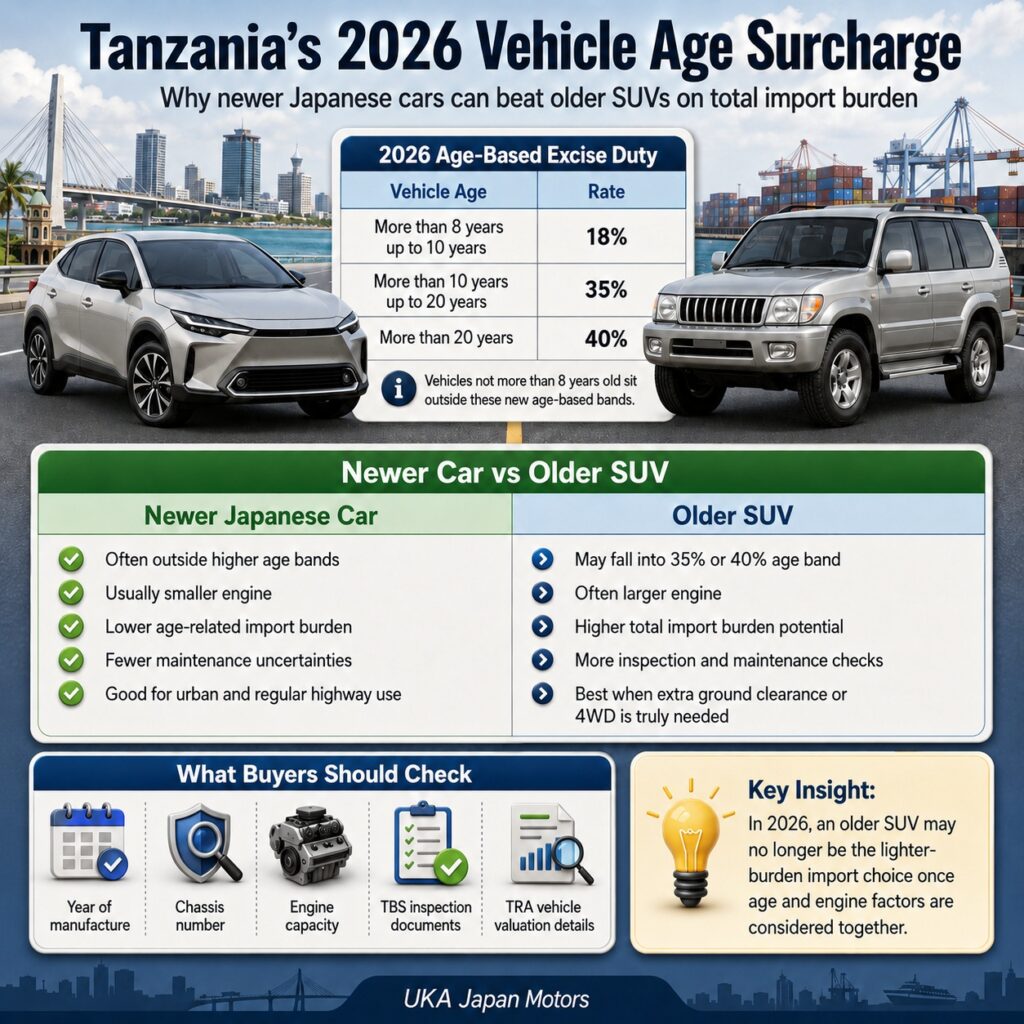
Japanese imported vehicles are widely used across Tanzania, from compact hatchbacks navigating daily traffic in Dar es Salaam to four-wheel-drive vehicles operating on the steeper and less predictable roads around Arusha, Mbeya and Mwanza. Their reliability and broad model range make them practical for many owners, but insuring them requires more attention than simply stating the manufacturer and commercial model name. An insurer does not assess every Toyota Harrier, Nissan X-Trail, Subaru Forester or Honda Fit in the same way....
Read More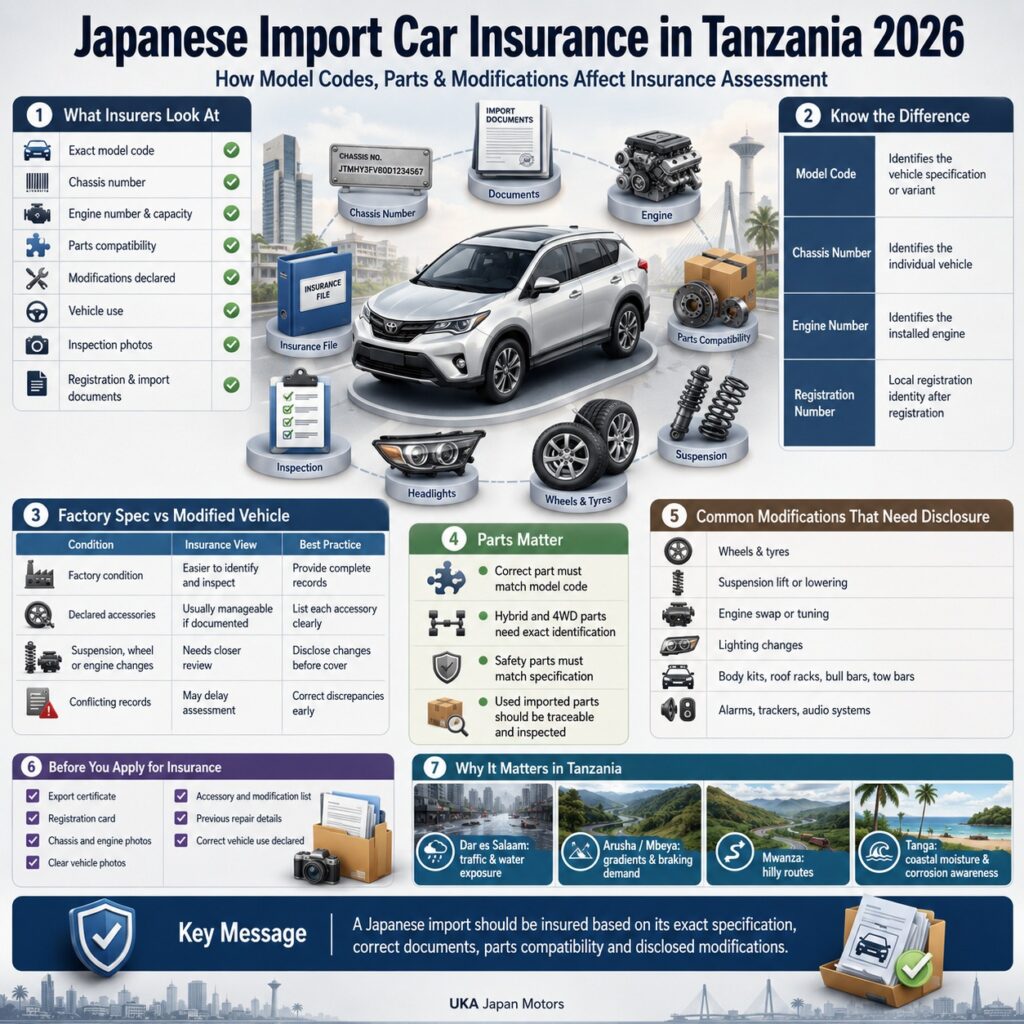
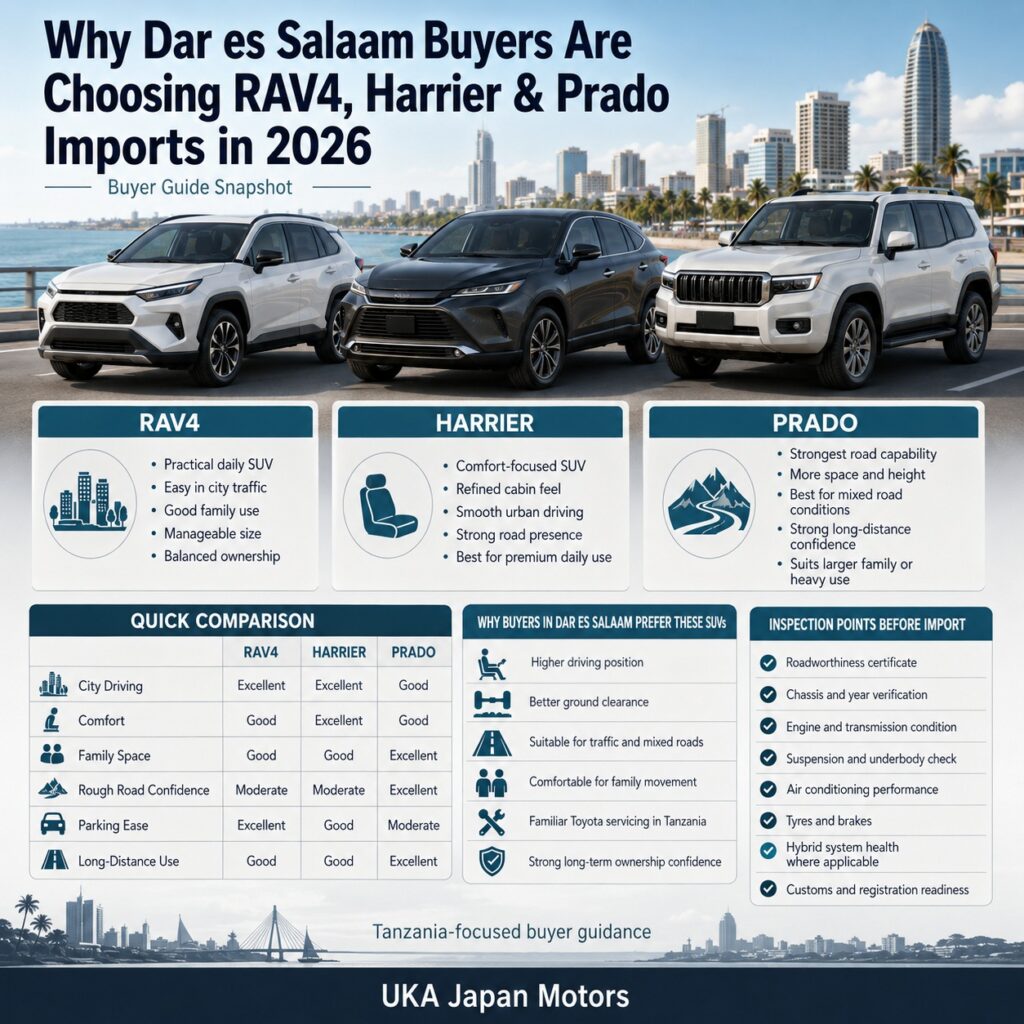
Japanese SUV imports continue to attract serious attention from Dar es Salaam buyers in 2026, especially the Toyota RAV4, Toyota Harrier and Toyota Land Cruiser Prado. These three models sit in different parts of the SUV market, but they share qualities that matter in Tanzania: strong road presence, trusted Toyota engineering, practical ground clearance, familiar servicing needs and broad suitability for daily driving. For many buyers in Dar es Salaam, the decision is not simply about choosing an SUV. It...
Read More