Importing a Japanese vehicle into Kenya has always required more than choosing a model and arranging shipment. The vehicle must satisfy Kenya's requirements for age, steering configuration, roadworthiness, inspection and documentation before it can be cleared and registered. In 2026, the vehicle-age requirement is particularly important because the annual eligibility cutoff has moved forward again. For vehicles entering Kenya from 1 January 2026, the applicable KEBS notice states that only right-hand-drive used vehicles whose year of first registration is 1...
Read More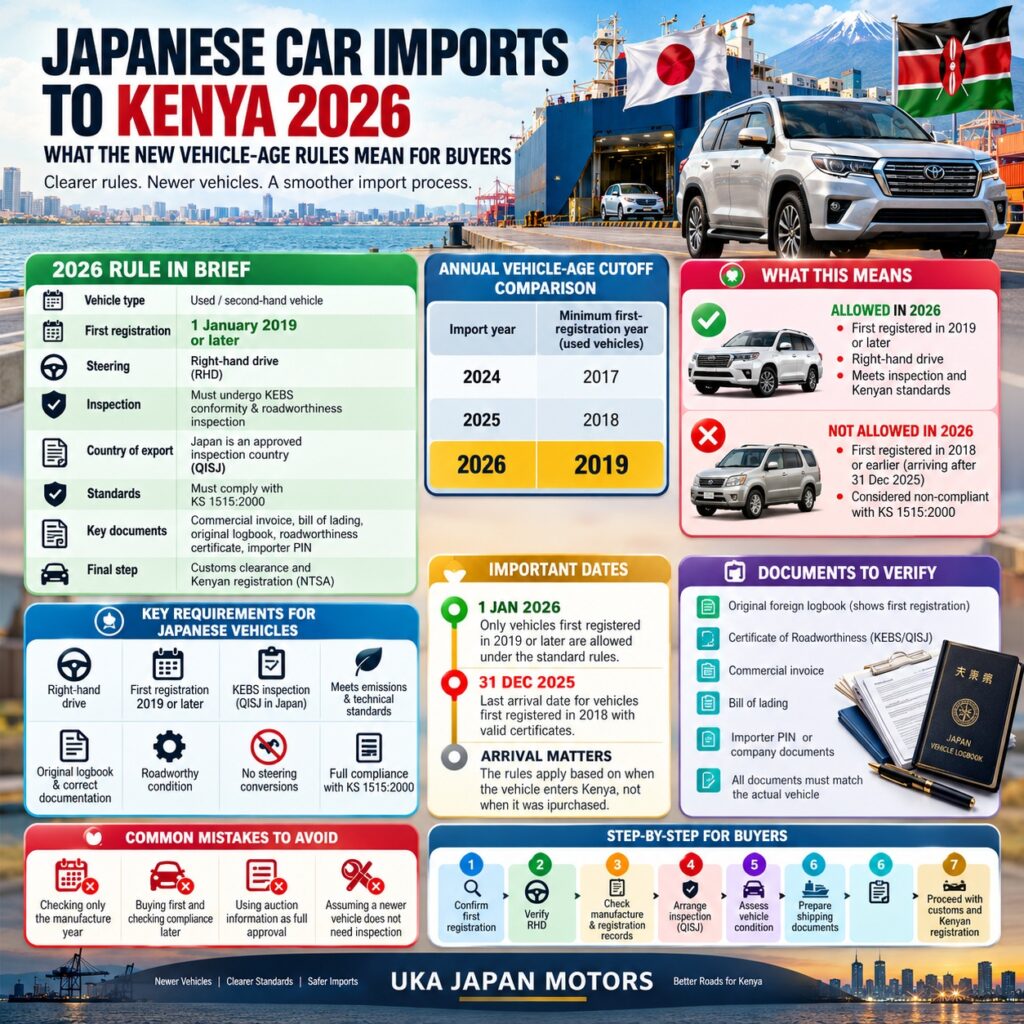
For Kenyan motorists considering a Japanese used vehicle in 2026, the number 2019 has particular importance. Kenya restricts the importation of older used vehicles under the applicable road-vehicle inspection standard. The central principle is that a used passenger vehicle must not be more than eight years old when assessed according to its year of first registration. Kenya Revenue Authority (KRA) describes imported vehicles as required to be less than eight years old from the year of first registration, while the...
Read More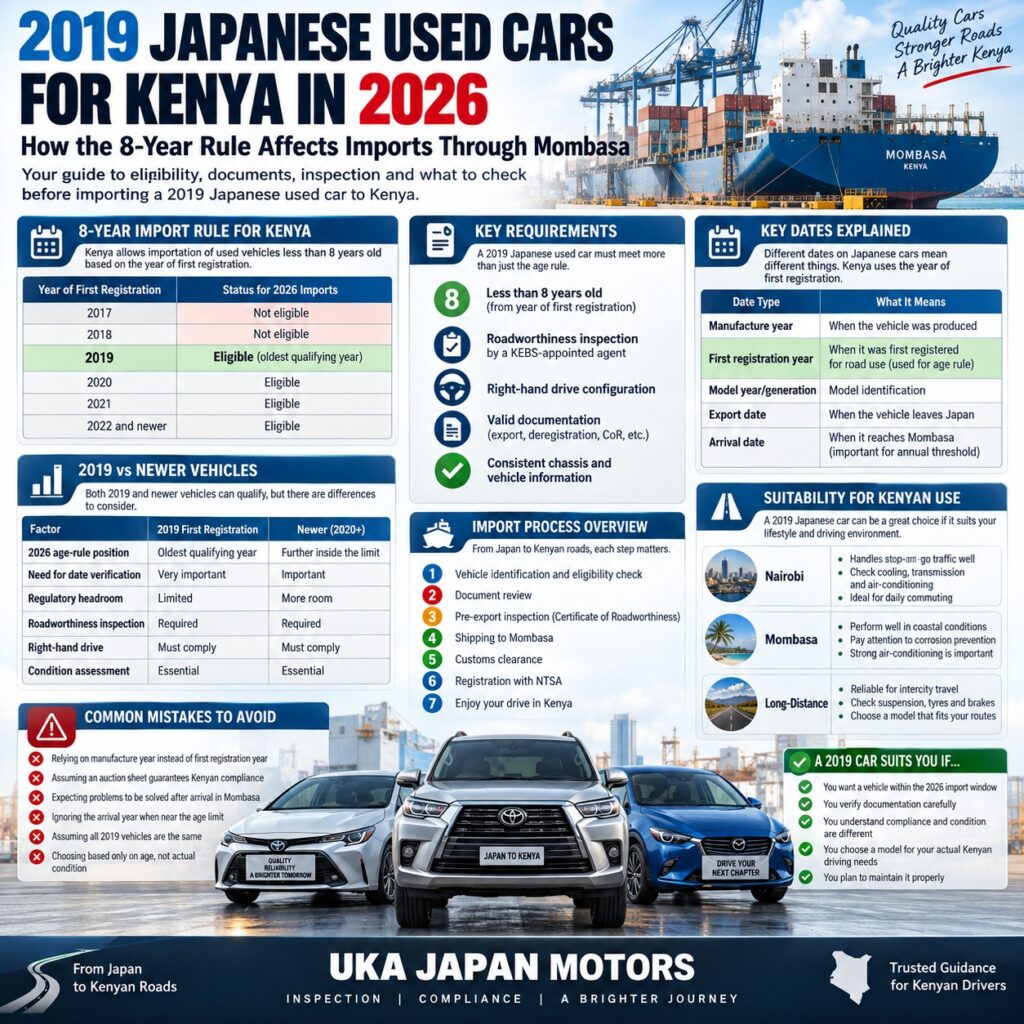
Buying a Japanese used car for Kenya in 2026 begins with a question that is more important than choosing between a Toyota, Mazda, Honda, Nissan or Subaru: is the vehicle actually eligible for importation under Kenya's age rules? For most used passenger vehicles entering Kenya during 2026, the practical starting point is a year of first registration of 2019 or later. That distinction matters. Buyers sometimes focus on the model year shown in an advertisement, the manufacture date written on...
Read More
Import eligibility is one of the first issues a Kenyan buyer should establish before choosing a used vehicle from Japan. A car may have the right engine size, body type, mileage profile, safety equipment, and condition for the intended owner, yet none of those qualities can compensate for a vehicle that does not meet Kenya's import requirements. For buyers looking at Japanese used cars in 2026, the age restriction commonly known as the 8-year rule is therefore an essential screening...
Read More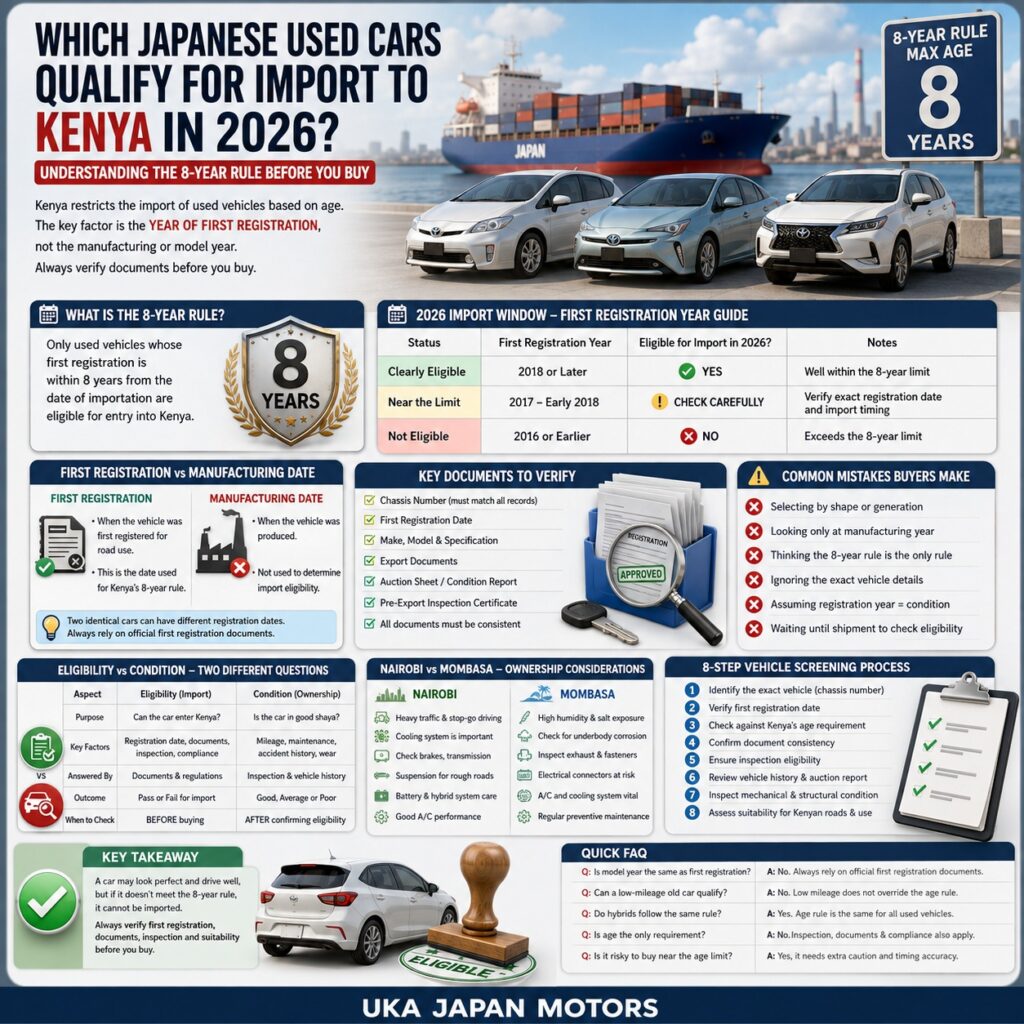
Kenya’s 2026 fuel-price shock is changing more than how frequently motorists visit filling stations. It is changing the questions buyers ask before selecting a vehicle. Engine capacity has always influenced vehicle choice, but it is now being examined more carefully. Nairobi and Mombasa buyers are no longer treating every compact Japanese car as equally efficient simply because it has a small engine. They are comparing engine size with vehicle weight, transmission type, hybrid technology, air-conditioning demands, passenger load, road conditions...
Read More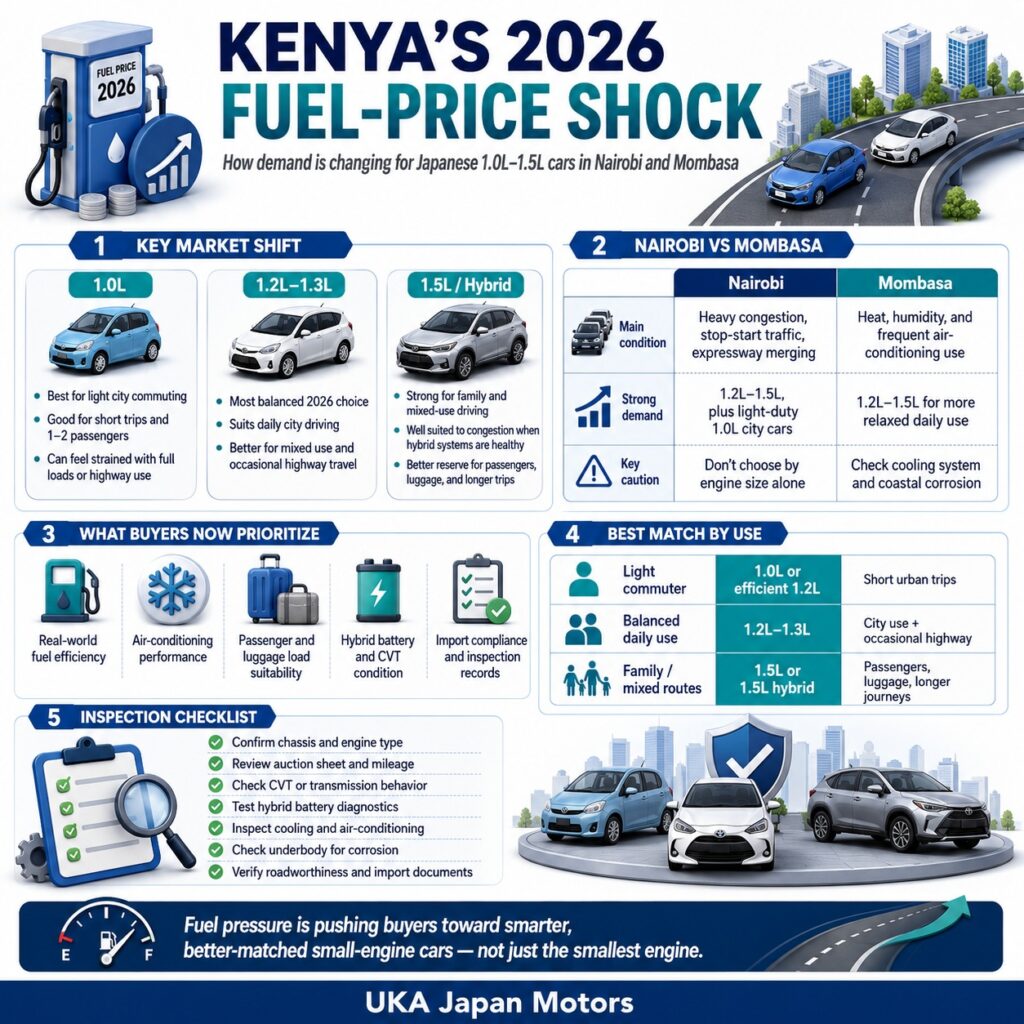
Electric vehicles have moved from being an unusual sight to becoming a serious part of Kenya’s transport discussion. Interest has grown around electric motorcycles, buses, commercial fleets and private passenger cars, while government policy has increasingly recognised electric mobility as part of the country’s transport and energy strategy. For buyers considering a used electric vehicle imported from Japan, however, the central question is not simply whether import taxes are lower. It is whether the vehicle will remain practical after it...
Read More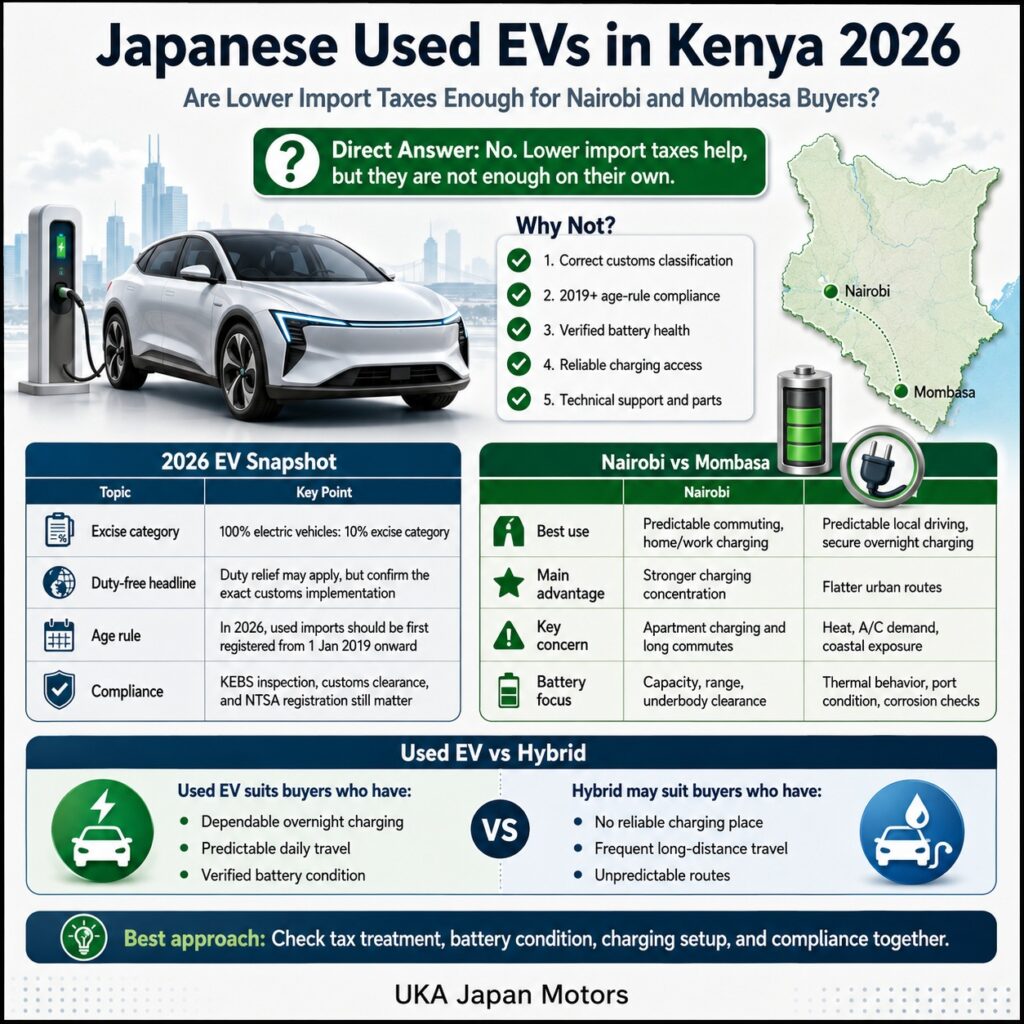
Importing a Japanese used vehicle into Kenya involves more than identifying a suitable model, checking its condition and arranging shipment. Before the vehicle can be cleared and registered, the Kenya Revenue Authority must determine its customs value. That value becomes the foundation on which import duty, excise duty, Value Added Tax and applicable import levies are assessed. For most Japanese used passenger vehicles, the declared purchase invoice is not treated as the only measure of value. Kenya uses the Current...
Read More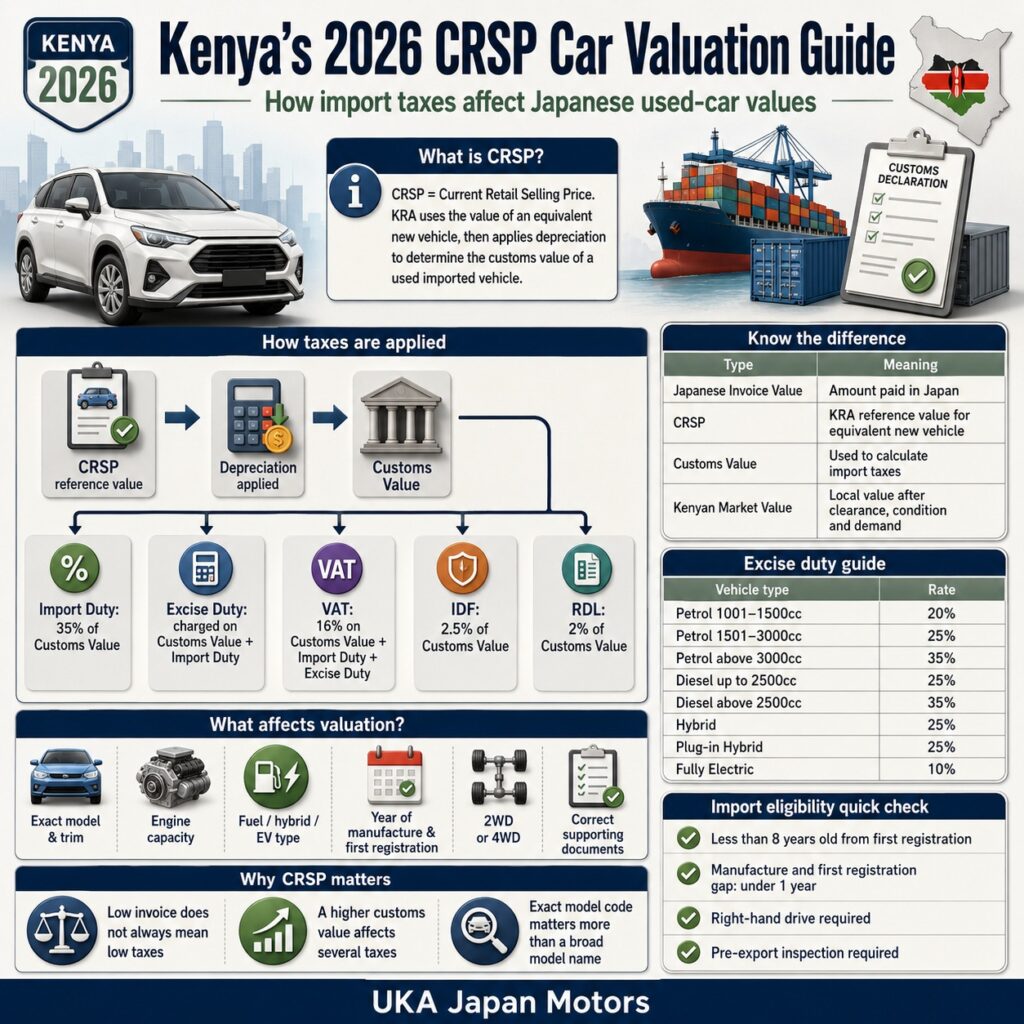
For Kenyan buyers planning to import a Japanese vehicle in 2026, the phrase “2019-or-newer” is more than a model-year preference. It directly affects whether a used vehicle can legally enter Kenya, pass the required inspection process, proceed through clearance, and move toward registration for road use. Kenya applies an age-limit requirement for used motor vehicles under KEBS standards. The Kenya Revenue Authority explains that an imported vehicle must comply with KEBS requirements and KS1515:2000, including being less than eight years...
Read More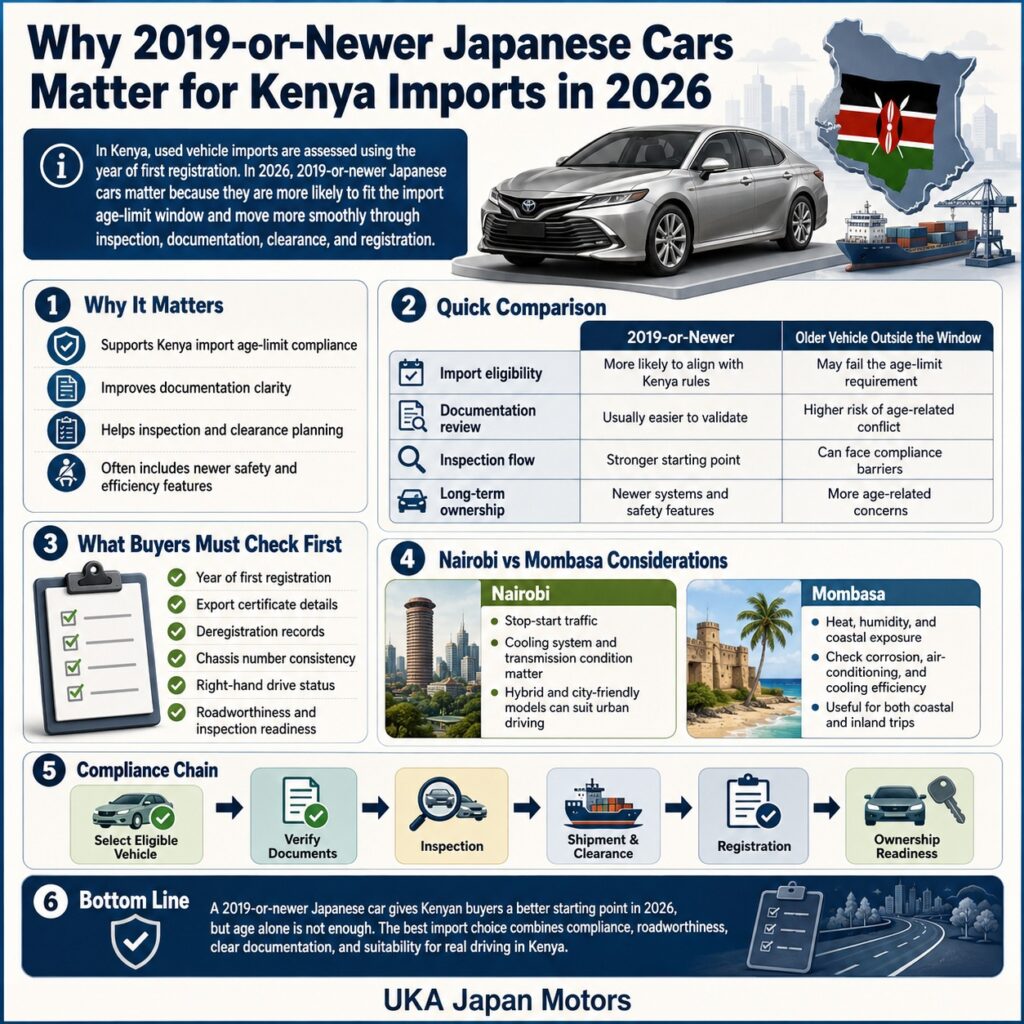
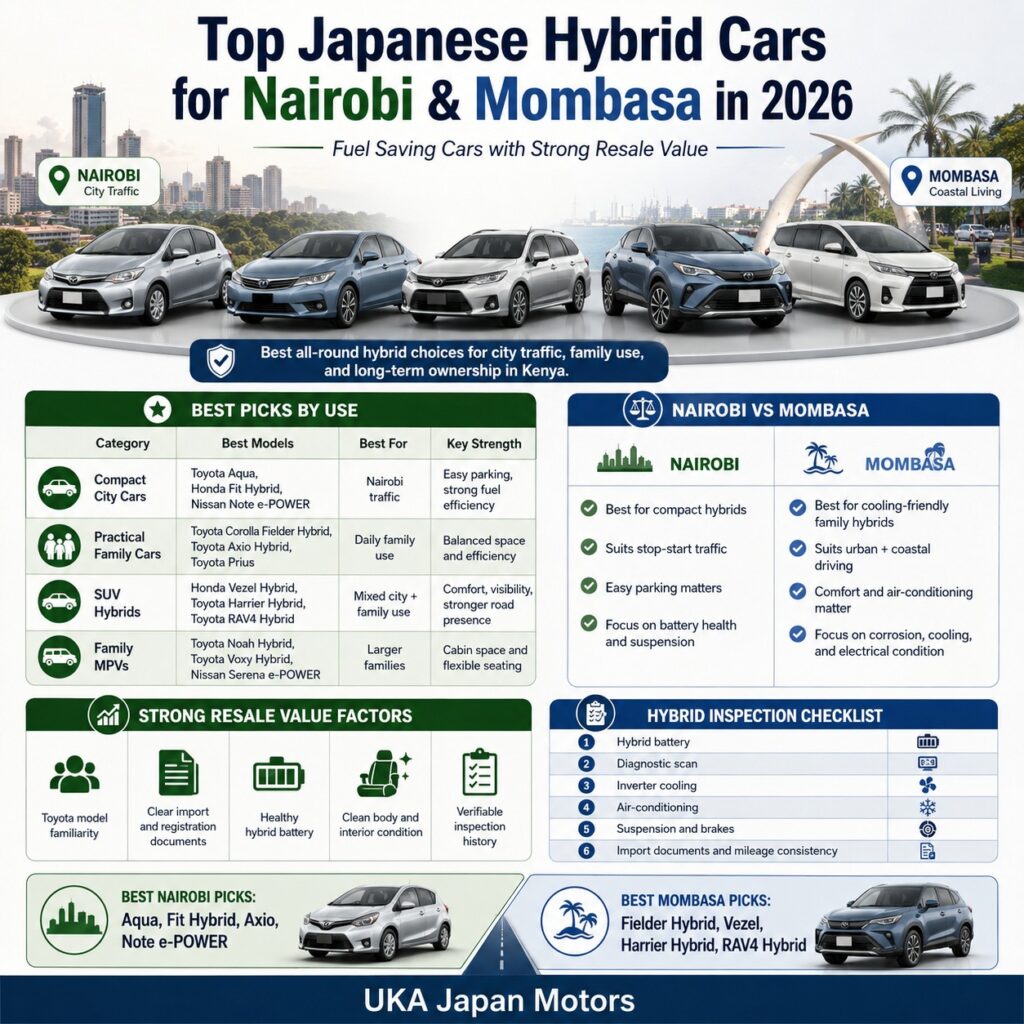
Japanese hybrid cars have become a serious consideration for many Kenyan buyers in 2026, especially for people who drive daily in Nairobi traffic, travel regularly between towns, or need a vehicle that balances fuel economy with reliable everyday use. A hybrid is not just a petrol car with an added battery. It is a vehicle designed to use a petrol engine and an electric motor together, allowing the car to manage energy more efficiently in traffic, at low speeds, and...
Read More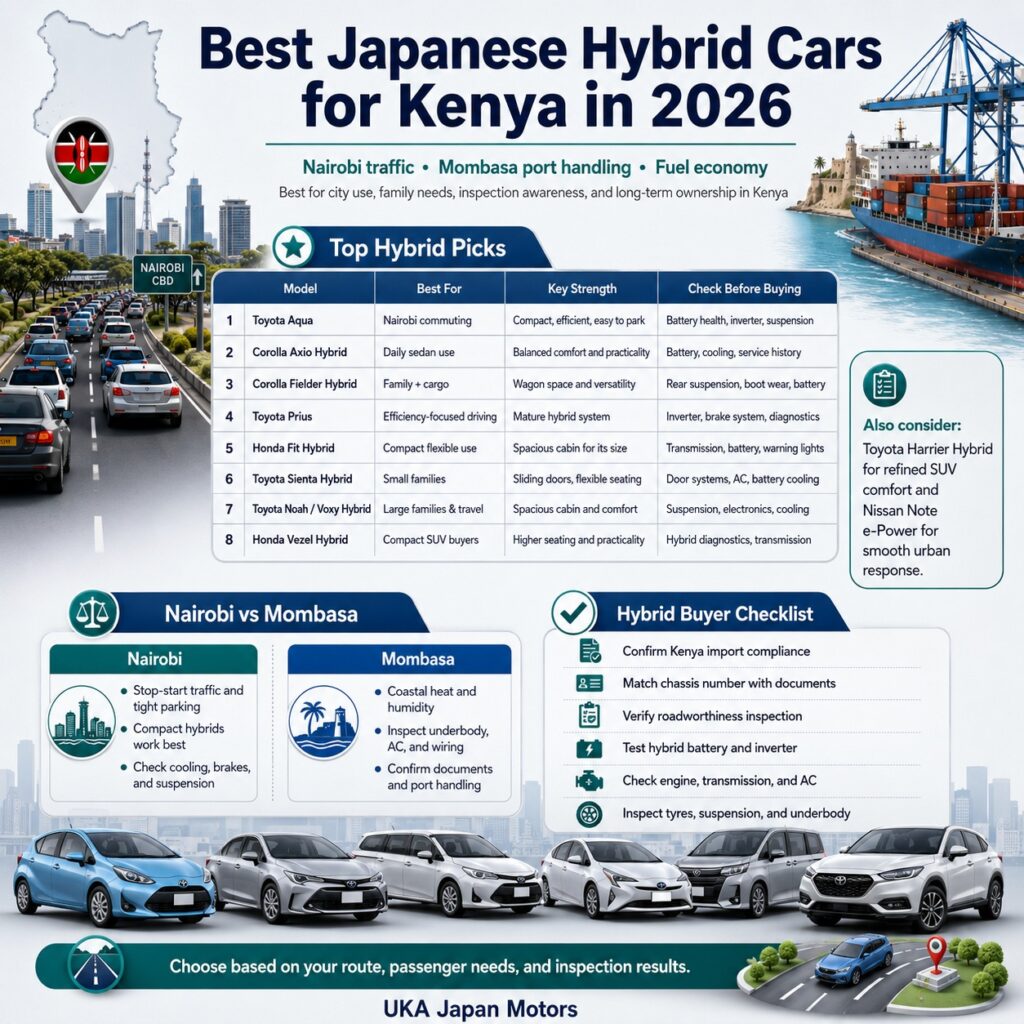
Japanese hybrid cars continue to attract attention among Kenyan buyers because they answer several practical ownership questions at the same time. They use fuel carefully in traffic, remain familiar to many technicians, suit a wide range of family and business needs, and often hold resale interest when the model is well known, properly inspected, and correctly documented. For Nairobi drivers, hybrid appeal is easy to understand. Daily movement often includes slow traffic, repeated stops, short bursts of acceleration, and long...
Read More