


Introduction
One of the most important decisions when selecting a vehicle in Kenya is engine size. Buyers often focus on the model, body type, or appearance, but the engine capacity determines how the vehicle behaves in real Kenyan driving conditions.
Is 1000cc enough for daily use in Nairobi?
Does 1500cc offer a better balance for highway travel?
Is 2500cc necessary for long-distance or upcountry driving?
These are practical ownership questions—not technical curiosities. Engine size directly affects performance in traffic congestion, overtaking on highways, carrying passengers, driving on hilly terrain, and long-term durability under Kenyan road conditions.
This guide explains the differences between 1000cc, 1500cc, and 2500cc engines from a Kenyan perspective, covering urban use in Nairobi, coastal driving in Mombasa, inspection realities, compliance considerations, and long-term suitability.
Direct Answer Summary
If you need a quick overview:
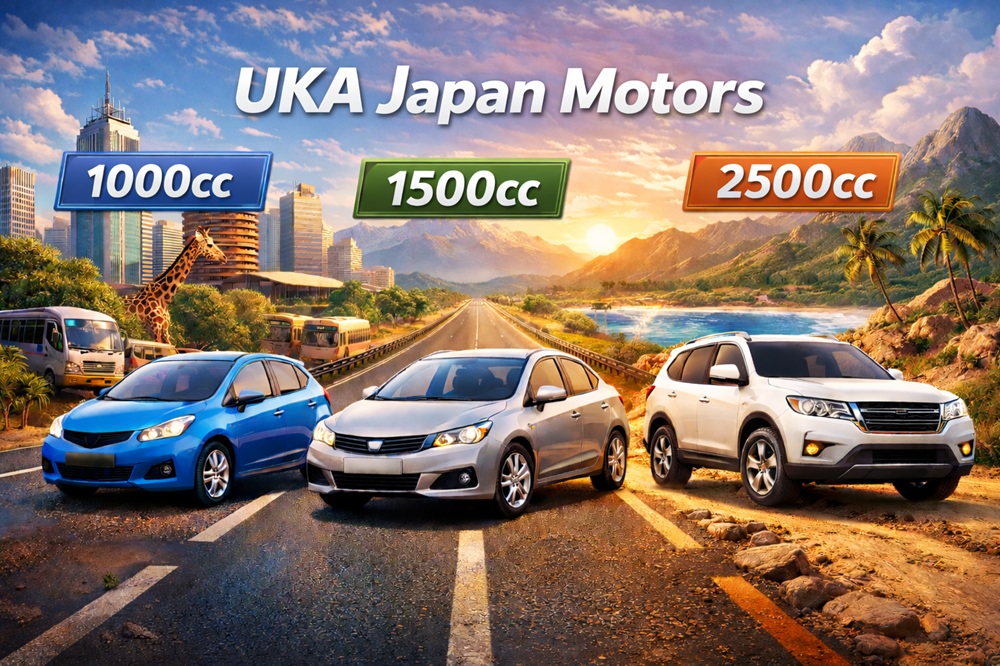
- 1000cc – Best suited for light urban commuting, especially within Nairobi’s stop-start traffic.
- 1500cc – Balanced choice for mixed city and highway use, suitable for most Kenyan drivers.
- 2500cc – Ideal for heavy loads, long-distance travel, highway overtaking, and more demanding terrain.
However, the right engine size depends on how and where you drive—not just numbers.
Understanding Engine Size in Practical Terms
Engine size, measured in cubic centimeters (cc), refers to the total volume of the engine’s cylinders. In simple terms:
- Smaller engines (1000cc) generate modest power and are typically more compact.
- Mid-size engines (1500cc) offer a balance between power and efficiency.
- Larger engines (2500cc) deliver stronger acceleration and higher torque.
But numbers alone do not explain real-world driving in Kenya. Traffic density in Nairobi, highway speeds on Mombasa Road, hilly areas around Limuru, and humid coastal conditions all influence how an engine performs.
Let’s examine each category in detail.
1000cc Engines in Kenya
Typical Characteristics
1000cc engines are commonly found in compact hatchbacks and small sedans. Examples include vehicles such as the Toyota Vitz, Nissan March, and Suzuki Alto.
These vehicles are lightweight, easy to maneuver, and well suited for dense urban traffic.
Performance in Nairobi
In areas like Westlands, Kilimani, Ngong Road, or Thika Road during rush hour:
- Acceleration demands are low.
- Speeds are moderate.
- Stop-start traffic is constant.
A 1000cc engine performs comfortably under these conditions. It warms up quickly, handles short trips efficiently, and is easy to park in tight spaces.
For daily commuting without heavy passenger loads, it is sufficient.
Highway Driving to Mombasa
On the Nairobi–Mombasa highway:
- Overtaking heavy trucks requires planning.
- Sustained higher speeds demand steady engine output.
- Carrying full passengers and luggage can strain smaller engines.
A 1000cc vehicle can handle the journey, but it may require more careful overtaking and downshifting.
Terrain and Load Considerations
If frequently driving:
- Hilly roads
- Upcountry rural areas
- With four or five passengers regularly
A 1000cc engine may feel underpowered.
When 1000cc Is Not Ideal
- Heavy family use
- Regular long-distance travel
- Towing or carrying heavy cargo
- Steep terrain
1500cc Engines in Kenya
Typical Characteristics
1500cc engines are extremely popular in Kenya because they strike a balance between performance and practicality. Examples include:
- Toyota Corolla
- Mazda Demio
- Honda Fit
These vehicles are commonly seen in Nairobi and Mombasa due to their versatility.
Why 1500cc Is Considered the Balanced Option
In Nairobi traffic:
- Enough power for confident acceleration.
- Smooth merging onto highways like Waiyaki Way or Southern Bypass.
On highways:
- Overtaking is easier compared to 1000cc.
- Engine stress is lower at sustained speeds.
For families:
- Comfortable carrying 4–5 passengers.
- Stable at higher speeds.
Coastal Driving in Mombasa
Mombasa’s climate presents different challenges:
- High humidity
- Salt exposure
- Warm temperatures
A 1500cc engine typically handles long coastal drives comfortably while maintaining stable cooling performance when properly maintained.
Long-Term Ownership
For many Kenyan households, 1500cc offers:
- Balanced engine stress
- Comfortable daily usability
- Sufficient highway capability
It suits drivers who mix:
- Urban commuting
- Weekend travel
- Occasional long-distance journeys
2500cc Engines in Kenya
Typical Characteristics
2500cc engines are usually found in larger SUVs and sedans such as:
- Toyota Harrier
- Nissan X-Trail
- Subaru Forester
These engines provide higher torque and stronger acceleration.
Highway Performance
On highways:
- Overtaking is easier and quicker.
- Engine remains stable at higher cruising speeds.
- Better suited for long-distance travel across counties.
For frequent Nairobi–Mombasa trips, Kisumu routes, or heavy usage, larger engines provide comfort and confidence.
Carrying Capacity
2500cc engines are ideal when:
- Regularly carrying multiple passengers.
- Transporting cargo.
- Driving in rural areas with uneven roads.
Urban Considerations
In heavy Nairobi congestion:
- Larger engines are fully capable but may not always be necessary.
- Stop-start traffic does not utilize full engine potential.
Comparison: 1000cc vs 1500cc vs 2500cc in Kenyan Conditions
| Factor | 1000cc | 1500cc | 2500cc |
|---|---|---|---|
| Nairobi traffic | Excellent | Excellent | Good |
| Highway overtaking | Moderate | Strong | Very Strong |
| Full passenger load | Limited | Comfortable | Very Comfortable |
| Hilly terrain | Struggles when loaded | Good | Excellent |
| Long-distance travel | Possible | Comfortable | Highly Comfortable |
| Rural roads | Limited | Good | Strong |
Inspection and Compliance Considerations
When importing vehicles into Kenya, engine size appears on:
- Export certificate
- Logbook documentation
- Inspection records
- Registration data
Accurate engine capacity reporting is essential. During inspection before shipment and local registration:
- Engine number must match documentation.
- Capacity must align with manufacturer specifications.
- Any modifications must be declared.
Engine size also influences classification for regulatory compliance, making accuracy critical during the import process.
Climate and Maintenance Realities in Kenya
Nairobi
- Cooler evenings
- Heavy congestion
- Frequent short trips
Smaller engines perform well here due to efficient warm-up and lower load demand.
Mombasa
- High humidity
- Salt exposure
- Warmer temperatures
Proper cooling system maintenance is critical, especially for larger engines that generate more heat.
Who Should Choose Each Engine Size?
Choose 1000cc If:
- You drive mostly within Nairobi.
- You commute short distances.
- You rarely carry full passenger loads.
- Parking space is limited.
Choose 1500cc If:
- You mix city and highway driving.
- You travel occasionally between counties.
- You need balanced performance.
- You want flexibility.
Choose 2500cc If:
- You frequently drive long distances.
- You carry passengers or cargo regularly.
- You prefer stronger acceleration and highway confidence.
- You drive in hilly or rural areas.
When Bigger Is Not Always Better
A larger engine does not automatically mean a better choice.
In heavy Nairobi traffic:
- Excess power is often unused.
- Maneuverability may be reduced in larger vehicles.
Choosing the right engine size is about suitability—not maximum capacity.
Long-Term Ownership Considerations
Engine durability depends on:
- Maintenance schedule adherence
- Cooling system care
- Oil quality
- Driving habits
In Kenya’s mixed road conditions, selecting an engine size aligned with your usage reduces strain and supports long-term reliability.
Frequently Asked Questions (FAQs)
1. Is 1000cc enough for Nairobi daily driving?
Yes, for short commutes and light passenger loads, it performs well.
2. Can a 1000cc car travel from Nairobi to Mombasa?
Yes, but overtaking requires careful planning.
3. Is 1500cc the safest all-round option?
For many Kenyan drivers, it provides the best balance.
4. Does 2500cc consume more fuel?
Larger engines generally use more fuel under similar conditions.
5. Is 2500cc necessary for city use?
Not usually, unless you prefer larger vehicles.
6. Does engine size affect registration?
Engine capacity must be accurately documented for compliance.
7. Are larger engines harder to maintain?
Maintenance complexity depends on vehicle type, not only engine size.
8. Which engine size lasts longest?
Longevity depends on maintenance and driving style more than capacity.
UKA Japan Motors’ Role in Engine Selection
At UKA Japan Motors, vehicle selection is guided by real usage patterns in Kenya.
Before shipment:
- Engine capacity is verified.
- Inspection documentation is reviewed.
- Compliance details are confirmed.
- Vehicle condition is assessed thoroughly.
Our teams serving Nairobi and Mombasa understand local driving realities and assist buyers in selecting engine sizes suited to their specific needs—not simply based on model popularity.
Engine suitability is about long-term practicality, documentation accuracy, and responsible ownership.
Conclusion
Choosing between 1000cc, 1500cc, and 2500cc is not about selecting the biggest engine available. It is about matching engine capacity to Kenyan road realities.
- For urban commuting in Nairobi, 1000cc may be sufficient.
- For balanced city and highway driving, 1500cc is often ideal.
- For heavy use, long-distance travel, and rural terrain, 2500cc provides confidence and strength.
Understanding how and where you drive is the foundation of making the correct decision.
Contact UKA Japan Motors for availability and inspection guidance.