


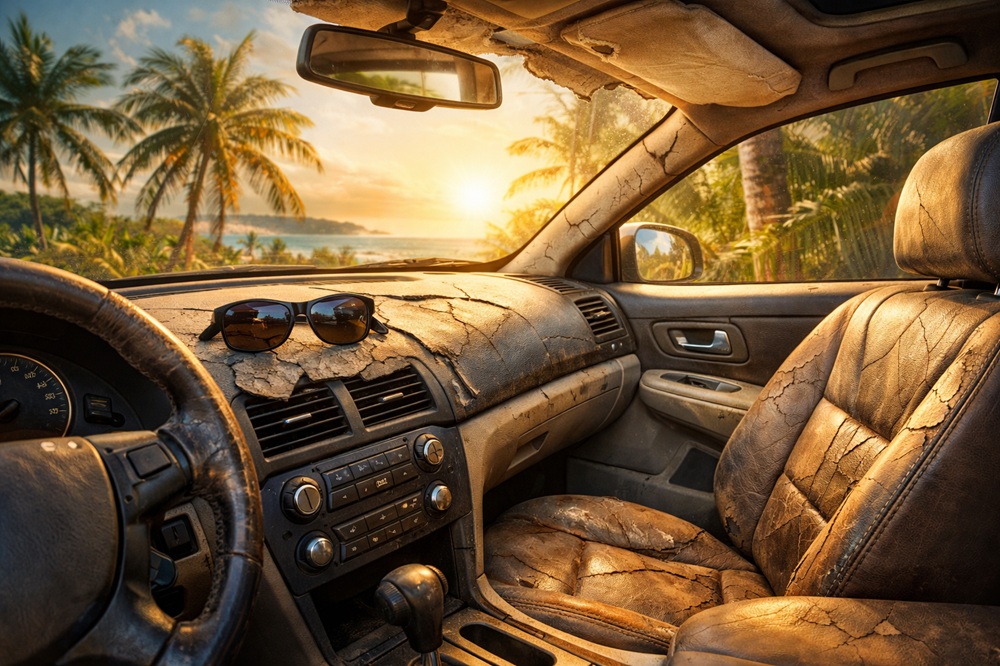
Vehicle ownership in Jamaica involves more than engine performance and fuel efficiency. One of the most overlooked but critical aspects of long-term ownership is how well a vehicle’s interior withstands constant exposure to heat and humidity.
In Kingston especially, where vehicles are frequently parked under direct sunlight and used in stop-and-go traffic, interior materials are exposed to prolonged thermal stress. Over time, this leads to visible wear, reduced comfort, and in some cases, functional issues such as cracked dashboards, faded panels, and deteriorating seat materials.
Understanding how different materials behave in high-heat environments allows buyers and owners to make better decisions—both when selecting a vehicle and maintaining it over time.
Direct Answer: What Happens to Vehicle Interiors in High Heat?
In Jamaica’s climate, vehicle interiors are affected in four primary ways:
- Material degradation due to prolonged UV exposure
- Expansion and contraction causing cracks and warping
- Moisture retention from humidity leading to mold and odors
- Accelerated wear on frequently touched surfaces
Not all interiors age the same. The durability depends heavily on material quality, design, and how the vehicle is used and maintained.
Why Heat and Humidity Matter in Jamaica
Kingston’s driving environment creates a unique combination of stress factors:
- Vehicles sit in intense sunlight for extended periods
- Cabin temperatures rise significantly when parked
- Coastal humidity introduces moisture into materials
- Daily commuting means frequent temperature cycling
Unlike cooler climates, interiors here do not get recovery time. Heat exposure is constant, and that continuous stress accelerates aging.
For drivers who park outdoors or rely on daily commuting, interior durability becomes a major factor in long-term vehicle condition.
Dashboard and Plastic Trim Durability
Common Issues
The dashboard is one of the most heat-exposed components in any vehicle. In Jamaica, it faces:
- Cracking and splitting
- Fading and discoloration
- Warping or lifting near vents
These issues occur because plastics expand under heat and contract as temperatures drop, especially overnight. Over time, this repeated cycle weakens the material.
Material Differences
- Hard plastics
More resistant to scratches but prone to cracking under heat - Soft-touch materials
More comfortable but may degrade, peel, or become sticky - UV-coated surfaces
Offer better resistance but still degrade if constantly exposed
Practical Consideration
Vehicles with simpler, well-finished dashboards often age better than those with complex layered materials. Fewer seams and joints reduce the risk of warping.
Seat Materials: Fabric vs Synthetic vs Leather
Fabric Seats
Advantages:
- Less heat absorption
- More breathable in traffic
Challenges:
- Absorbs moisture from humidity
- Can develop odors over time
- More difficult to clean thoroughly
Fabric performs reasonably well in heat but struggles with long-term moisture exposure.
Synthetic Materials (e.g., Vinyl or Artificial Leather)
Advantages:
- Easier to clean
- Resistant to moisture
Challenges:
- Can become extremely hot under sunlight
- Prone to cracking over time
These materials are common in imported vehicles and can show wear quickly if exposed daily to direct sun.
Leather Seats
Advantages:
- Durable if properly maintained
- More resistant to tearing
Challenges:
- Requires conditioning to prevent drying
- Can harden and crack under heat
Leather interiors can last long in Jamaica, but only if regularly maintained. Without care, they degrade faster than expected.
Steering Wheel and High-Touch Surfaces
Steering wheels, gear selectors, and door handles experience both heat and constant physical contact.
Common Problems
- Peeling or worn coatings
- Sticky surfaces due to heat breakdown
- Discoloration from UV exposure
These areas often show wear earlier than other parts of the interior because they combine heat + friction.
Real-World Observation
In Kingston traffic, where drivers spend extended time behind the wheel, these components deteriorate faster than in vehicles used less frequently.
Headliners and Roof Interior Materials
The headliner (the fabric on the interior roof) is highly sensitive to heat.
Common Issues
- Sagging fabric
- Adhesive failure
- Staining from humidity
Heat weakens the adhesive that holds the material in place. Combined with humidity, this leads to detachment over time.
Vehicles frequently parked outdoors are especially vulnerable.
Door Panels and Interior Trim
Door panels combine multiple materials—plastic, fabric, and sometimes leather—making them susceptible to uneven wear.
What Happens Over Time
- Fabric inserts loosen or fade
- Plastic trims warp or discolor
- Armrests wear due to repeated use
Door panels often reveal how well a vehicle has handled both heat and daily usage.
Air Conditioning and Its Indirect Impact
While air conditioning improves comfort, it also affects interior durability.
How It Helps
- Reduces cabin temperature
- Slows material degradation
- Minimizes humidity buildup inside the vehicle
How It Can Contribute to Wear
- Frequent cooling after extreme heat causes thermal stress cycles
- Sudden temperature changes accelerate material fatigue
In Jamaica, consistent and moderate use of air conditioning helps preserve interior components.
Comparison: Vehicles That Age Well vs Poorly in Heat
Interiors That Hold Up Better
- Simple material combinations
- UV-resistant coatings
- Breathable fabrics
- Solid construction with minimal seams
Interiors That Struggle
- Glossy plastics
- Low-quality synthetic materials
- Complex layered dashboards
- Poor adhesive quality in trim
This comparison highlights that durability is not just about material type, but also about design and build quality.
Inspection Considerations for Imported Vehicles
Interior condition is a key part of vehicle inspection and should never be overlooked.
What to Check
- Dashboard cracks or fading
- Seat wear consistency
- Steering wheel condition
- Headliner stability
- Odors indicating moisture buildup
Why It Matters
Interior damage often reflects:
- Prolonged sun exposure
- Poor storage conditions
- Lack of maintenance
Even if mechanical systems appear sound, interior condition can indicate how the vehicle was treated before import.
Long-Term Ownership Considerations
Interior durability directly affects:
- Daily comfort
- Driving experience
- Maintenance effort
- Overall vehicle condition
A well-preserved interior contributes to a more enjoyable ownership experience, especially in a climate where vehicles are used frequently.
Ignoring interior care leads to cumulative wear that becomes difficult to reverse.
Practical Guidance for Jamaican Drivers
To maintain interior durability:
- Park in shaded areas whenever possible
- Use windshield sunshades
- Clean and condition materials regularly
- Avoid prolonged exposure to direct sunlight
- Keep windows slightly ventilated when parked safely
These habits reduce the rate of deterioration significantly.
Frequently Asked Questions (FAQ)
1. Why do dashboards crack in Jamaica?
Constant exposure to heat causes materials to expand and contract repeatedly, eventually leading to cracks.
2. Are fabric seats better than leather in hot climates?
Fabric stays cooler but absorbs moisture. Leather lasts longer with proper care but requires maintenance.
3. What causes a sticky dashboard or steering wheel?
Heat breaks down surface coatings, especially in lower-quality materials.
4. Can interior damage indicate deeper vehicle issues?
Yes. It may suggest prolonged exposure to harsh conditions or poor maintenance.
5. How does humidity affect interiors?
Humidity leads to moisture retention, which can cause odors, mold, and material weakening.
6. Do darker interiors wear faster in heat?
Darker materials absorb more heat, which can accelerate wear compared to lighter interiors.
7. Is interior damage reversible?
Some issues like cleaning and conditioning can be improved, but cracks and warping are usually permanent.
8. What should be prioritized during inspection?
Focus on dashboard condition, seat wear, and signs of moisture damage.
The Role of UKA Japan Motors
UKA Japan Motors approaches vehicle selection with a strong focus on real-world durability, including interior condition.
Inspection processes consider:
- Exposure-related wear
- Material condition consistency
- Signs of neglect or environmental damage
This ensures that vehicles are not only mechanically sound but also suitable for long-term use in Jamaica’s climate.
Transparency in inspection helps buyers understand what to expect beyond the surface.
Conclusion
Interior durability in high-heat environments is not just about aesthetics—it directly impacts comfort, usability, and long-term ownership satisfaction.
In Jamaica, where heat and humidity are constant factors, understanding how materials respond to these conditions is essential. Choosing the right interior and maintaining it properly can significantly extend the life of a vehicle.
By paying attention to material quality, inspection details, and daily usage habits, drivers can avoid many of the common issues associated with heat-related interior wear.
Contact UKA Japan Motors for availability and inspection guidance.