


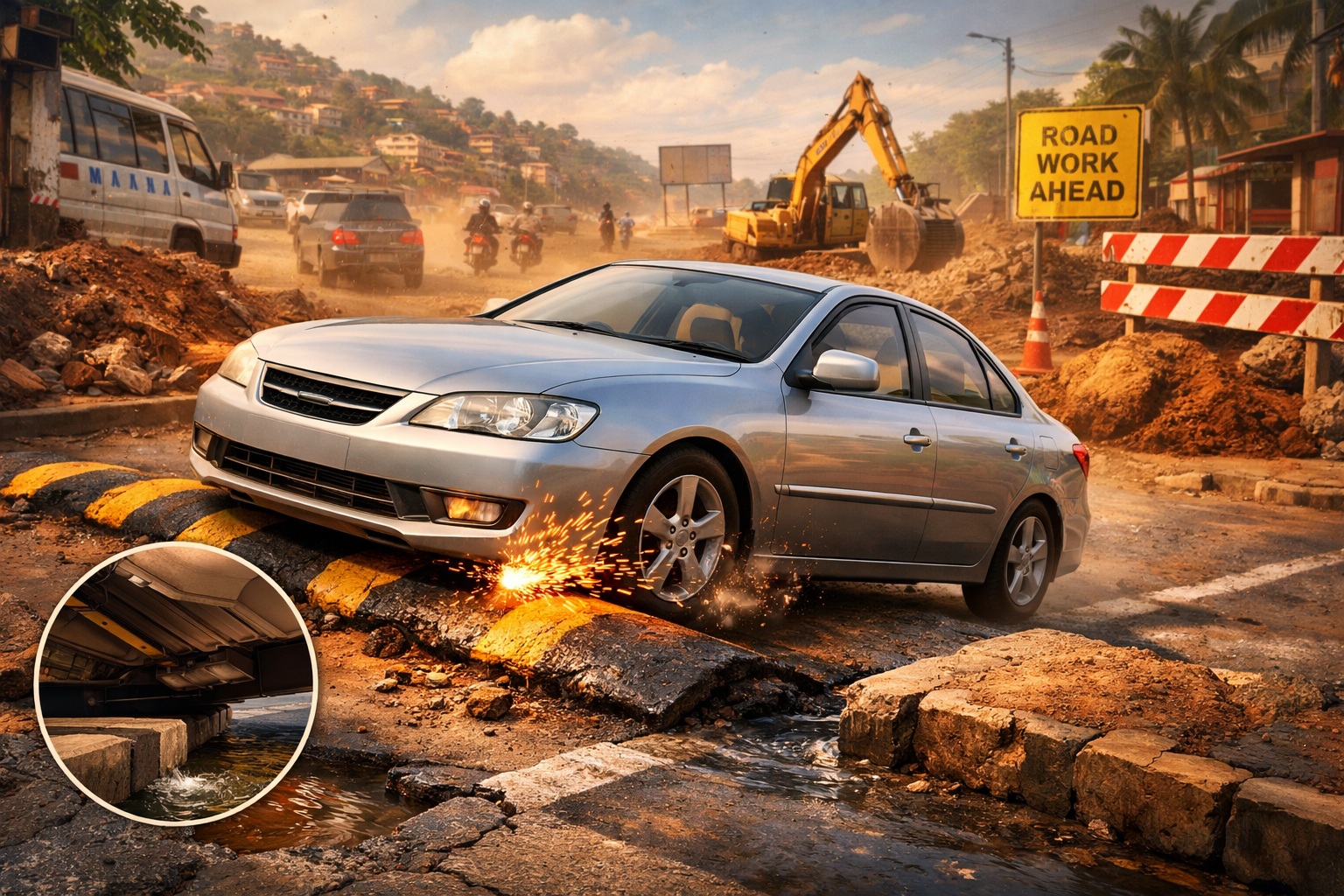
Ground clearance is one of the most practical specifications to consider when choosing a vehicle for everyday driving in Kampala. It determines how much space exists between the lowest part of a vehicle and the road surface. While this measurement may appear technical, it directly affects how comfortably a vehicle can navigate the roads, parking areas, and urban infrastructure that drivers encounter daily.
Vehicles with lower ground clearance—typically many sedans, compact hatchbacks, and certain hybrid models—are designed primarily for smoother road environments. In Kampala, however, drivers frequently encounter uneven surfaces, drainage crossings, steep ramps, and road repairs that can challenge vehicles sitting closer to the ground.
Understanding the common situations where low ground clearance creates difficulties helps buyers make better vehicle choices and prepares current owners for realistic driving conditions.
Quick Summary
Low ground clearance vehicles often face problems in Kampala during situations such as:
-
Driving over large speed humps
-
Entering or exiting steep parking ramps
-
Crossing drainage channels
-
Driving on uneven or damaged roads
-
Passing through construction zones
-
Parking on raised shoulders
-
Carrying heavy passenger loads
-
Driving on roads with temporary repairs
Each of these situations places stress on the vehicle’s underside, suspension, and bumper areas. Over time, repeated contact with the road surface can lead to mechanical wear and physical damage.
Why Ground Clearance Matters for Daily Driving in Kampala
Kampala’s road environment combines well-paved main routes with narrower residential streets, mixed road surfaces, and frequent infrastructure adjustments. Even when major roads are smooth, smaller connecting streets may contain speed humps, uneven patches, or drainage systems that require vehicles to climb and descend small elevations.
Drivers often need to:
-
Turn into steep residential driveways
-
Cross road drainage channels
-
Navigate raised parking entrances
-
Drive slowly over large speed bumps
-
Pass through construction areas with temporary surfaces
Vehicles with higher ground clearance manage these situations more easily because their underbody components remain safely above the road surface. Lower vehicles, however, may scrape or hit the ground if the driver misjudges the angle or speed.
This difference explains why many drivers in Kampala consider ground clearance carefully before importing or purchasing a vehicle.
Large Speed Humps on Urban Roads
One of the most common challenges for low clearance vehicles in Kampala is navigating large speed humps.
Speed humps are installed widely throughout residential areas, school zones, and busy streets to control traffic speed. While they serve an important safety purpose, their height and shape can vary significantly.
Some speed humps are gradual and easy to pass over, but others are steep and tall.
Low clearance vehicles may experience:
-
Scraping underbody panels
-
Bumper contact
-
Exhaust pipe impact
-
Suspension compression
Drivers often compensate by slowing down significantly or crossing the hump at an angle. However, repeated contact over time can damage protective panels beneath the engine and transmission.
Steep Parking Entrances
Parking entrances in Kampala frequently include ramps that connect street level with underground or elevated parking areas. These ramps can be quite steep, especially in commercial buildings or apartment complexes.
For vehicles with low ground clearance, two critical points create risk:
-
The transition between the road and the ramp
-
The transition between the ramp and the parking surface
At these transition points, the front bumper or underbody may touch the ground.
Drivers of low clearance vehicles sometimes experience:
-
Front bumper scraping
-
Rear bumper contact when exiting
-
Underbody panels striking the ramp
Vehicles with longer wheelbases can be especially vulnerable because the center of the vehicle may hit the highest point of the ramp.
Crossing Roadside Drainage Channels
Drainage systems are common along many Kampala roads. These channels help direct water away during heavy rainfall, but they often create raised or uneven crossings at certain points.
Drivers may need to cross these drainage channels when:
-
Entering residential compounds
-
Accessing small parking areas
-
Turning into side streets
If the crossing is steep or poorly aligned with the road surface, a low clearance vehicle may hit the edge of the channel.
Typical contact points include:
-
Engine splash guards
-
Exhaust components
-
Transmission housing covers
Even minor impacts can gradually weaken protective parts under the vehicle.
Uneven Residential Roads
Many residential streets in Kampala include sections where the road surface is uneven due to wear, repairs, or environmental conditions. These irregularities may include:
-
Raised asphalt patches
-
Sunken pothole repairs
-
Slight elevation differences between lanes
Vehicles with low clearance may scrape the road surface when driving slowly across these uneven areas, especially if the vehicle is carrying passengers or cargo.
When suspension compresses under weight, the vehicle sits even closer to the ground. This increases the likelihood of contact with raised surfaces.
Temporary Road Repairs and Construction Zones
Construction activity and road repair work can create temporary driving conditions that challenge low clearance vehicles.
Drivers may encounter:
-
Loose gravel surfaces
-
Raised repair patches
-
Temporary speed bumps
-
Uneven metal plates covering road work
These surfaces are often unpredictable and may not align smoothly with the surrounding road. As a result, vehicles with lower ground clearance may scrape when passing through these sections.
Construction zones also require slow maneuvering, which sometimes forces vehicles to drive partially on uneven ground.
Parking on Raised Road Shoulders
Parking space in busy areas of Kampala can be limited. Drivers sometimes park partially on road shoulders or raised sidewalks where permitted.
These areas may sit higher than the road surface, requiring vehicles to climb a small step when entering or exiting the parking spot.
Low clearance vehicles may struggle with this situation because:
-
The bumper may hit the curb edge
-
The underbody may contact the raised surface
-
The exhaust system may scrape when reversing
Drivers often attempt to approach at an angle to reduce the steepness, but repeated contact can still occur.
Carrying Multiple Passengers or Cargo
Ground clearance measurements provided by manufacturers are typically based on an unloaded vehicle. Once passengers and cargo are added, the suspension compresses and the vehicle sits lower.
This situation is common in everyday driving when a vehicle carries:
-
Multiple passengers
-
Luggage
-
Work equipment
-
Household items
With the suspension compressed, the vehicle becomes more vulnerable to scraping over speed humps, road patches, and drainage crossings.
Even vehicles that normally clear obstacles may begin to make contact under heavier loads.
Long Wheelbase Vehicles and Clearance Challenges
Ground clearance alone does not determine whether a vehicle will scrape the road. Wheelbase length also plays an important role.
A longer wheelbase increases the chance that the middle section of the vehicle may touch the ground when passing over raised surfaces.
This issue is known as breakover angle, which refers to how sharply a vehicle can pass over an obstacle without the center contacting the ground.
Vehicles with long wheelbases and low ground clearance may experience:
-
Underbody scraping over large speed humps
-
Contact with uneven road crests
-
Difficulty navigating steep parking ramps
Drivers often adapt their approach angle and speed to minimize this risk.
When Low Clearance Vehicles Can Still Work Well
Despite these challenges, many drivers in Kampala successfully use vehicles with lower ground clearance. Success often depends on driving environment and habits.
Low clearance vehicles can function well when:
-
Most driving occurs on well-maintained main roads
-
Drivers avoid rough residential streets
-
Speed humps are approached carefully
-
Parking entrances are moderate rather than steep
Careful driving technique can significantly reduce the risk of underbody damage.
However, buyers should understand the types of situations they will encounter regularly before choosing a vehicle.
Inspection Considerations for Low Clearance Vehicles
When importing or inspecting a vehicle with lower ground clearance, careful underbody inspection becomes especially important.
Key areas to examine include:
-
Engine splash shields
-
Exhaust piping
-
Suspension components
-
Underbody protective panels
-
Front bumper lower edges
Signs of scraping or damage may indicate that the vehicle has previously encountered rough road conditions.
Ensuring that protective panels are intact helps maintain long-term durability.
Ownership and Long-Term Considerations
Repeated scraping may seem minor at first, but over time it can affect several components under the vehicle.
Potential long-term issues include:
-
Damaged underbody protection
-
Exhaust system wear
-
Loose panels beneath the engine
-
Suspension stress
Drivers who frequently encounter rough roads may prefer vehicles with higher ground clearance because they require fewer adjustments in everyday driving.
This is one reason crossovers and compact SUVs have become increasingly common on Kampala roads.
Frequently Asked Questions
1. What is considered low ground clearance for a vehicle?
Vehicles with ground clearance closer to the road surface—commonly found in sedans and certain hatchbacks—are generally considered low clearance vehicles.
2. Why do speed humps cause problems for some vehicles?
Large speed humps create steep elevation changes that may cause the underside of a low clearance vehicle to scrape when passing over them.
3. Can careful driving prevent scraping?
Driving slowly and approaching obstacles at an angle can reduce the likelihood of scraping, although it cannot eliminate it entirely.
4. Does vehicle load affect ground clearance?
Yes. When passengers or cargo are added, the suspension compresses and the vehicle sits lower, reducing available clearance.
5. Are low clearance vehicles unsafe?
Low clearance vehicles are not unsafe, but they may require more careful driving in environments with uneven roads and obstacles.
6. Why do some vehicles scrape in parking ramps?
Steep ramp angles can cause the front bumper, rear bumper, or underbody to contact the surface during entry or exit.
7. Does wheelbase affect scraping?
Yes. Vehicles with longer wheelbases may scrape in the middle when passing over raised surfaces due to a smaller breakover angle.
8. Is underbody inspection important for low clearance vehicles?
Yes. Inspecting the underbody helps identify previous scraping damage and ensures protective panels are intact.
How UKA Japan Motors Supports Buyers
Vehicle selection involves more than choosing a brand or body style. Practical factors such as ground clearance, suspension condition, and underbody protection play a major role in long-term ownership.
UKA Japan Motors focuses on careful inspection and documentation review to ensure imported vehicles meet practical driving requirements in Kampala. This includes verifying manufacturer specifications, assessing vehicle condition, and ensuring key components remain properly protected.
Guidance during the inspection process helps buyers understand whether a particular vehicle is suitable for their daily driving environment.
Conclusion
Ground clearance directly influences how comfortably a vehicle can handle the everyday driving conditions found in Kampala. While low clearance vehicles offer many benefits in smooth road environments, they may face challenges when navigating speed humps, drainage crossings, steep ramps, and uneven roads.
Understanding these common situations allows drivers and buyers to make more informed vehicle choices and to drive with greater awareness of how road conditions interact with vehicle design.
By considering real driving conditions and performing thorough inspections, vehicle owners can better protect their vehicles and maintain long-term reliability.
Contact UKA Japan Motors for availability and inspection guidance. 🚗