For daily driving in the UAE, small Japanese cars are generally more practical in dense urban environments like Dubai and Sharjah, while SUVs offer advantages in comfort, visibility, and versatility—especially for longer drives and mixed road conditions. The right choice depends on how and where the vehicle will be used. Daily commuting patterns, parking availability, and exposure to heat and traffic all play a significant role in determining which option works better. Understanding the UAE Driving Environment Driving conditions across...
Read More
Hybrid vehicles have become a familiar sight on roads across Dubai, Abu Dhabi, Sharjah, and other Emirates. Many drivers appreciate their quiet operation and the way they combine electric power with traditional engines to improve efficiency during city driving. However, one of the most common questions people ask before choosing a hybrid vehicle in the UAE is about the battery itself. The UAE climate is known for high temperatures, long summers, and heavy use of air conditioning. Because hybrid vehicles...
Read More
When buying or importing a vehicle in Dubai, one of the most important technical details that inspectors evaluate is the condition and integrity of the chassis. The chassis is the structural foundation of the vehicle, and its condition determines whether a car can pass inspection, be registered, and operate safely on the road. During vehicle testing in Dubai, inspectors carefully check the chassis number, its original condition, and whether the structure has been modified or repaired. This process becomes especially...
Read More
Hybrid SUVs are increasingly visible on the roads of Dubai — from residential communities in Jumeirah to busy Sheikh Zayed Road traffic during peak hours. But many buyers still ask a fundamental question: Is a hybrid SUV truly practical for daily driving in Dubai’s climate and traffic conditions? The short answer: Yes — in many cases, a hybrid SUV is highly practical for daily urban driving in Dubai.However, suitability depends on usage pattern, inspection condition, battery health, and driving expectations....
Read More
Buying a vehicle in the UAE often comes with one major question: Should you choose a GCC-spec vehicle or a non-GCC Japanese import? The terms are widely used in Dubai, Sharjah, Abu Dhabi, and across the Emirates — yet many buyers do not fully understand what they actually mean. Misunderstanding this difference can lead to incorrect assumptions about cooling systems, inspection results, registration requirements, and long-term ownership experience. This guide explains: What GCC specification truly means What defines a non-GCC...
Read More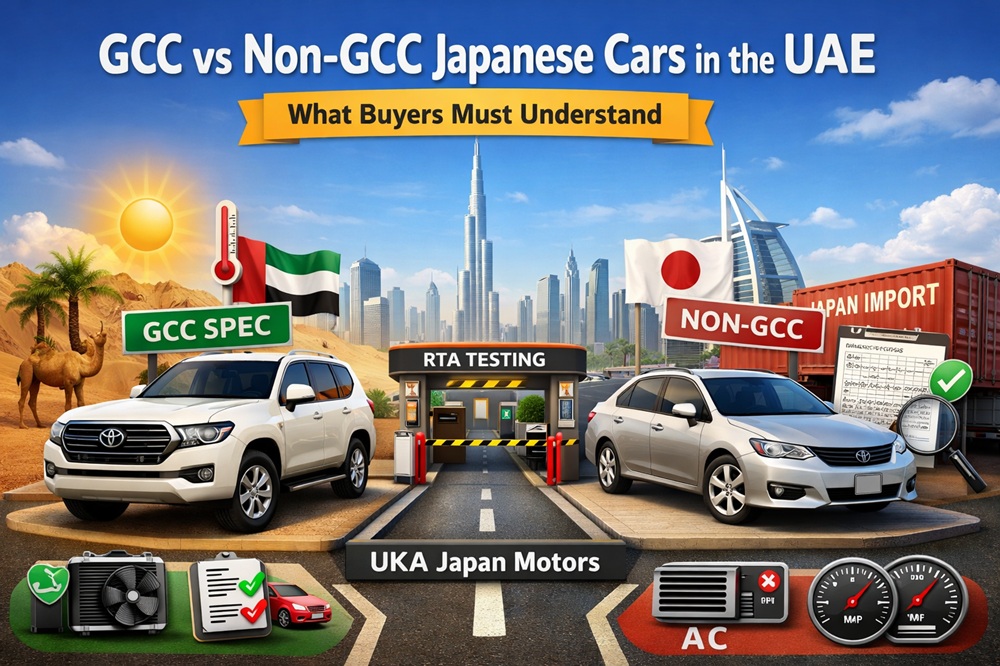
Quick answer Japanese imports often fail initial UAE inspection due to lighting mismatches, undocumented modifications, emissions non-compliance, structural repairs, and missing safety or conformity documentation. These issues are usually fixable—but only if they’re identified before registration or resale timelines are affected. This matters in the UAE because inspection standards are regulation-driven, climate-aware, and safety-focused, not cosmetic. What passes in Japan does not automatically pass in Dubai, Abu Dhabi, or Sharjah. Why Japanese Imports Face Compliance Challenges in the UAE Japanese...
Read More