


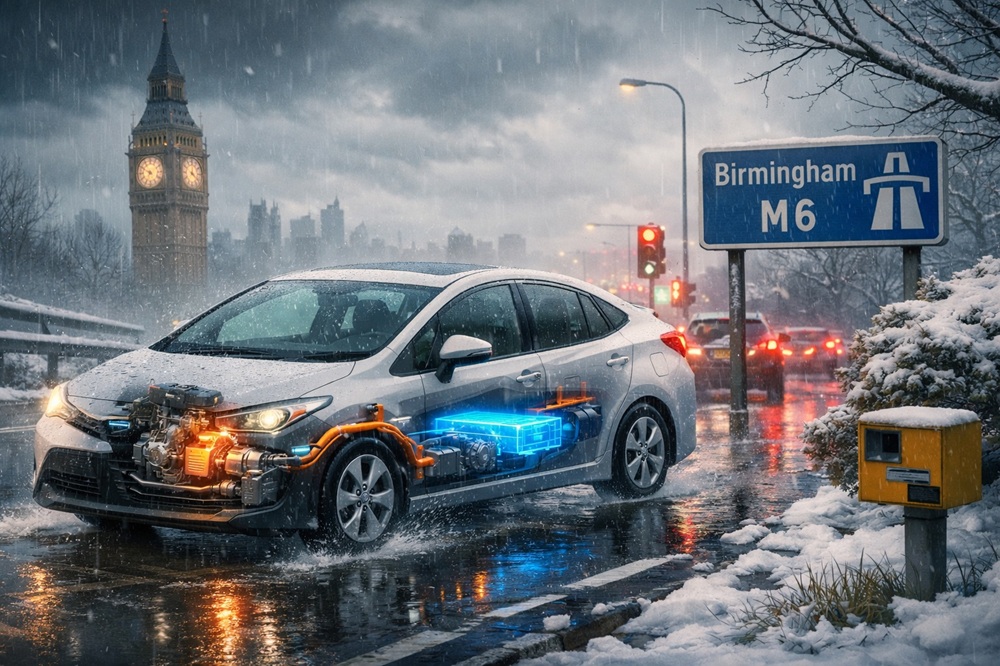
Hybrid vehicles are widely recognised for their ability to improve fuel efficiency and reduce engine load during urban driving. In England, where driving conditions frequently involve damp roads, low temperatures, and seasonal weather variation, the behaviour of hybrid systems can differ from what drivers may expect under warmer conditions.
Cities such as Birmingham present a particularly relevant environment for observing these effects. Daily journeys often involve a combination of congested city roads, short commutes, motorway junction queues, and frequent stop-start movement. When these patterns are combined with England’s cold and wet climate, the hybrid powertrain responds in specific ways that influence efficiency, battery performance, and engine usage.
Understanding how weather conditions interact with hybrid technology allows drivers to interpret vehicle behaviour more accurately. It also helps owners maintain realistic expectations about performance during colder months and wet seasonal periods.
This article explains how temperature, rainfall, road conditions, and seasonal changes influence hybrid vehicle efficiency, with practical context grounded in Birmingham driving conditions.
Summary: Key Ways Cold and Wet Weather Affects Hybrid Efficiency
Several environmental factors influence how hybrid vehicles perform in England’s climate.
The most important include:
-
Low temperatures affecting hybrid battery efficiency
-
Increased engine operation during cold starts
-
Reduced regenerative braking effectiveness on wet roads
-
Higher electrical demand for heating systems
-
Short urban journeys preventing optimal system warm-up
In Birmingham, where commuting patterns often involve short trips and congested traffic corridors, these factors combine to influence how often the petrol engine engages and how effectively the electric motor contributes to driving.
While hybrid vehicles remain efficient in these conditions, seasonal changes can alter how the system distributes energy between the electric motor and internal combustion engine.
Why Weather Matters for Hybrid Powertrains
Hybrid vehicles operate using a combination of two primary components:
-
Internal combustion engine
-
Electric motor powered by a hybrid battery
The system continuously adjusts how power is delivered based on speed, acceleration demand, battery charge levels, and environmental conditions.
Weather plays a role because:
-
Batteries respond differently at varying temperatures
-
Road grip affects braking energy recovery
-
Cabin heating requires additional energy
-
Engine warm-up cycles change during colder months
Unlike conventional vehicles that rely entirely on an engine, hybrids must balance multiple energy sources. When temperatures drop or roads become wet, the system may prioritise engine operation more frequently to maintain optimal vehicle performance.
This behaviour is particularly noticeable during winter mornings and during sustained wet weather periods common in England.
Hybrid Battery Behaviour in Cold Temperatures
The hybrid battery is one of the most sensitive components to environmental conditions.
Most hybrid systems use nickel-metal hydride (NiMH) or lithium-ion batteries, both of which experience changes in performance when temperatures drop.
Reduced Energy Efficiency in Cold Conditions
Cold temperatures slow the chemical reactions inside batteries. As a result:
-
Battery discharge becomes slightly less efficient
-
Electric motor assistance may be reduced temporarily
-
The petrol engine may engage earlier during acceleration
This does not indicate a fault. It simply reflects the physics of battery chemistry.
During winter mornings in Birmingham, especially when vehicles have been parked overnight, drivers may notice:
-
The engine starting sooner after ignition
-
Less frequent electric-only driving during the first few minutes
-
Slightly slower battery charging behaviour
Once the system warms up, the hybrid battery typically returns to its normal operating efficiency.
Engine Warm-Up Cycles During Cold Weather
One of the most noticeable seasonal differences in hybrid behaviour occurs during engine warm-up.
Hybrid vehicles prioritise efficient engine operation. In colder temperatures, the engine must reach its optimal operating temperature before the system allows extensive electric-only driving.
Why Hybrids Use the Engine More in Winter
During cold starts, the engine performs several important functions:
-
Heating engine oil to proper viscosity
-
Activating emission control systems
-
Supplying heat for the cabin heater
-
Stabilising combustion efficiency
Because of this, hybrid vehicles often keep the engine running longer during the first few minutes of driving in winter.
In Birmingham’s urban traffic, this effect is amplified when:
-
Journeys are short
-
Traffic congestion limits vehicle speed
-
The engine has limited time to reach full temperature
Drivers may therefore notice reduced electric-only driving during early stages of winter journeys.
Heating Systems and Energy Demand
Unlike conventional vehicles that rely solely on engine heat, hybrids must carefully manage cabin heating because it affects energy consumption.
Cabin Heating in Hybrid Vehicles
Most hybrid vehicles use the petrol engine to generate heat for the cabin heater. When outside temperatures are low, the vehicle may keep the engine running to maintain interior comfort.
This has two consequences:
-
The engine remains active more frequently
-
The hybrid battery contributes slightly less to propulsion
In Birmingham’s colder months, drivers often use heating systems regularly during morning and evening commutes. When this happens, the hybrid control system prioritises maintaining cabin temperature, which can temporarily reduce overall fuel efficiency.
However, once the vehicle is warmed up and interior temperature stabilises, the hybrid system returns to its typical energy distribution between electric motor and engine.
Wet Roads and Regenerative Braking Efficiency
One of the key advantages of hybrid vehicles is regenerative braking, a process that converts braking energy into electricity and stores it in the hybrid battery.
However, this system behaves differently on wet road surfaces.
How Wet Roads Influence Regenerative Braking
When roads are wet, traction levels decrease. Hybrid braking systems adjust their behaviour to maintain vehicle stability.
To ensure safe braking, the vehicle may:
-
Reduce regenerative braking intensity
-
Increase reliance on conventional friction brakes
-
Adjust energy recovery rates
This is especially noticeable in Birmingham during periods of steady rainfall, which can last for extended periods during autumn and winter.
Because less braking energy is recovered under slippery conditions, hybrid battery charging may occur more gradually.
Despite this adjustment, the system prioritises safety and predictable braking behaviour, which is essential for urban traffic environments.
Rain, Tyre Grip, and Driving Behaviour
Rain also indirectly affects hybrid efficiency through changes in driving behaviour.
Wet road surfaces influence:
-
Acceleration patterns
-
Braking distances
-
Traffic flow speed
Drivers typically accelerate more gradually and maintain larger following distances during rainy conditions. While this often promotes smoother driving, it can also affect how the hybrid system cycles between electric and engine power.
For example:
-
Gentle acceleration may allow the electric motor to contribute more frequently
-
However, slower traffic movement may keep the engine active longer during warm-up cycles
Birmingham’s busy city roads often combine heavy traffic with wet conditions, creating a complex environment where hybrid systems must constantly adapt.
The Impact of Short Urban Journeys in Winter
Short trips are common in Birmingham. Many daily drives involve distances between residential neighbourhoods, workplaces, and local retail areas.
While hybrids are well suited for stop-start traffic, cold weather can make short journeys slightly less efficient.
Why Short Trips Affect Hybrid Efficiency
Short journeys may not allow enough time for:
-
The engine to fully warm up
-
The battery to stabilise at optimal temperature
-
The hybrid system to enter full efficiency mode
As a result, the petrol engine may operate for a larger proportion of the journey.
This effect is not unique to hybrids; conventional vehicles also experience reduced efficiency during cold short trips. However, hybrid drivers often notice the change more clearly because they are accustomed to frequent electric-only operation during warmer months.
Seasonal Driving Patterns in Birmingham
Birmingham’s climate features:
-
Frequent rainfall
-
Moderate winters with regular cold mornings
-
Short daylight hours during winter months
These factors influence how hybrid vehicles are used throughout the year.
Typical Seasonal Differences
Drivers may observe:
Summer and mild seasons
-
Longer electric-only driving phases
-
Faster battery charging through regenerative braking
-
Less engine operation during city driving
Winter and colder months
-
Increased engine use during warm-up
-
Greater heating demand
-
Slower battery efficiency during early driving stages
Despite these differences, hybrid vehicles remain particularly effective in Birmingham due to the city’s frequent stop-start traffic patterns.
Even during winter months, regenerative braking and electric motor assistance continue to provide efficiency benefits compared with conventional engine-only vehicles.
Long-Term Effects of Climate on Hybrid Systems
Hybrid vehicles are engineered to operate across a wide range of environmental conditions. England’s climate, although damp and cool, generally falls within the ideal operating range for hybrid systems.
Battery Durability
Hybrid battery management systems carefully regulate:
-
Temperature
-
Charging cycles
-
Power output
Even in cold conditions, the vehicle continuously adjusts battery usage to prevent damage and maintain longevity.
Engine Operation
Because hybrid engines often operate intermittently rather than continuously, cold weather warm-up cycles are managed carefully by the vehicle’s control system.
Over time, this balanced operation helps maintain engine efficiency while reducing unnecessary strain.
Inspection Considerations for Hybrid Vehicles in England
Regular inspection plays an important role in maintaining hybrid efficiency, particularly in climates with frequent rain and seasonal temperature changes.
Important inspection areas include:
-
Hybrid battery cooling systems
-
Brake components affected by regenerative braking
-
Tyres and traction performance on wet roads
-
Engine coolant and heating systems
-
Electrical system diagnostics
In England, imported hybrid vehicles must also meet compliance requirements before registration, which often include checks on electrical and safety systems.
Proper inspection ensures the hybrid system continues to perform reliably throughout seasonal changes.
Comparing Hybrid Efficiency in Wet Weather vs Conventional Vehicles
Although cold and wet weather influences hybrid behaviour, hybrids still offer advantages compared with conventional petrol vehicles.
Hybrid Advantages in Birmingham Conditions
Hybrid vehicles benefit from:
-
Regenerative braking during stop-start traffic
-
Electric assistance during low-speed driving
-
Reduced engine load during congestion
Even when rain slightly reduces regenerative braking effectiveness, the hybrid system continues to recover energy more efficiently than conventional braking systems.
For urban areas like Birmingham where traffic queues are common, hybrids remain particularly well suited to the environment.
Practical Driving Considerations for Hybrid Owners
Drivers can help maintain efficient hybrid operation during cold and wet weather by adapting their driving approach.
Practical habits include:
-
Allowing the vehicle a brief warm-up period during winter mornings
-
Driving smoothly to maximise regenerative braking
-
Maintaining appropriate tyre grip for wet roads
-
Avoiding repeated short journeys when possible
These behaviours allow the hybrid system to manage energy more effectively and maintain consistent efficiency across seasonal conditions.
Frequently Asked Questions
Do hybrid cars become less efficient in winter?
Hybrid efficiency can decrease slightly during colder months because batteries operate less efficiently at low temperatures and engines require longer warm-up periods. However, hybrids remain efficient compared with conventional vehicles in similar conditions.
Why does the engine start more often in cold weather?
During cold temperatures, the engine must warm up to reach its optimal operating range. It may also run longer to supply heat to the cabin and support emission control systems.
Does rain affect hybrid regenerative braking?
Yes. On wet roads, the vehicle may reduce regenerative braking strength to maintain safe traction. This can slightly reduce the amount of energy recovered during braking.
Are hybrid batteries affected by cold weather?
Hybrid batteries operate slightly less efficiently when cold, but vehicle systems regulate temperature and charging behaviour to maintain reliability and performance.
Do hybrid cars take longer to warm up in winter?
Hybrid engines may run longer during the first minutes of driving in winter because the system prioritises warming the engine and interior cabin.
Does using the heater reduce hybrid efficiency?
Cabin heating typically relies on engine heat. During cold weather, the engine may remain active longer to maintain interior temperature, which can influence efficiency.
Are hybrids suitable for Birmingham’s rainy climate?
Yes. Hybrid vehicles perform well in urban environments with frequent stop-start traffic, which is common in Birmingham. Even with wet conditions, regenerative braking and electric assistance remain beneficial.
Does cold weather damage hybrid batteries?
No. Hybrid batteries are designed to operate in varying temperatures. The vehicle’s battery management system protects the battery by controlling charging and discharge behaviour.
The Role of UKA Japan Motors
Understanding how hybrid vehicles behave in England’s climate is an important part of responsible vehicle ownership. When importing or purchasing a Japanese hybrid vehicle, inspection and compliance checks ensure the vehicle’s systems operate correctly in local conditions.
UKA Japan Motors focuses on providing clear guidance regarding hybrid vehicle inspections, system condition, and documentation requirements for vehicles entering the English market. Careful inspection of hybrid components helps confirm that the battery, braking system, and electronic controls are functioning correctly for everyday driving environments such as Birmingham’s urban roads.
By emphasising proper inspection and compliance processes, drivers can approach hybrid ownership with confidence and a clearer understanding of how these vehicles respond to seasonal weather conditions.
Conclusion
England’s cold and wet climate influences how hybrid vehicles distribute power between their electric motor and internal combustion engine. Lower temperatures affect battery chemistry, heating systems increase energy demand, and wet road conditions can influence regenerative braking behaviour.
In Birmingham, where short urban journeys and congested traffic are common, these seasonal factors can shape how hybrid systems operate during daily commutes. Drivers may notice increased engine use during winter mornings, slightly reduced electric-only driving, and changes in braking energy recovery during wet weather.
Despite these seasonal variations, hybrid vehicles remain highly effective in urban environments. Their ability to recover braking energy, assist with electric propulsion, and adapt to traffic conditions continues to provide efficiency benefits throughout the year.
Understanding how weather interacts with hybrid technology allows drivers to interpret vehicle behaviour more clearly and maintain realistic expectations about seasonal performance.
Contact UKA Japan Motors for availability and inspection guidance.