


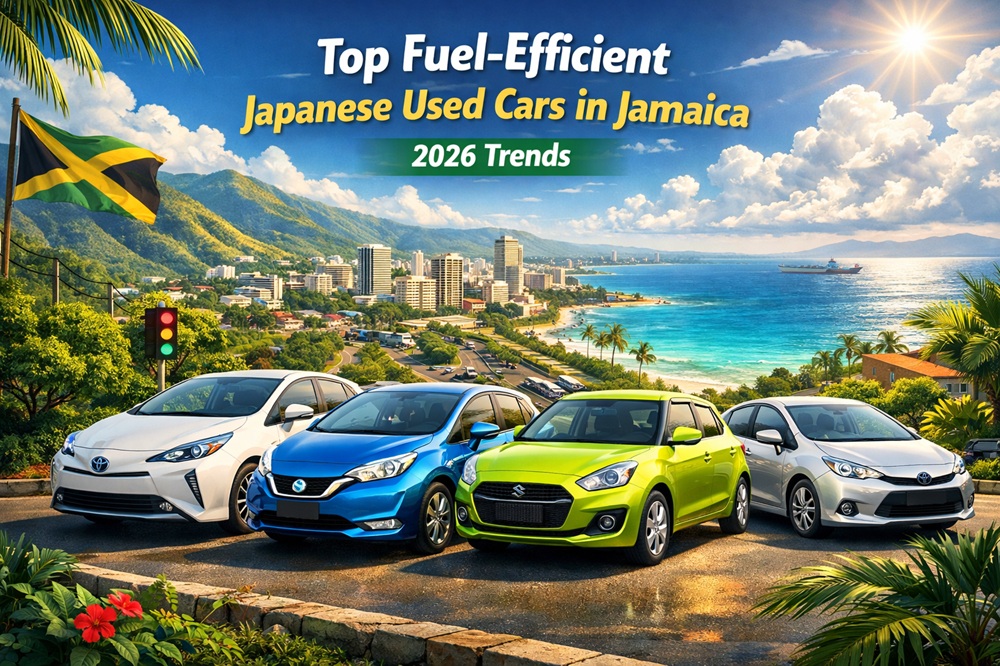
Fuel efficiency has become one of the most important factors for drivers in Jamaica, particularly in Kingston where daily commuting, traffic congestion, and long idle times are part of everyday driving. Whether navigating Half-Way Tree traffic, climbing hillside roads in St. Andrew, or handling coastal heat conditions, the choice of a fuel-efficient vehicle directly affects long-term ownership experience.
Japanese used cars dominate this category due to their engineering focus on efficiency, reliability, and hybrid innovation. As of 2026, the trend has shifted further toward hybrid systems, smaller displacement engines, and smarter fuel management technologies.
This guide explains the most practical, fuel-efficient Japanese used cars currently relevant for Jamaica, how they perform in real driving conditions, and what to consider before ownership.
Direct Answer: What Are the Best Fuel-Efficient Japanese Used Cars in Jamaica?
The most fuel-efficient Japanese used cars for daily driving in Jamaica in 2026 include:
- Toyota Prius (Hybrid)
- Toyota Aqua (Hybrid)
- Honda Fit Hybrid
- Nissan Note e-POWER
- Toyota Vitz / Yaris (Petrol)
- Suzuki Swift (Petrol)
- Daihatsu Mira / Toyota Pixis (Kei cars)
These vehicles stand out due to:
- Strong fuel economy in stop-and-go traffic
- Reliable performance in hot and humid conditions
- Proven hybrid systems suited to urban driving
- Availability of parts and service familiarity
However, each model suits different types of drivers depending on driving routes, passenger needs, and maintenance expectations.
Why Fuel Efficiency Matters in Kingston Driving Conditions
Driving in Kingston is not simply about distance—it is about time spent on the road. Fuel consumption increases significantly in:
- Stop-and-go traffic along major corridors like Constant Spring Road
- Extended idling in urban congestion
- Short-distance trips with frequent starts and stops
- Hillside driving requiring repeated acceleration
Hybrid vehicles perform especially well under these conditions because:
- Electric motors assist during low-speed driving
- Regenerative braking recovers energy during traffic slowdowns
- Engines operate more efficiently at controlled intervals
In contrast, traditional petrol vehicles consume more fuel during repeated acceleration cycles, especially in heavy traffic.
Hybrid vs Petrol: Which Is Better for Daily Driving?
Hybrid Vehicles
Advantages:
- Lower fuel consumption in city driving
- Quiet operation during low-speed travel
- Reduced engine strain due to electric assistance
Considerations:
- Hybrid battery condition must be verified during inspection
- Requires understanding of hybrid system diagnostics
- Cooling systems must be well maintained in Jamaica’s heat
Petrol Vehicles
Advantages:
- Simpler mechanical systems
- Easier servicing across general workshops
- Lower complexity in inspections
Considerations:
- Higher fuel consumption in traffic
- Less efficient in stop-and-go conditions
- Engine wear increases with frequent idling
For daily commuting in Kingston, hybrids generally offer better real-world efficiency, while petrol vehicles remain practical for simpler ownership.
Toyota Prius – The Benchmark for Hybrid Efficiency
The Toyota Prius remains one of the most recognized hybrid vehicles globally and continues to be relevant in Jamaica.
Why It Works in Jamaica
- Performs exceptionally well in heavy traffic
- Hybrid system reduces fuel usage during idle and slow driving
- Smooth driving experience on urban roads
Daily Driving Experience
In Kingston traffic, the Prius often runs on electric power at low speeds, which significantly reduces fuel consumption. On open roads, the petrol engine supports efficient cruising.
Inspection Considerations
- Hybrid battery health must be evaluated
- Cooling fan system for the battery should be checked
- Ensure no warning lights related to hybrid systems
Ownership Reality
The Prius suits drivers who spend most of their time in city environments and want maximum fuel efficiency over the long term.
Toyota Aqua – Compact Efficiency for Urban Use
The Toyota Aqua is one of the most popular hybrid hatchbacks due to its smaller size and efficiency.
Why It Fits Kingston
- Compact design makes it easy to maneuver in tight traffic
- Excellent fuel efficiency for short daily commutes
- Lower weight improves energy efficiency
Comparison with Prius
- Smaller and lighter than the Prius
- Slightly less interior space
- Often more suited for single drivers or small households
Inspection Focus
- Battery condition remains critical
- Suspension should be checked due to rough road exposure
- Interior wear may indicate heavy use
Ownership Perspective
The Aqua is ideal for drivers who prioritize efficiency and ease of movement in dense traffic areas.
Honda Fit Hybrid – Balanced Practicality
The Honda Fit Hybrid combines fuel efficiency with interior flexibility.
Key Strengths
- Spacious interior relative to its size
- Flexible seating configurations
- Smooth hybrid integration
Real-World Use in Jamaica
- Handles mixed driving conditions well
- Suitable for both city driving and occasional highway use
- Performs reliably in varying road surfaces
Hybrid System Differences
Compared to Toyota hybrids, Honda’s system behaves slightly differently, often engaging the engine more frequently. This can result in:
- Slightly different driving feel
- Still efficient, but not always as optimized for pure stop-and-go traffic
Inspection Considerations
- Hybrid system diagnostics
- Transmission behavior
- General suspension condition
Ownership Suitability
This vehicle suits drivers who need both fuel efficiency and interior practicality.
Nissan Note e-POWER – A Different Hybrid Approach
The Nissan Note e-POWER introduces a unique system where:
- The petrol engine does not drive the wheels directly
- Instead, it generates electricity for the electric motor
Advantages in Kingston Driving
- Feels like a fully electric vehicle in traffic
- Smooth acceleration in stop-and-go conditions
- Strong efficiency in urban environments
Comparison with Traditional Hybrids
- More electric-focused driving experience
- Less mechanical complexity in drivetrain connection
- Different maintenance considerations
Inspection Focus
- Battery system performance
- Generator (engine) condition
- Electrical system integrity
Ownership Consideration
This model suits drivers who want an electric-like driving experience without relying on charging infrastructure.
Toyota Vitz / Yaris – Reliable Petrol Efficiency
For drivers who prefer simplicity, the Toyota Vitz (also known as Yaris) remains a strong option.
Strengths
- Proven reliability
- Easy maintenance
- Widely understood by local mechanics
Fuel Efficiency Reality
While not as efficient as hybrids in traffic, it still offers:
- Good fuel economy on mixed routes
- Predictable performance
- Lower system complexity
Comparison with Hybrids
- Less efficient in congestion
- Easier to maintain
- No battery-related concerns
Inspection Considerations
- Engine condition
- Transmission smoothness
- Cooling system performance
Ownership Suitability
Ideal for drivers who want dependable daily transportation without hybrid complexity.
Suzuki Swift – Lightweight Efficiency
The Suzuki Swift is known for its lightweight design and responsive handling.
Why It Works in Jamaica
- Efficient due to lower vehicle weight
- Easy handling in urban environments
- Performs well on narrow or uneven roads
Fuel Efficiency Characteristics
- Performs well in moderate traffic
- Slightly less efficient than hybrids in heavy congestion
- Good balance between performance and economy
Inspection Focus
- Suspension condition
- Engine responsiveness
- Signs of wear from frequent short trips
Ownership Perspective
A practical choice for drivers who want a balance between efficiency and driving feel.
Kei Cars – Maximum Efficiency in Small Packages
Kei cars such as the Daihatsu Mira and Toyota Pixis represent the extreme end of fuel efficiency.
Key Features
- Very small engines
- Lightweight construction
- Minimal fuel consumption
Real-World Use in Jamaica
- Highly efficient for short urban trips
- Less suited for highways or steep hills
- Cabin space is limited
Comparison with Larger Cars
- More efficient than all other categories
- Less power and stability at higher speeds
- Reduced passenger and cargo capacity
Inspection Considerations
- Engine performance under load
- Cooling efficiency
- Structural condition due to compact design
Ownership Suitability
Best for short-distance daily commuting within urban areas.
How Road Conditions Affect Fuel Efficiency
Fuel efficiency is not only about the car—it is also influenced by:
Traffic Conditions
- Stop-start driving increases fuel consumption
- Hybrids mitigate this effect better than petrol vehicles
Terrain
- Hills require more engine power
- Smaller engines may struggle under load
Weather and Heat
- High temperatures affect engine cooling
- Air conditioning usage increases fuel consumption
Road Surface
- Rough roads increase rolling resistance
- Poor suspension can reduce efficiency over time
Understanding these factors helps drivers choose the right vehicle for their specific routes.
Inspection and Documentation Considerations
Before selecting a fuel-efficient used car, inspection is critical.
Key Areas to Check
- Engine condition and performance
- Transmission smoothness
- Suspension wear from local road conditions
- Cooling system efficiency
Hybrid-Specific Checks
- Battery health and performance
- Cooling systems for hybrid components
- Diagnostic scan for system errors
Documentation Importance
- Verify import documentation
- Ensure compliance with local registration requirements
- Confirm inspection history where available
Proper inspection ensures that fuel efficiency is not compromised by hidden issues.
Long-Term Ownership Considerations
Fuel efficiency must be evaluated alongside long-term usability.
Maintenance Patterns
- Regular servicing ensures efficiency remains consistent
- Hybrid systems require specialized understanding
Parts Availability
- Common models have easier access to replacement parts
- Less common models may require longer sourcing times
Driving Habits
- Aggressive driving reduces fuel efficiency
- Smooth acceleration improves long-term performance
Climate Impact
- Heat affects battery performance and engine cooling
- Proper maintenance becomes essential in tropical conditions
Frequently Asked Questions
1. Are hybrid cars reliable in Jamaica’s heat?
Yes, when properly maintained. Cooling systems must be in good condition to support battery performance.
2. Which hybrid car is best for heavy Kingston traffic?
The Toyota Aqua and Toyota Prius perform particularly well due to their efficient low-speed operation.
3. Do hybrid batteries require replacement frequently?
Not necessarily. With proper care, they can last for many years, but condition must be verified before purchase.
4. Is a petrol car still a good option for daily driving?
Yes, especially for drivers who prefer simpler maintenance and mixed driving routes.
5. Are smaller cars always more fuel-efficient?
Generally yes, but engine efficiency and driving conditions also play a major role.
6. Can fuel efficiency decrease over time?
Yes, especially if maintenance is neglected or components wear out.
7. Are Kei cars suitable for all drivers?
They are best for short urban trips and may not suit drivers needing power or space.
8. What is the biggest factor affecting fuel consumption in Kingston?
Traffic conditions and driving habits are the most significant factors.
The Role of UKA Japan Motors
UKA Japan Motors focuses on inspection-based vehicle sourcing, ensuring that fuel efficiency is not just theoretical but practical for real-world use in Jamaica.
This includes:
- Careful evaluation of hybrid systems
- Verification of engine and transmission condition
- Assessment of wear based on driving conditions
- Transparent documentation handling
The goal is to match each driver with a vehicle that performs reliably under local conditions rather than simply appearing efficient on paper.
Conclusion
Fuel efficiency in Jamaica is shaped by more than just engine specifications—it depends on traffic patterns, terrain, maintenance practices, and inspection quality.
Hybrid vehicles dominate the 2026 landscape due to their ability to handle stop-and-go driving efficiently, while petrol cars continue to offer simplicity and reliability. The right choice depends on how and where the vehicle will be used daily.
Understanding these factors ensures that drivers select vehicles that remain efficient, reliable, and practical over the long term.
Contact UKA Japan Motors for availability and inspection guidance.