


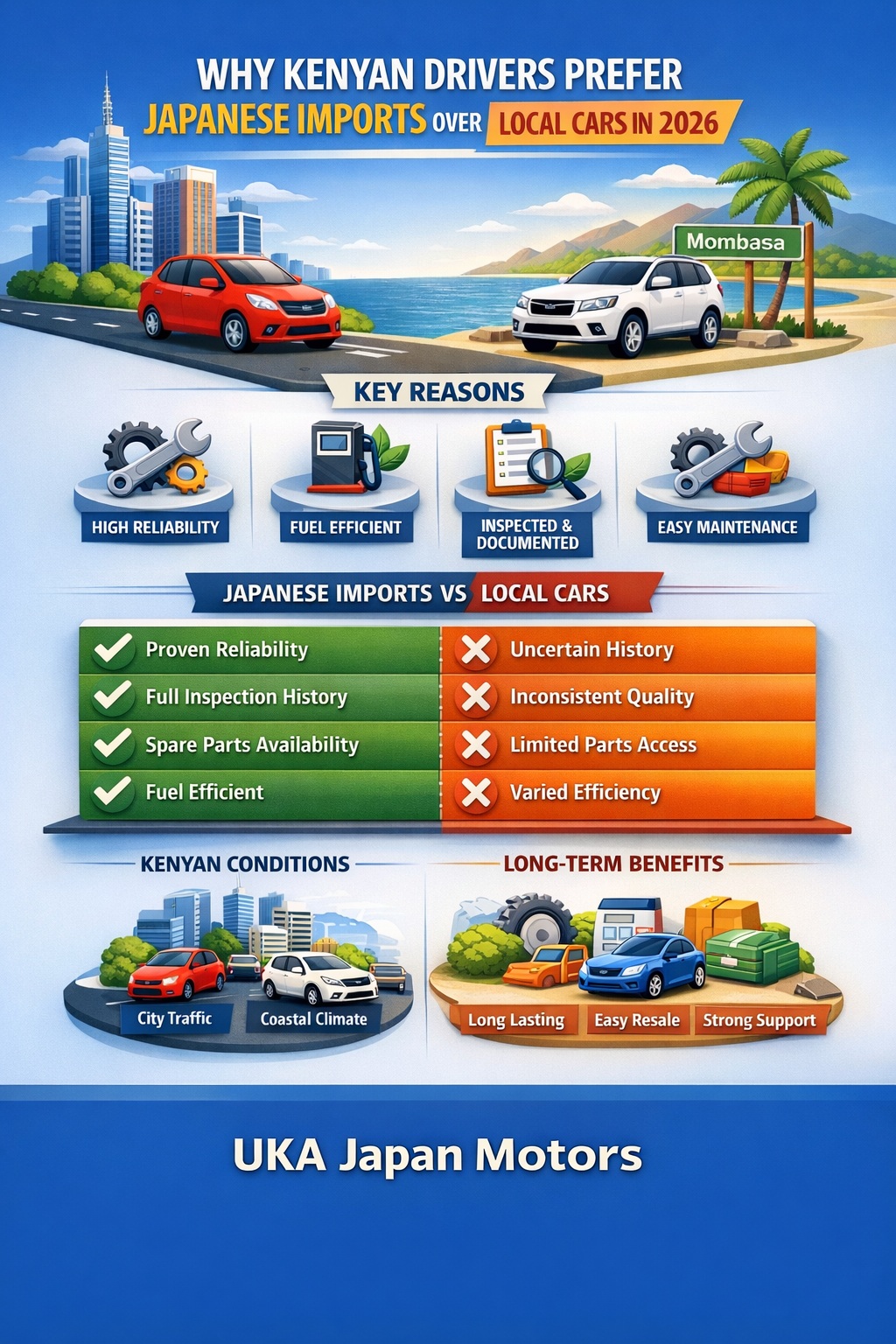
In 2026, the Kenyan automotive landscape continues to show a strong and consistent pattern: a clear preference for Japanese import vehicles over locally available alternatives. Whether in the busy streets of Nairobi or along the humid coastal roads of Mombasa, drivers repeatedly choose imported Japanese cars as their primary mode of transport.
This preference is not driven by trends or short-term considerations. Instead, it reflects years of real-world experience, practical ownership outcomes, and an understanding of how vehicles perform under Kenyan conditions.
Japanese imports are not simply seen as vehicles—they are considered dependable tools for daily life, long-distance travel, and business operations.
Direct Answer: Why Japanese Imports Are Preferred
Kenyan drivers prefer Japanese imports in 2026 because they offer:
- Proven long-term reliability under varied road conditions
- Verified inspection and maintenance history before arrival
- Better fuel efficiency for both city and highway driving
- Wide availability of spare parts across the country
- Strong compatibility with Kenya’s road and climate conditions
- Higher consistency in build quality and engineering
These factors combine to create a vehicle ownership experience that is predictable, manageable, and aligned with local needs.
The Kenyan Driving Environment: Why Vehicle Choice Matters
To understand this preference, it is important to consider how vehicles are actually used in Kenya.
Nairobi: Urban Pressure and Stop-Start Driving
In Nairobi, drivers face:
- Heavy traffic congestion
- Frequent braking and acceleration
- Uneven road surfaces in some areas
- Long idle times
Vehicles must be responsive, efficient, and capable of handling daily stress without excessive wear.
Mombasa: Coastal Climate and Corrosion Risk
In Mombasa, conditions are different:
- High humidity and salt exposure
- Warmer temperatures year-round
- Occasional flooding in low-lying areas
Cars must resist corrosion and maintain performance despite environmental stress.
Japanese imports are widely regarded as suitable for both of these environments, which contributes significantly to their popularity.
Reliability: The Foundation of Buyer Confidence
One of the most important reasons Kenyan drivers prefer Japanese imports is reliability.
Japanese manufacturers are known for:
- Consistent engineering standards
- Durable engine design
- Long-lasting transmission systems
In practical terms, this means:
- Fewer unexpected breakdowns
- Lower frequency of major repairs
- Stable performance over years of use
For drivers who rely on their vehicles daily—whether for commuting, family transport, or business—this reliability is critical.
Inspection Standards Before Export
Japanese import vehicles typically undergo structured inspection processes before leaving Japan.
These inspections often include:
- Engine condition evaluation
- Mileage verification
- Structural integrity checks
- Documentation of service history
This level of documentation allows Kenyan buyers to:
- Understand the vehicle’s past usage
- Identify any prior damage
- Confirm overall condition before import
Why This Matters in Kenya
Locally available vehicles may not always come with complete or verifiable histories. In contrast, Japanese imports provide a clearer starting point for ownership.
This transparency builds trust and reduces uncertainty.
Fuel Efficiency in Kenyan Conditions
Fuel efficiency is not about cost comparisons—it is about practicality.
In Kenya:
- Urban driving often involves traffic delays
- Long-distance travel between cities is common
- Fuel availability can vary in remote areas
Japanese imports are known for:
- Efficient engine design
- Lightweight construction
- Hybrid technology adoption
Real-World Impact
Drivers experience:
- Longer driving ranges
- Reduced frequency of refueling
- Better adaptability between city and highway driving
This makes Japanese vehicles particularly suitable for both Nairobi’s congestion and cross-country journeys.
Spare Parts Availability and Maintenance Ecosystem
Another key factor is the availability of spare parts.
Across Kenya:
- Japanese vehicle parts are widely stocked
- Mechanics are familiar with Japanese systems
- Maintenance procedures are well understood
This creates a strong support ecosystem.
Practical Ownership Advantage
Owners benefit from:
- Faster repair times
- Easier diagnosis of issues
- Consistent maintenance practices
In contrast, vehicles that are less common in the Kenyan market may face delays in parts sourcing and limited technical expertise.
Build Quality and Engineering Philosophy
Japanese vehicles are designed with a focus on:
- Longevity
- Efficiency
- Functional simplicity
This design philosophy aligns closely with Kenyan usage patterns.
Key Characteristics
- Engines designed for endurance
- Suspension systems suited for mixed road quality
- Interiors built for durability rather than luxury excess
These qualities make Japanese imports practical rather than purely aesthetic choices.
Comparison: Japanese Imports vs Locally Available Vehicles
Japanese Imports
Strengths:
- Verified condition before arrival
- Consistent engineering standards
- Strong resale demand
- Proven performance in Kenyan conditions
Limitations:
- Import process requires understanding of documentation
- Compliance requirements must be followed carefully
Locally Available Vehicles
Strengths:
- Immediate availability
- No import process required
Limitations:
- Limited transparency in vehicle history
- Varying maintenance standards
- Inconsistent condition across listings
Key Insight
The preference for Japanese imports is not about rejecting local vehicles—it is about choosing predictability, transparency, and long-term dependability.
Compliance and Import Regulations in 2026
Vehicle importation into Kenya is governed by structured regulations.
Key areas include:
- Age limits for imported vehicles
- Inspection requirements before shipment
- Registration and documentation upon arrival
Importance of Compliance
Failure to meet these requirements can result in:
- Delays in clearance
- Additional inspections
- Registration complications
Japanese imports are often already aligned with these standards due to pre-export inspection systems.
Ownership Experience Over Time
Choosing a vehicle is not just about the moment of purchase—it is about years of use.
With Japanese Imports
Owners typically experience:
- Predictable maintenance schedules
- Gradual wear rather than sudden failure
- Stable performance over long distances
Long-Term Considerations
- Consistent driving experience
- Easier resale due to market familiarity
- Continued availability of service support
This long-term stability reinforces the preference for Japanese vehicles.
Hybrid and Fuel-Efficient Technology Adoption
In 2026, hybrid vehicles have become more common on Kenyan roads.
Japanese manufacturers have been leaders in:
- Hybrid system development
- Fuel-efficient engine technology
- Emission reduction engineering
Relevance in Kenya
- Reduced fuel consumption in traffic-heavy Nairobi
- Quiet operation for urban driving
- Lower environmental impact
This makes Japanese imports increasingly aligned with modern driving needs.
Why This Preference Continues to Grow
The preference for Japanese imports is not static—it continues to strengthen.
Contributing Factors
- Increasing awareness of inspection standards
- Growing experience among Kenyan buyers
- Strong community knowledge and shared insights
- Consistent performance outcomes over time
Drivers are not simply following trends—they are making informed decisions based on accumulated experience.
Frequently Asked Questions (FAQs)
1. Are Japanese import cars suitable for Kenyan roads?
Yes. They are well-suited for both urban and rural conditions due to their durability and suspension design.
2. Do Japanese imports require special maintenance?
No. Most mechanics in Kenya are familiar with these vehicles, making maintenance straightforward.
3. Is the inspection history of Japanese imports reliable?
Yes. Vehicles often come with documented inspection reports that provide clear condition details.
4. How do Japanese cars perform in coastal areas like Mombasa?
They generally perform well, though regular maintenance is important due to humidity and salt exposure.
5. Are hybrid Japanese cars practical in Kenya?
Yes. They are especially useful in urban areas with heavy traffic.
6. Why are spare parts easier to find for Japanese vehicles?
Because they are widely used across Kenya, creating strong demand and supply networks.
7. Do Japanese imports last longer than other vehicles?
They are known for long-term reliability when properly maintained.
8. Is importing a Japanese car complicated?
It requires understanding documentation and compliance, but the process is structured and manageable.
The Role of UKA Japan Motors
UKA Japan Motors operates with a focus on:
- Verified vehicle inspection
- Transparent documentation
- Compliance with Kenyan import regulations
- Guidance throughout the import and registration process
This approach ensures that buyers:
- Understand the condition of the vehicle
- Receive accurate information
- Navigate import requirements correctly
Rather than focusing on transactions, the emphasis is placed on clarity, inspection integrity, and long-term ownership outcomes.
Conclusion
The continued preference for Japanese imports among Kenyan drivers in 2026 is rooted in real-world practicality.
These vehicles offer:
- Reliability under demanding conditions
- Transparency through inspection systems
- Compatibility with Kenyan roads and climate
- Strong support networks for maintenance and parts
In both Nairobi’s dense traffic and Mombasa’s coastal environment, Japanese imports consistently meet the expectations of Kenyan drivers.
This is not simply a market trend—it is the result of years of proven performance, informed decision-making, and alignment with local needs.
Contact UKA Japan Motors for availability and inspection guidance.