


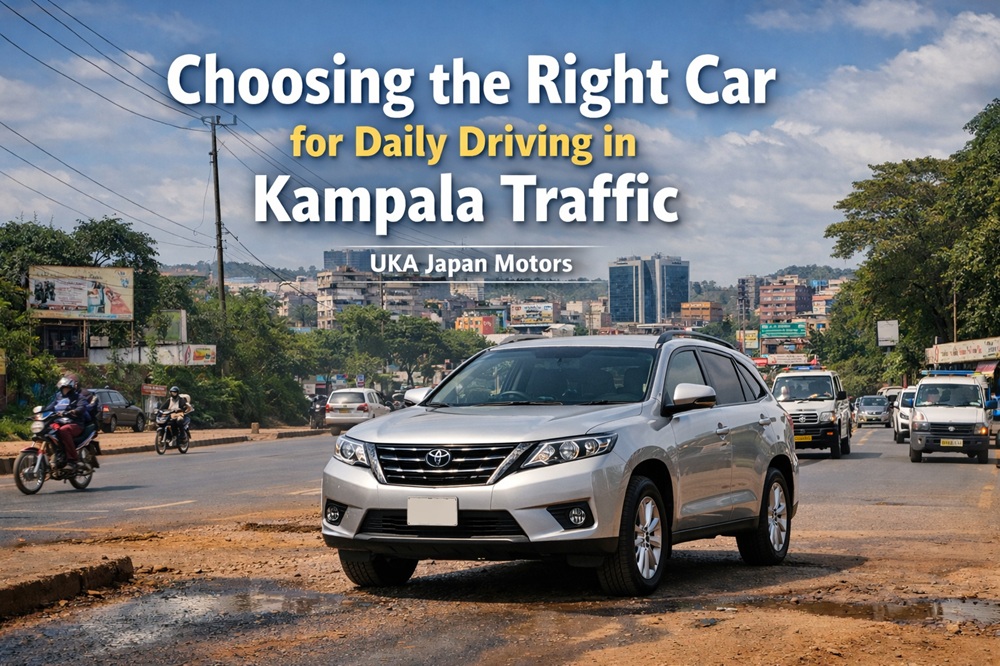
Selecting a car for daily use in Kampala is not simply about appearance, brand popularity, or engine size. It is about suitability. Kampala’s driving environment presents a unique mix of heavy congestion, narrow roads, uneven surfaces, sudden stops, limited parking space, and unpredictable traffic behavior.
A vehicle that performs well in open highway conditions may feel uncomfortable, inefficient, or even stressful in daily city traffic. This guide explains what to look for, what to avoid, and how to evaluate a car specifically for Kampala’s daily driving conditions.
Direct Answer: What Makes a Car Suitable for Kampala Traffic?
A suitable daily driver in Kampala typically has:
- Moderate engine size (not oversized for city use)
- Automatic transmission for stop-start traffic
- Good fuel efficiency
- Reliable cooling system
- Comfortable suspension for potholes and humps
- Compact dimensions for maneuverability
- Readily available spare parts
- Proper inspection documentation and compliance
The best car is not the most powerful or the largest. It is the one that reduces fatigue, handles traffic smoothly, and remains dependable over long-term urban use.
Understanding Kampala’s Traffic Reality
Before choosing a car, it is important to understand what daily driving actually involves.
1. Heavy Congestion
Traffic during peak hours often means:
- Slow movement
- Frequent braking
- Extended idling
- Short travel distances taking long durations
This environment stresses engines, cooling systems, and transmissions.
2. Road Surface Variability
Even within Kampala:
- Some roads are smooth and paved
- Others have potholes, drainage humps, uneven shoulders, or temporary roadworks
Ground clearance and suspension durability become important.
3. Limited Parking Space
Parking areas in commercial zones can be tight. Large vehicles become harder to manage and increase daily driving stress.
4. Warm Climate Conditions
Kampala’s climate requires a reliable cooling system. Overheating in traffic is not uncommon for poorly maintained vehicles.
Understanding these realities allows you to choose a vehicle based on functionality rather than assumptions.
Engine Size: Bigger Is Not Always Better
Many buyers assume that a larger engine means a better car. In Kampala traffic, this is rarely true.
Small to Moderate Engine (1.3L – 2.0L)
Advantages:
- Better fuel efficiency in stop-start traffic
- Less strain during idling
- Lower heat build-up
- Easier maintenance
These engines are well suited for daily commuting.
Larger Engines (2.5L and Above)
Considerations:
- Consume more fuel in congestion
- Generate more heat in prolonged traffic
- May feel unnecessary for short city distances
Unless your routine includes frequent upcountry travel or heavy load usage, a large engine may not be practical for daily Kampala use.
Automatic vs Manual Transmission in Traffic
Automatic Transmission
In Kampala’s heavy traffic, automatic transmission offers:
- Reduced driver fatigue
- Smooth stop-start movement
- Easier navigation in congestion
For daily city driving, automatic transmission is generally more practical.
Manual Transmission
Manual vehicles may:
- Require constant clutch control
- Increase leg fatigue
- Experience clutch wear in traffic
Manual vehicles are workable, but for daily congestion, automatic systems offer more comfort.
Ground Clearance: Why It Matters in the City
Ground clearance is often associated with rural driving, but it is equally important in Kampala.
Common Urban Challenges:
- High drainage humps
- Uneven parking entrances
- Potholes
- Road construction detours
A vehicle with slightly higher ground clearance reduces:
- Undercarriage damage
- Scraping on humps
- Suspension strain
However, extremely high vehicles may compromise stability and increase fuel consumption. Balance is key.
Vehicle Size: Compact vs Large
Compact Sedans and Hatchbacks
Advantages:
- Easier to park
- Better maneuverability
- Lower fuel consumption
- Comfortable for small families or individual drivers
Ideal for:
- Office commuting
- School runs
- Short daily routes
Mid-Size SUVs and Crossovers
Advantages:
- Better road visibility
- More cabin space
- Improved ground clearance
Considerations:
- Larger turning radius
- Slightly higher fuel use
Best for drivers who combine city use with occasional rougher roads.
Full-Size SUVs
Often unnecessary for daily urban commuting unless:
- You require consistent passenger capacity
- You frequently carry heavy loads
In tight Kampala parking areas, large vehicles can become inconvenient.
Cooling System Reliability in Kampala Traffic
One overlooked factor in city driving is engine cooling.
Extended idling in traffic means:
- Limited airflow through the radiator
- Continuous heat build-up
- Heavy reliance on cooling fans
When evaluating a car for daily use:
- Confirm radiator condition
- Inspect cooling fans
- Check coolant system integrity
- Ensure no history of overheating
Vehicles with weak cooling systems struggle in prolonged congestion.
Suspension Comfort and Durability
City driving does not mean smooth roads.
Frequent exposure to:
- Potholes
- Speed humps
- Uneven shoulders
Can cause premature wear.
Look for:
- Stable suspension design
- No unusual noises during inspection
- Balanced ride comfort
Overly stiff suspension may feel uncomfortable in daily use. Extremely soft suspension may wear faster.
Fuel Efficiency in Stop-Start Driving
City fuel efficiency differs from highway performance.
Daily Kampala traffic involves:
- Low-speed movement
- Frequent braking
- Idle time
Vehicles optimized for urban efficiency reduce long-term ownership strain.
Hybrid systems can perform well in stop-start traffic because they:
- Use electric assistance at low speeds
- Reduce fuel use during idling
However, hybrid systems require proper inspection and battery health verification before purchase.
Hybrid vs Petrol for Daily Kampala Use
Petrol Engine
Advantages:
- Simpler mechanical structure
- Widely available maintenance expertise
- Predictable performance
Hybrid System
Advantages:
- Efficient in congestion
- Reduced engine strain at low speeds
Considerations:
- Battery inspection is essential
- Cooling systems for hybrid components must be verified
Hybrid vehicles can be practical for city driving if properly inspected and maintained.
Inspection and Documentation: A Critical Step
No vehicle should be chosen for daily driving without:
- Verified inspection reports
- Matching chassis number documentation
- Confirmed roadworthiness status
- Proper registration flow
Urban driving exposes mechanical weaknesses quickly. Poorly repaired accident vehicles or improperly documented imports may develop issues soon after purchase.
Inspection clarity is not optional. It is essential.
Long-Term Ownership Considerations
Daily drivers accumulate mileage quickly.
Before choosing, consider:
- Spare parts availability in Kampala
- Service expertise for the specific model
- Known mechanical patterns
- Electrical system reliability
Vehicles with complex systems but limited local expertise may create long-term inconvenience.
When a Car May Not Be Suitable for Daily Kampala Driving
Avoid vehicles that:
- Overheat in traffic
- Have excessively large engines without need
- Are too low for urban humps
- Have limited spare parts availability
- Show signs of previous structural damage
- Have incomplete documentation
Practicality should always outweigh aesthetics.
Who Should Prioritize Compact Efficiency?
- Office commuters
- Small families
- Drivers covering short daily routes
- Individuals driving mostly within Kampala
Who May Need a Larger Vehicle?
- Families combining city and upcountry travel
- Drivers regularly carrying cargo
- Individuals living in areas with rough access roads
Frequently Asked Questions (FAQ)
1. Is a small engine powerful enough for Kampala traffic?
Yes. Moderate engine sizes are generally sufficient for city speeds and congestion.
2. Does automatic transmission require more maintenance?
Not necessarily, but proper servicing is essential for long-term durability.
3. Are hybrids reliable in Kampala?
They can be, provided battery and cooling systems are inspected properly.
4. Is ground clearance important even in the city?
Yes. Drainage humps and uneven roads make moderate clearance valuable.
5. Do large SUVs perform better in traffic?
They offer visibility but are not always practical for tight spaces and fuel efficiency.
6. Should I prioritize brand popularity?
Focus on suitability and inspection condition rather than popularity.
7. How important is spare parts availability?
Very important. Daily drivers require predictable maintenance access.
8. Can a manual car work for daily traffic?
Yes, but it may increase fatigue in heavy congestion.
The Role of UKA Japan Motors
Choosing the right car for daily driving is not only about model selection. It is about inspection integrity, documentation accuracy, and understanding how a vehicle will behave in real Kampala conditions.
UKA Japan Motors focuses on:
- Verified inspection history
- Proper documentation flow
- Chassis and engine verification
- Compliance awareness
- Long-term suitability guidance
A car that fits your routine reduces stress, improves reliability, and ensures safer daily movement within Kampala.
Conclusion
Choosing the right car for daily driving in Kampala traffic requires a realistic understanding of the environment. Congestion, road surface variability, warm climate, and limited parking space all influence suitability.
The ideal daily driver is:
- Efficient in stop-start movement
- Comfortable over uneven roads
- Easy to maneuver
- Properly inspected and documented
- Practical for long-term ownership
A car that matches Kampala’s realities will serve reliably for years without unnecessary strain.
Contact UKA Japan Motors for availability and inspection guidance.