


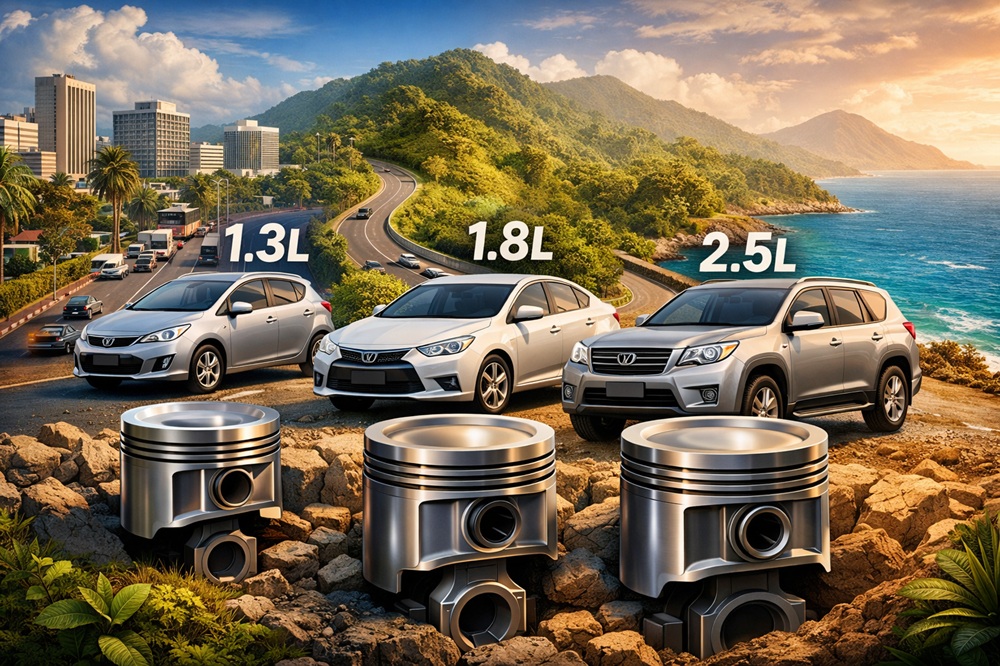
Selecting a vehicle involves many decisions, including body style, reliability, and practicality. One factor that often receives less attention than it deserves is engine size. Engine size, commonly measured in cubic centimeters (CC) or liters, directly influences how a vehicle performs in everyday driving situations.
In Jamaica, where driving conditions range from busy urban streets in Kingston to hillside roads and coastal routes, engine size can significantly affect how comfortable, responsive, and efficient a vehicle feels during daily use.
Many imported vehicles from Japan come with a wide range of engine sizes even within the same model category. Two vehicles that appear very similar may behave very differently on the road simply because of the difference in their engine capacity.
Understanding how engine size works, and how it fits Jamaican driving conditions, helps buyers choose vehicles that match their daily needs rather than relying only on appearance or brand familiarity.
Quick Answer: Why Engine Size Matters
Engine size matters because it determines how much power and torque an engine can produce.
In Jamaica, engine capacity influences:
-
Vehicle performance on hillside roads
-
Acceleration in stop-start urban traffic
-
Highway cruising comfort
-
Engine strain during long drives
-
Overall driving experience
Smaller engines are often well suited for city commuting, while larger engines provide stronger performance when climbing hills, carrying passengers, or traveling longer distances.
Choosing the correct engine size helps ensure the vehicle operates smoothly under Jamaica’s unique road and environmental conditions.
Understanding What Engine Size Actually Means
Engine size refers to the total volume of all cylinders inside an engine. It represents how much air and fuel the engine can burn during operation.
For example:
-
1000cc – 1300cc engines are considered small
-
1500cc – 1800cc engines fall into the mid-range category
-
2000cc and above are typically larger engines
The larger the engine capacity, the more air and fuel can enter the combustion chambers. This generally allows the engine to produce more power.
However, engine size alone does not determine performance. Factors such as engine design, hybrid technology, and transmission systems also influence how the engine behaves.
Still, engine capacity remains one of the most important indicators of how a vehicle will perform under different driving conditions.
Driving Conditions in Kingston and Across Jamaica
Choosing the right engine size becomes especially important when considering the variety of road conditions across Jamaica.
Urban Traffic
Kingston experiences dense traffic during peak hours, where vehicles frequently accelerate and slow down. In these conditions, smaller engines often perform efficiently because they require less power for short bursts of movement.
However, extremely small engines may feel strained when carrying passengers or navigating steep roads within the city.
Hillside Roads
Many areas outside central Kingston involve steeper inclines and winding roads. Vehicles traveling through hillside communities often require stronger engine torque to climb comfortably without excessive strain.
Larger engines or well-designed mid-size engines can handle these situations more smoothly.
Coastal Routes
Coastal roads frequently involve longer stretches of uninterrupted driving. In these conditions, engines that can maintain steady power levels help provide a relaxed driving experience.
These different environments highlight why engine size must match how and where the vehicle will actually be used.
Small Engines for Daily City Driving
Compact vehicles with smaller engines are very common among Japanese imports.
Examples of vehicles that often come with smaller engines include:
-
Toyota Vitz
-
Nissan Dayz
-
Toyota Passo
-
Suzuki Alto
These vehicles are designed primarily for urban mobility.
Advantages of Smaller Engines
Smaller engines typically provide:
-
Smooth operation in city traffic
-
Lighter vehicle weight
-
Efficient performance during short trips
-
Easier maneuverability on narrow roads
Drivers who spend most of their time navigating busy streets or commuting short distances often find smaller engines perfectly adequate.
Limitations of Small Engines
However, smaller engines may feel less responsive when:
-
Driving uphill
-
Carrying multiple passengers
-
Traveling with heavy cargo
-
Accelerating onto highways
Understanding these limitations helps buyers decide whether a small engine truly suits their lifestyle.
Mid-Size Engines and Balanced Performance
Mid-range engines are often considered the most balanced option for many drivers.
Vehicles with engines between 1500cc and 1800cc provide a combination of manageable efficiency and stronger performance.
Common examples include:
-
Toyota Corolla
-
Toyota Prius
-
Honda Fit
-
Mazda Axela
These vehicles can handle both city commuting and longer drives without excessive strain.
Why Mid-Size Engines Work Well in Jamaica
Mid-range engines offer several benefits:
-
Better hill climbing ability
-
Smoother acceleration
-
Improved comfort when carrying passengers
-
Balanced driving experience in different environments
Because Jamaican roads vary greatly between urban and rural settings, many drivers prefer this engine category for its versatility.
Larger Engines and High Power Applications
Vehicles with engines 2000cc and above are typically designed for stronger performance and heavier vehicle bodies.
Examples include:
-
Toyota Harrier
-
Toyota Prado
-
Nissan X-Trail
-
Toyota Estima
These vehicles often serve drivers who require additional power for larger vehicles or more demanding driving conditions.
Situations Where Larger Engines Are Helpful
Larger engines are beneficial when:
-
Driving on steep mountainous routes
-
Carrying larger groups of passengers
-
Transporting heavier loads
-
Traveling long distances regularly
However, they may not always be necessary for everyday commuting.
Choosing a large engine without needing its power can sometimes lead to unnecessary mechanical strain in stop-start city traffic.
Engine Size vs Hybrid Technology
Hybrid vehicles have become increasingly common among imports arriving in Jamaica.
Models such as the Toyota Prius, Toyota Aqua, and Toyota Corolla Hybrid combine gasoline engines with electric motors.
These vehicles sometimes use smaller gasoline engines but still deliver strong performance because the electric motor assists during acceleration.
Why Hybrid Engine Size Can Be Misleading
For example, a hybrid vehicle with a 1500cc engine may perform similarly to a larger engine vehicle because the electric motor supplements the engine’s power.
This makes hybrids particularly well suited to Kingston traffic, where frequent braking and acceleration allow the hybrid system to operate efficiently.
Understanding this difference helps buyers evaluate engine size more accurately when considering hybrid vehicles.
Engine Stress and Long-Term Ownership
One overlooked aspect of engine size is how it affects long-term engine durability.
An engine that constantly operates near its maximum capacity may experience increased wear over time.
For example:
-
A very small engine climbing steep hills daily may work harder than intended.
-
A mid-range engine performing the same task may experience less strain.
Choosing an engine size appropriate for the environment can help ensure smoother long-term ownership.
Regular inspection and maintenance remain essential regardless of engine size.
Vehicle Weight and Engine Matching
Engine size must also match the weight of the vehicle body.
Larger vehicles naturally require more power.
For example:
-
Compact hatchbacks can function well with smaller engines
-
Multi-purpose vehicles (MPVs) often require larger engines
When engine size is too small for the vehicle body, drivers may notice:
-
Sluggish acceleration
-
Increased engine noise
-
Reduced driving comfort on hills
Matching engine size to vehicle type ensures balanced performance.
Inspection Considerations for Engine Capacity
Before importing or purchasing a vehicle, engine specifications should always be verified during inspection.
Important checks include:
-
Engine displacement listed on official documentation
-
Matching chassis and engine numbers
-
Engine condition during inspection reports
-
Signs of modifications or replacement engines
Accurate documentation helps confirm that the engine installed in the vehicle matches the original factory specifications.
Inspection reports provide valuable insights into engine condition before shipment or registration.
Comparing Two Similar Vehicles with Different Engines
A practical example highlights how engine size influences vehicle choice.
Two vehicles may appear almost identical:
Vehicle A
Compact hatchback with a 1300cc engine
Vehicle B
Compact hatchback with a 1800cc engine
While both vehicles share the same body style, the larger engine may offer:
-
Stronger hill performance
-
Faster acceleration
-
Reduced engine strain under load
The smaller engine, however, may feel perfectly adequate for daily city commuting.
Comparing similar vehicles helps buyers understand how engine capacity affects real-world performance.
Ownership Habits That Influence Engine Choice
Engine size should also match personal driving habits.
Drivers who regularly:
-
Travel across parishes
-
Carry passengers frequently
-
Navigate hilly terrain
may benefit from stronger engines.
Meanwhile, drivers who mostly:
-
Commute short distances
-
Drive within Kingston
-
Travel with minimal passengers
may find smaller engines completely sufficient.
Matching engine size to lifestyle helps ensure comfortable and reliable ownership.
Frequently Asked Questions
Does a larger engine always mean a better car?
No. A larger engine provides more power, but the best choice depends on driving conditions and daily usage.
Are smaller engines suitable for Kingston traffic?
Yes. Smaller engines often perform efficiently in urban environments where vehicles operate at lower speeds and shorter distances.
Do hybrid vehicles require larger engines?
Not necessarily. Hybrid systems combine gasoline engines with electric motors, allowing smaller engines to deliver strong overall performance.
Is engine size important for hillside driving?
Yes. Climbing steep roads requires engine torque. Mid-size or larger engines typically handle these conditions more comfortably.
Can two cars with the same model year have different engine sizes?
Yes. Many vehicles are produced with multiple engine options depending on market specifications and design variations.
How can I confirm the engine size of an imported vehicle?
Engine size can be verified through official export documents, chassis number records, and vehicle inspection reports.
Does engine size affect long-term reliability?
An engine that matches the vehicle’s workload tends to experience less strain, which may support smoother long-term operation when properly maintained.
Should engine size be checked during vehicle inspection?
Yes. Inspection reports should confirm engine specifications and verify that the engine installed matches official documentation.
UKA Japan Motors Inspection and Import Guidance
Selecting the correct engine size requires more than simply reviewing vehicle specifications. Buyers must also verify engine condition, documentation accuracy, and inspection reports before finalizing a vehicle choice.
UKA Japan Motors supports vehicle buyers by helping review inspection reports, export documentation, and vehicle specifications so buyers clearly understand the condition and configuration of each imported vehicle.
This approach focuses on transparency and reliable documentation, helping buyers make informed decisions based on verified vehicle information rather than assumptions.
Conclusion
Engine size is one of the most important factors when choosing a vehicle for use in Jamaica. It influences how the vehicle performs in city traffic, climbs hillside roads, and handles everyday driving demands.
Smaller engines can provide efficient urban mobility, while mid-range and larger engines offer stronger performance for heavier vehicles and more demanding driving environments.
Understanding how engine capacity interacts with vehicle weight, hybrid technology, and real driving conditions helps buyers select vehicles that align with their daily needs.
Making an informed decision about engine size supports a smoother driving experience and more confident long-term vehicle ownership.
Contact UKA Japan Motors for availability and inspection guidance.