


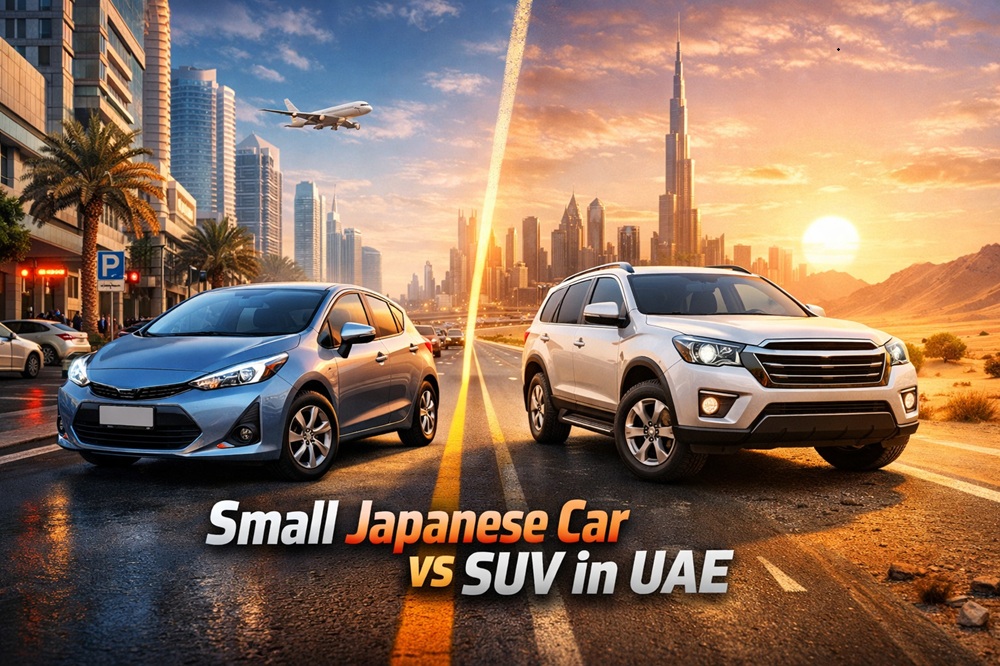
For daily driving in the UAE, small Japanese cars are generally more practical in dense urban environments like Dubai and Sharjah, while SUVs offer advantages in comfort, visibility, and versatility—especially for longer drives and mixed road conditions.
The right choice depends on how and where the vehicle will be used. Daily commuting patterns, parking availability, and exposure to heat and traffic all play a significant role in determining which option works better.
Understanding the UAE Driving Environment
Driving conditions across the UAE are not uniform. A vehicle that performs well in central Dubai may feel different on longer highway routes between emirates.
Key realities include:
- Heavy traffic congestion in areas like Dubai Marina, Deira, and Sharjah industrial zones
- Frequent stop-and-go driving, especially during peak hours
- Tight parking spaces in residential and commercial zones
- Long highway stretches connecting Dubai, Abu Dhabi, and northern emirates
- Extreme heat exposure, especially during summer months
These conditions directly influence whether a compact car or an SUV is more suitable.
What Defines Small Japanese Cars and SUVs?
Small Japanese Cars
These include compact hatchbacks and sedans designed for efficiency and urban use.
Typical characteristics:
- Lightweight structure
- Smaller engine capacity
- Lower ground clearance
- Compact dimensions for easy maneuvering
SUVs (Sport Utility Vehicles)
SUVs vary from compact crossovers to full-size vehicles.
Typical characteristics:
- Higher ground clearance
- Elevated driving position
- Larger body size
- Increased interior space
Why This Choice Matters in the UAE
This is not just about preference—it directly impacts:
- Daily comfort during long commutes
- Ease of driving in congested areas
- Exposure to heat and wear over time
- Inspection outcomes for imported vehicles
- Long-term usability and maintenance considerations
Choosing the wrong category for your usage pattern often leads to dissatisfaction over time.
Daily Driving in City Traffic: Compact Cars Take the Lead
In dense urban environments, small Japanese cars have a clear advantage.
Maneuverability
Their compact size makes it easier to:
- Navigate narrow streets
- Change lanes in slow-moving traffic
- Handle tight turns in older areas
Parking Efficiency
Parking is a major daily challenge in cities like Dubai and Sharjah.
Small cars:
- Fit into tighter spaces
- Require less effort to park
- Reduce the risk of minor parking damage
Stop-and-Go Comfort
Frequent braking and acceleration are less physically demanding in smaller vehicles due to:
- Lower weight
- Simpler driving dynamics
SUVs in Daily Traffic: Where They Struggle
SUVs can feel less practical in city-heavy driving.
Challenges:
- Larger turning radius
- Difficulty in tight parking areas
- More effort in congested roads
However, they still offer one advantage:
Elevated Visibility
Drivers benefit from:
- Better road view
- Improved awareness in heavy traffic
Highway Driving: SUVs Offer Better Comfort
For long-distance driving between emirates, SUVs often provide a more comfortable experience.
Stability and Comfort
SUVs typically offer:
- Better suspension for uneven roads
- More stable driving at higher speeds
- Reduced fatigue on long journeys
Space and Practicality
They are more suitable for:
- Family use
- Carrying luggage
- Multi-passenger travel
Small Cars on Highways
While capable, compact cars may:
- Feel less stable at high speeds
- Offer less cabin space
- Be more affected by crosswinds
Heat and Climate Impact: A Critical UAE Factor
The UAE climate plays a significant role in vehicle performance.
Small Cars
- Smaller cabins cool down faster
- AC systems are less strained
- Less exposure of materials to heat
SUVs
- Larger interiors take longer to cool
- AC systems work harder in peak summer
- More surface area exposed to sun
Over time, this affects:
- Interior wear
- AC efficiency
- Electrical system stress
Inspection and Compliance Considerations
For imported Japanese vehicles, inspection is a critical stage before registration.
Small Cars
Common inspection concerns:
- Suspension wear due to lighter components
- Brake condition in urban-driven units
SUVs
Inspection challenges may include:
- Suspension system stress from heavier body
- Undercarriage wear if used on rough terrain
- Tire condition and alignment
Shared Considerations
Both types must pass:
- Lighting compliance
- Structural integrity checks
- Emissions standards
- Chassis inspection
Vehicles that appear visually clean may still fail due to hidden issues.
Ownership Reality Over Time
Small Japanese Cars
Best suited for:
- Daily commuters
- Individuals driving within city limits
- Drivers prioritizing ease of use
Potential limitations:
- Less interior space
- Reduced comfort for long journeys
SUVs
Best suited for:
- Families
- Drivers frequently traveling between emirates
- Mixed-use driving (city + highway)
Potential limitations:
- More demanding in urban environments
- Greater exposure to wear from heat and size
Direct Comparison: Small Cars vs SUVs in UAE
| Factor | Small Japanese Cars | SUVs |
|---|---|---|
| City Driving | Excellent | Moderate |
| Parking | Easy | Challenging |
| Highway Comfort | Moderate | High |
| Interior Space | Limited | Spacious |
| Heat Impact | Lower | Higher |
| Maneuverability | High | Moderate |
| Visibility | Moderate | High |
| Daily Urban Use | Ideal | Less Practical |
When a Small Japanese Car Makes More Sense
Choose a compact car if:
- Your driving is mostly within city limits
- You deal with daily traffic congestion
- Parking is limited or tight
- You prefer ease of handling
When an SUV Is the Better Option
Choose an SUV if:
- You frequently drive long distances
- You need more interior space
- You prioritize comfort over maneuverability
- Your driving includes highways and varied road conditions
Frequently Asked Questions
1. Are small cars safe for UAE highways?
Yes, but they may feel less stable compared to SUVs at higher speeds.
2. Do SUVs perform better in hot weather?
Not necessarily. Their larger cabins take longer to cool and place more demand on AC systems.
3. Which is easier for daily parking in Dubai?
Small Japanese cars are significantly easier to park in tight urban areas.
4. Are SUVs better for families in the UAE?
Yes, due to increased space and comfort for passengers.
5. Do compact cars wear out faster in UAE conditions?
Not inherently, but heavy traffic use can increase wear on brakes and suspension.
6. Is visibility better in SUVs?
Yes, due to the elevated driving position.
7. Which type is better for Sharjah traffic?
Small cars are generally more practical due to congestion and tighter roads.
8. Can SUVs handle city driving effectively?
Yes, but they require more effort and awareness in tight spaces.
The Role of UKA Japan Motors
Choosing between a small Japanese car and an SUV is not just about preference—it requires understanding:
- Actual vehicle condition before import
- Inspection readiness for UAE compliance
- Suitability for local driving conditions
UKA Japan Motors focuses on:
- Careful vehicle selection based on real usage needs
- Inspection awareness before shipment
- Transparency in vehicle condition and suitability
This ensures that the vehicle aligns with UAE driving realities—not just expectations.
Final Thoughts
There is no universal answer. The better option depends entirely on how the vehicle will be used in the UAE.
- For urban, daily commuting: small Japanese cars provide unmatched convenience
- For comfort, space, and long-distance travel: SUVs offer clear advantages
Understanding your daily driving pattern is the most important factor in making the right decision.
Contact UKA Japan Motors for availability and inspection guidance.