


Introduction
Across Kenya, a noticeable shift is taking place in the automotive market. Buyers who previously leaned toward conventional petrol vehicles are increasingly turning their attention to Japanese hybrid cars. This transition is not driven by trends alone, but by practical, everyday realities of driving, fuel usage, and long-term vehicle ownership.
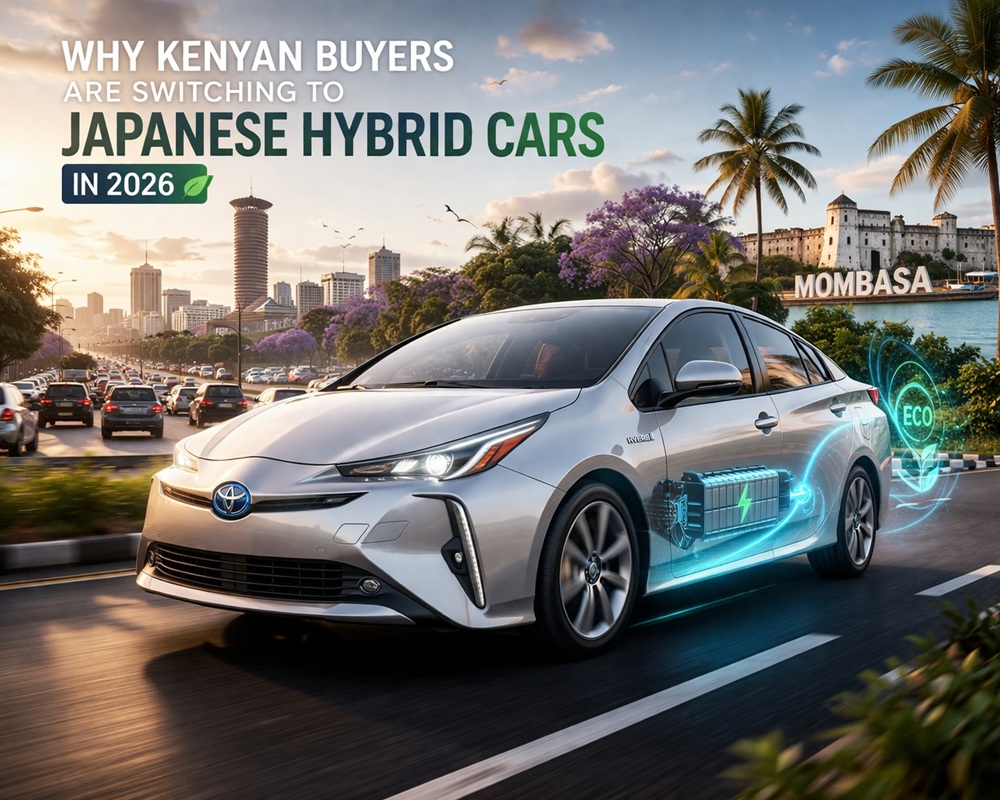
From the dense traffic patterns in Nairobi to the coastal climate of Mombasa, hybrid vehicles are aligning more closely with how vehicles are actually used in Kenya today. As 2026 unfolds, this shift is becoming more defined, with hybrid models no longer seen as niche or experimental, but as a viable and often preferred choice.
Direct Answer: Why Are Kenyan Buyers Choosing Hybrid Cars?
Kenyan buyers are switching to Japanese hybrid cars in 2026 primarily because they offer better fuel efficiency in traffic-heavy environments, smoother urban driving, reduced engine strain, and improved long-term usability under local conditions. Additionally, advancements in hybrid technology and better inspection awareness have made these vehicles more reliable and practical for everyday use.
Understanding Hybrid Cars in the Kenyan Context
A hybrid car combines a petrol engine with an electric motor. Unlike fully electric vehicles, hybrids do not require external charging. Instead, they generate and store energy through braking and engine operation.
In Kenya, this setup fits naturally into real-world driving conditions:
- Frequent stop-and-go traffic
- Mixed urban and highway usage
- Variable road quality
- Long idle times in congestion
The electric motor assists during low-speed driving, while the petrol engine takes over at higher speeds.
Why This Shift Is Happening Now
1. Urban Traffic Realities in Nairobi
Nairobi’s road networks are often congested during peak hours. In such conditions:
- Petrol engines spend long periods idling
- Fuel consumption increases significantly
- Engine wear accelerates
Hybrid cars address this by:
- Running on electric power at low speeds
- Automatically shutting off the engine when stationary
- Reducing fuel use during traffic buildup
This makes them particularly suited to daily commuting patterns within the city.
2. Coastal Driving Conditions in Mombasa
Mombasa presents a different environment:
- High humidity
- Warmer temperatures
- Frequent short-distance travel
Hybrid systems help by:
- Reducing engine workload in heat
- Providing smoother acceleration in stop-start driving
- Maintaining efficiency in short trips
However, buyers must ensure proper inspection, especially for battery condition, due to the coastal climate’s potential impact on components.
3. Fuel Efficiency in Real Driving Conditions
Fuel efficiency is one of the most practical reasons behind the shift.
In Kenya:
- Traffic conditions are unpredictable
- Driving speeds vary constantly
- Long idle times are common
Hybrid vehicles perform best in exactly these conditions.
Comparison:
| Driving Condition | Petrol Car Behavior | Hybrid Car Behavior |
|---|---|---|
| Heavy traffic | High fuel consumption | Electric mode reduces fuel use |
| Stop-and-go movement | Engine strain increases | Electric assist smooths driving |
| Idle (traffic jam) | Engine keeps running | Engine often shuts off |
This difference becomes more noticeable over time, especially for daily commuters.
Improvements in Japanese Hybrid Technology
Earlier concerns about hybrid vehicles often revolved around battery life and maintenance complexity. However, Japanese manufacturers have refined hybrid systems significantly.
Key improvements include:
- More durable battery systems
- Better energy management software
- Seamless switching between engine and motor
- Reduced maintenance complexity
These advancements have increased confidence among Kenyan buyers, especially those importing vehicles.
Import and Inspection Considerations
Hybrid vehicles require careful inspection before importation.
What Must Be Checked:
- Hybrid battery health
- System error history
- Mileage consistency
- Cooling system condition
Unlike conventional vehicles, hybrids rely on integrated systems. A standard inspection is not enough—hybrid-specific checks are essential.
Documentation Relevance:
- Export certificates must match vehicle condition
- Inspection reports should include hybrid system status
- Compliance documentation must align with Kenyan import standards
This is where professional guidance becomes critical.
Ownership Experience in Kenya
1. Daily Driving Comfort
Hybrid cars offer:
- Quieter operation
- Smooth acceleration
- Reduced vibration in traffic
This makes them particularly comfortable for city driving in Nairobi and short commutes in Mombasa.
2. Maintenance Considerations
Contrary to common assumptions:
- Hybrids do not necessarily require more frequent maintenance
- Brake wear is often reduced due to regenerative braking
- Engine strain is lower in traffic conditions
However:
- Hybrid systems require knowledgeable servicing
- Diagnostic tools must support hybrid systems
3. Long-Term Reliability
Reliability depends heavily on:
- Initial inspection quality
- Driving conditions
- Maintenance consistency
Japanese hybrid vehicles are generally built with long-term durability in mind, but improper import choices can lead to complications.
Comparison: Hybrid vs Conventional Petrol Cars in Kenya
Performance in Urban Use
- Petrol Cars: Less efficient in traffic, more fuel use
- Hybrids: Designed for stop-start efficiency
Highway Driving
- Petrol Cars: Stable and predictable
- Hybrids: Similar performance, with added efficiency in mixed driving
Maintenance Complexity
- Petrol Cars: Simpler systems
- Hybrids: More complex but increasingly standardized
Suitability
- Petrol Cars: Better for purely long-distance driving
- Hybrids: Ideal for mixed urban and moderate highway use
Why This Matters for Kenyan Buyers
The shift toward hybrid vehicles reflects a deeper change:
- Buyers are prioritizing efficiency over familiarity
- Real-world driving conditions are influencing decisions more than specifications
- Long-term usability is becoming more important than short-term convenience
In Nairobi, where congestion defines daily driving, hybrids offer clear advantages. In Mombasa, where environmental conditions differ, hybrids still provide practical benefits when properly inspected.
When Hybrid Cars May Not Be Ideal
Despite their advantages, hybrid cars are not suitable for every situation.
They may not be ideal if:
- The vehicle is primarily used for long, uninterrupted highway driving
- Inspection history is unclear or incomplete
- Access to qualified servicing is limited
Understanding these limitations is essential for making the right decision.
The Role of Inspection and Compliance
Hybrid vehicles require a higher level of scrutiny before purchase.
Important aspects include:
- Verifying hybrid system integrity
- Ensuring compliance with Kenyan import regulations
- Confirming documentation accuracy
Without proper inspection, buyers risk acquiring vehicles with hidden system issues.
Frequently Asked Questions (FAQs)
1. Are hybrid cars suitable for Nairobi traffic?
Yes, they are particularly effective in traffic due to their ability to operate on electric power at low speeds.
2. Do hybrid cars require charging in Kenya?
No, Japanese hybrids are self-charging and do not require external charging infrastructure.
3. How reliable are hybrid batteries?
Battery reliability has improved significantly, but proper inspection before import is essential.
4. Are hybrid cars difficult to maintain?
They require knowledgeable servicing, but routine maintenance is not necessarily more frequent than petrol cars.
5. Do hybrids perform well on highways?
Yes, but their main advantage is in mixed and urban driving conditions.
6. Is hybrid technology affected by Mombasa’s climate?
The coastal climate can impact components over time, making inspection and maintenance more important.
7. Can hybrid cars handle long-distance travel in Kenya?
Yes, but their efficiency benefits are most noticeable in urban and mixed driving.
8. What should I check before importing a hybrid car?
Battery condition, system diagnostics, inspection reports, and documentation accuracy.
How UKA Japan Motors Supports Hybrid Buyers
UKA Japan Motors focuses on ensuring that hybrid vehicles meet inspection and compliance standards before reaching Kenyan buyers.
This includes:
- Verifying hybrid system condition during inspection
- Reviewing documentation for accuracy and compliance
- Guiding buyers through import processes aligned with Kenyan regulations
- Providing clarity on vehicle suitability based on intended use
The goal is not just to supply vehicles, but to ensure they are appropriate for Kenyan roads and ownership conditions.
Conclusion
The shift toward Japanese hybrid cars in Kenya is not a temporary trend—it reflects a practical response to real driving conditions, fuel usage patterns, and long-term ownership considerations.
As urban congestion increases and buyers become more informed, hybrid vehicles are emerging as a logical solution for many Kenyan drivers. However, their benefits depend heavily on proper inspection, documentation, and understanding of how they fit into local conditions.
For buyers in Nairobi and Mombasa alike, the decision to switch to a hybrid vehicle is increasingly grounded in everyday experience rather than assumption.
Contact UKA Japan Motors for availability and inspection guidance.